Auxiliary equipment & integrated systems
e-mail [email protected] Language EN ES

Equipment

Vacuum Loader

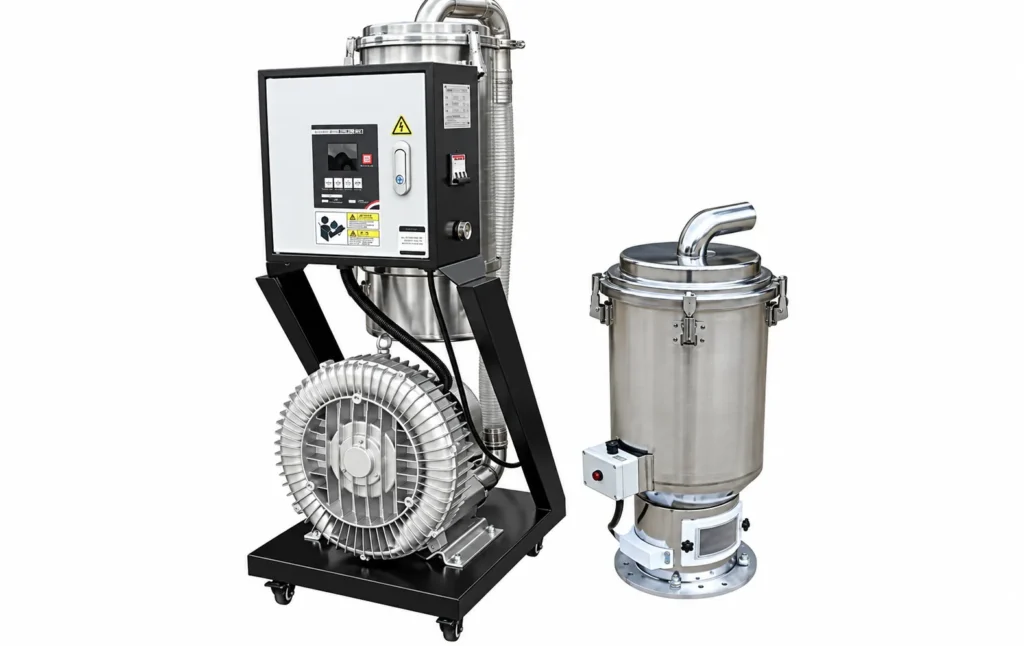
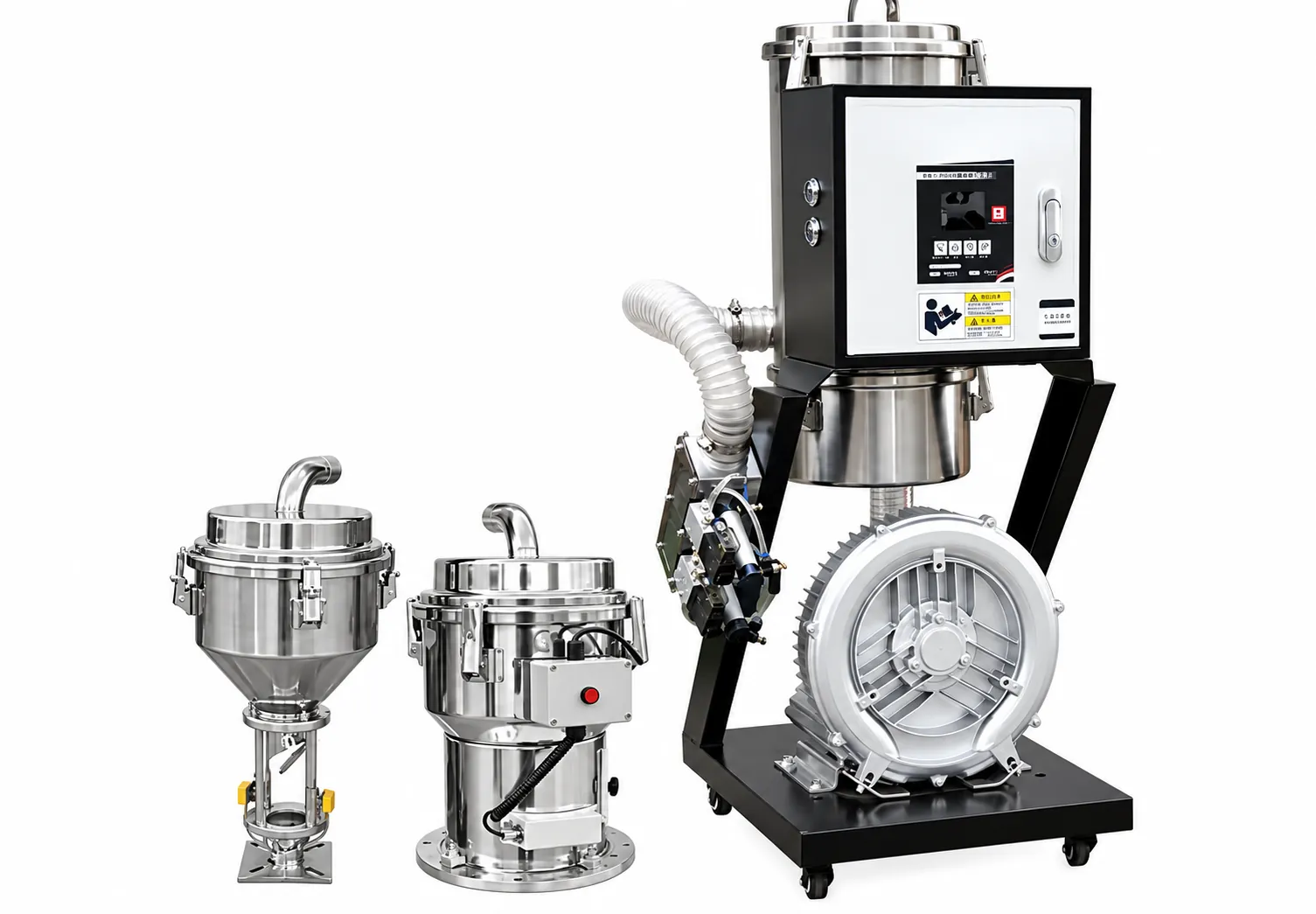
Automated negative-pressure pneumatic vacuum hopper loader for closed-loop, dust-free transfer of plastic pellets, regrind flakes, and powder additives.

  • Feeding and Conveying Equipment
  • Feeding and Material Transfer
  • Modified Plastics
  • Multifunctional Masterbatch
  • Recycled plastics
  • Resin
  • Rubber
  • Thermoplastic Elastomer
  • Pellets
  • Powder
  • Regrind
  • Dust at loading and transfer
  • Intermittent or inaccurate feeding

Overview

What this machine does

Transfers plastic pellets, regrind flakes, and dry powders automatically via negative-pressure pneumatic vacuum from containers, silos, or drying hoppers directly into processing machine throats.

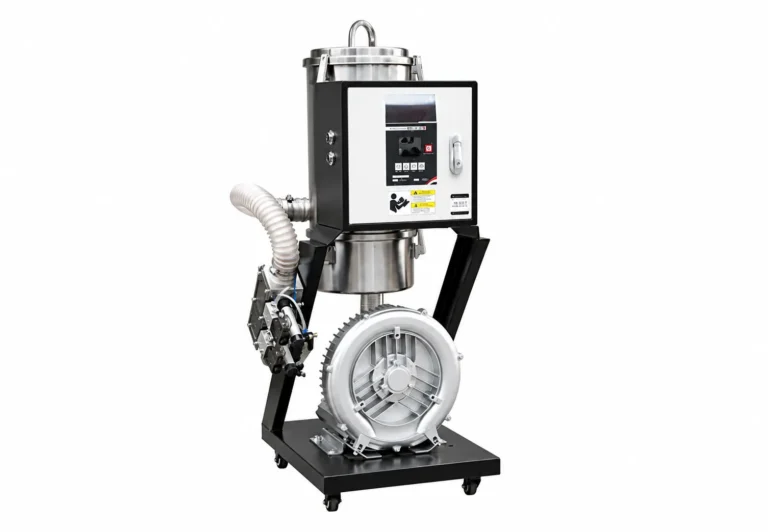
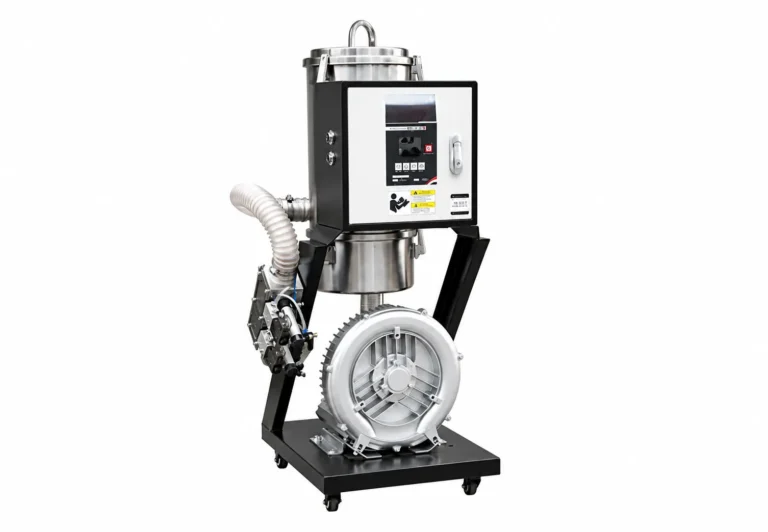
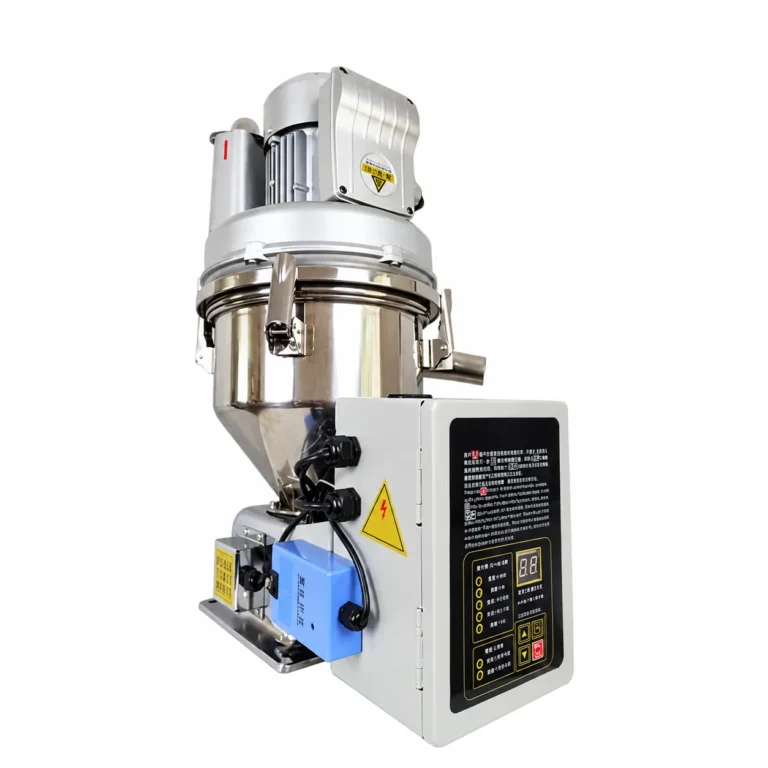
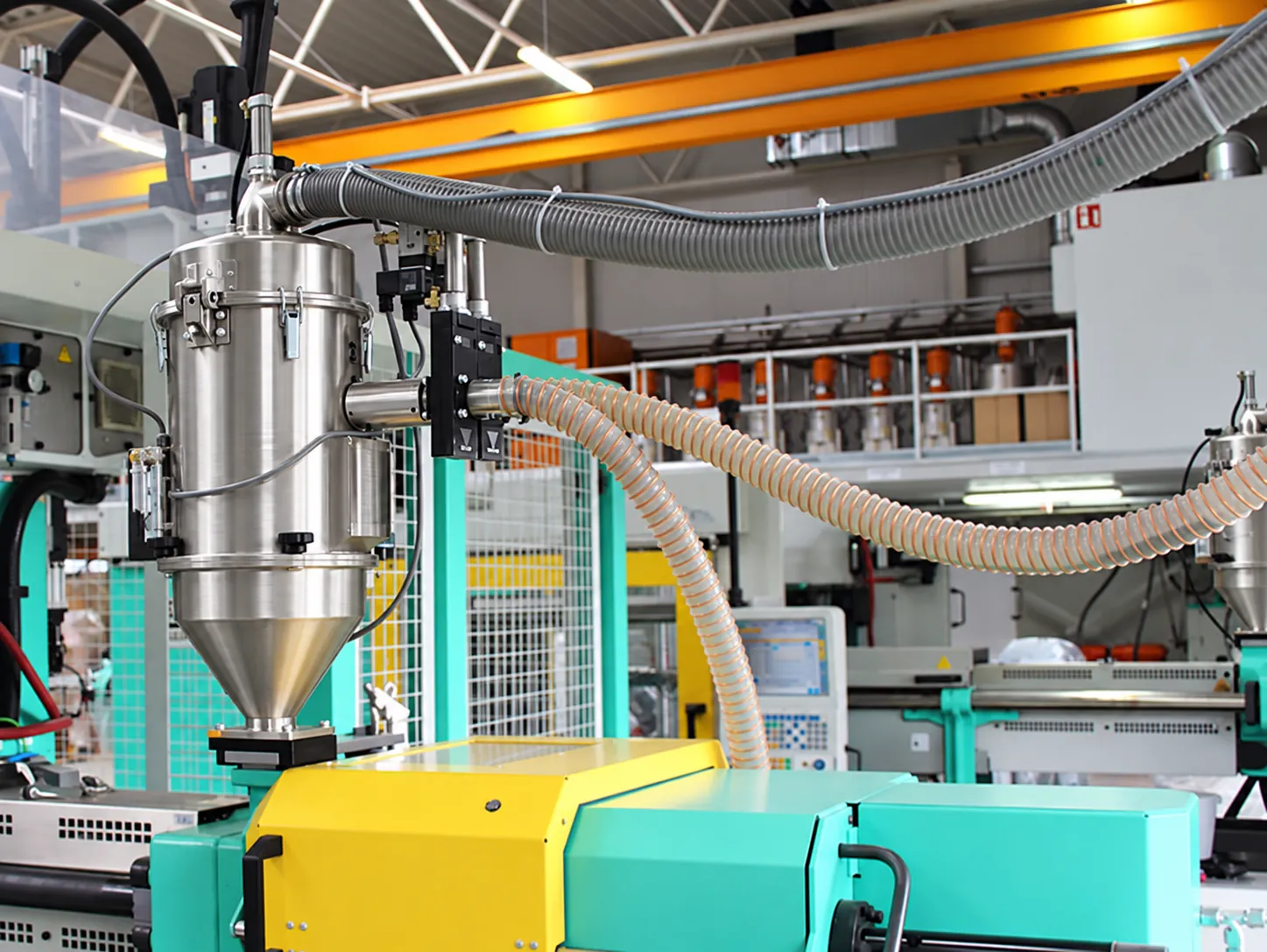
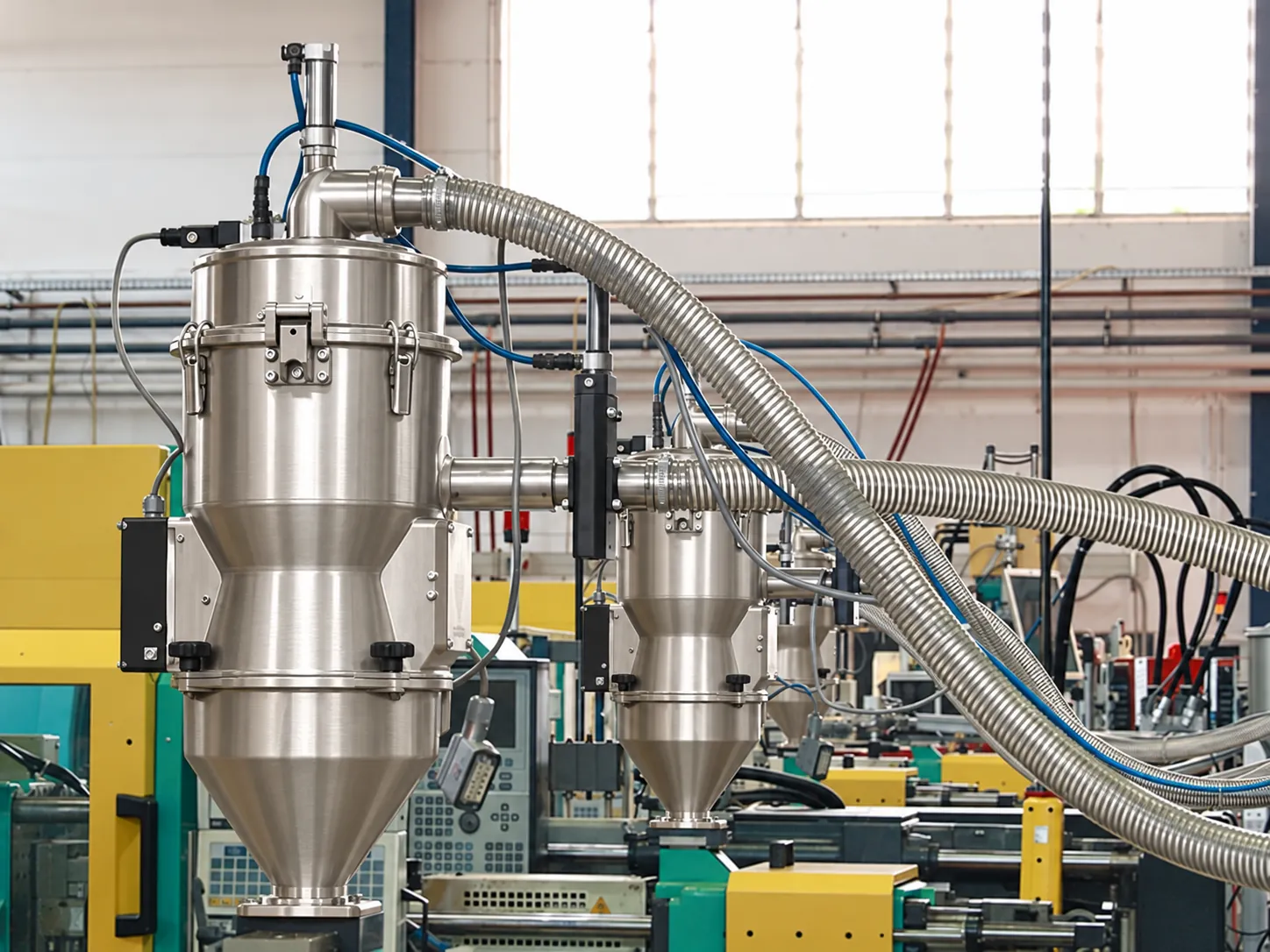
The Industrial Vacuum Loader (pneumatic vacuum hopper loader / auto-loader) provides automated, closed-loop negative-pressure conveying for plastic virgin pellets, masterbatches, regrind flakes, and dry powders. Operating on the differential pressure generated by a high-efficiency regenerative side-channel blower or multi-stage vacuum pump, the system draws raw materials cleanly from drying bins, bag-dump stations, gaylord boxes, or floor silos through conveying hoses and deposits them directly into extruder throats, injection molding hoppers, or loss-in-weight feeder bins.

Unlike open manual bag dumps or mechanical screw augers that require rigid line-of-sight elevation, the vacuum loader utilizes flexible conveying tubing to navigate multi-plane piping layouts, long horizontal distances, and vertical elevation across plant mezzanines. Equipped with reverse-pulse jet compressed air filter cleaning, microcomputer cycle control, and high-sensitivity proximity level sensors, the loader guarantees an uninterrupted, spillage-free feed supply while maintaining a dust-free production environment.

Key features

The parts that do the work

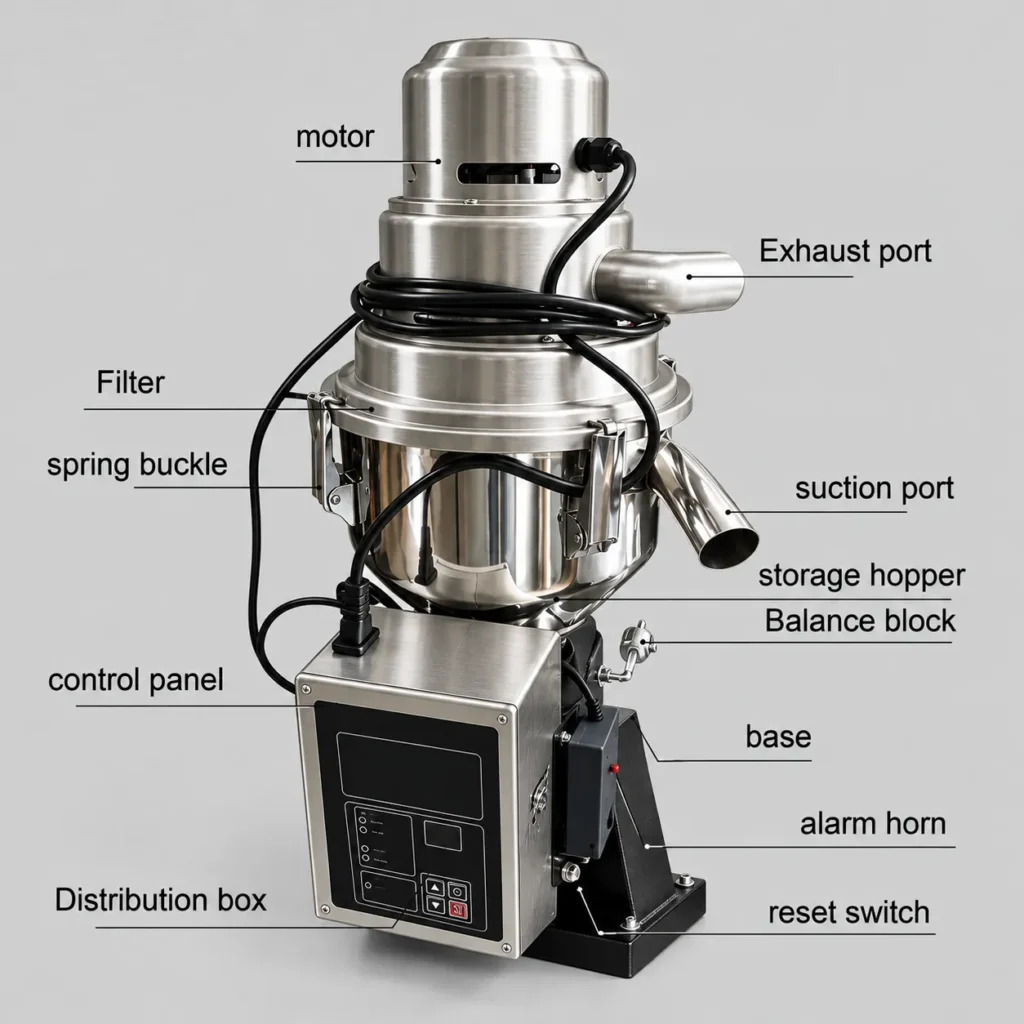
Each picture names one part of the machine and what it does for the material and the batch.

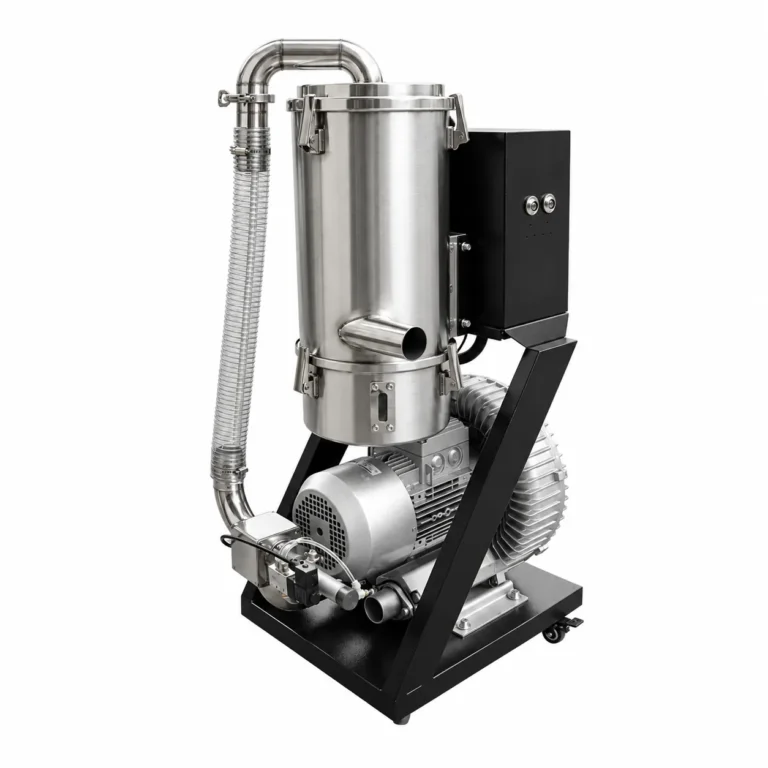
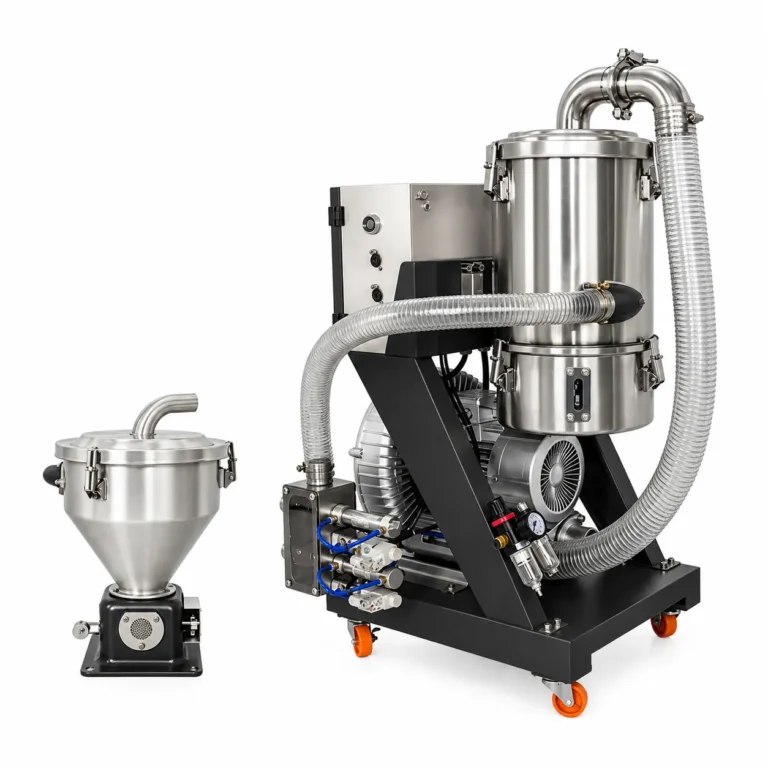
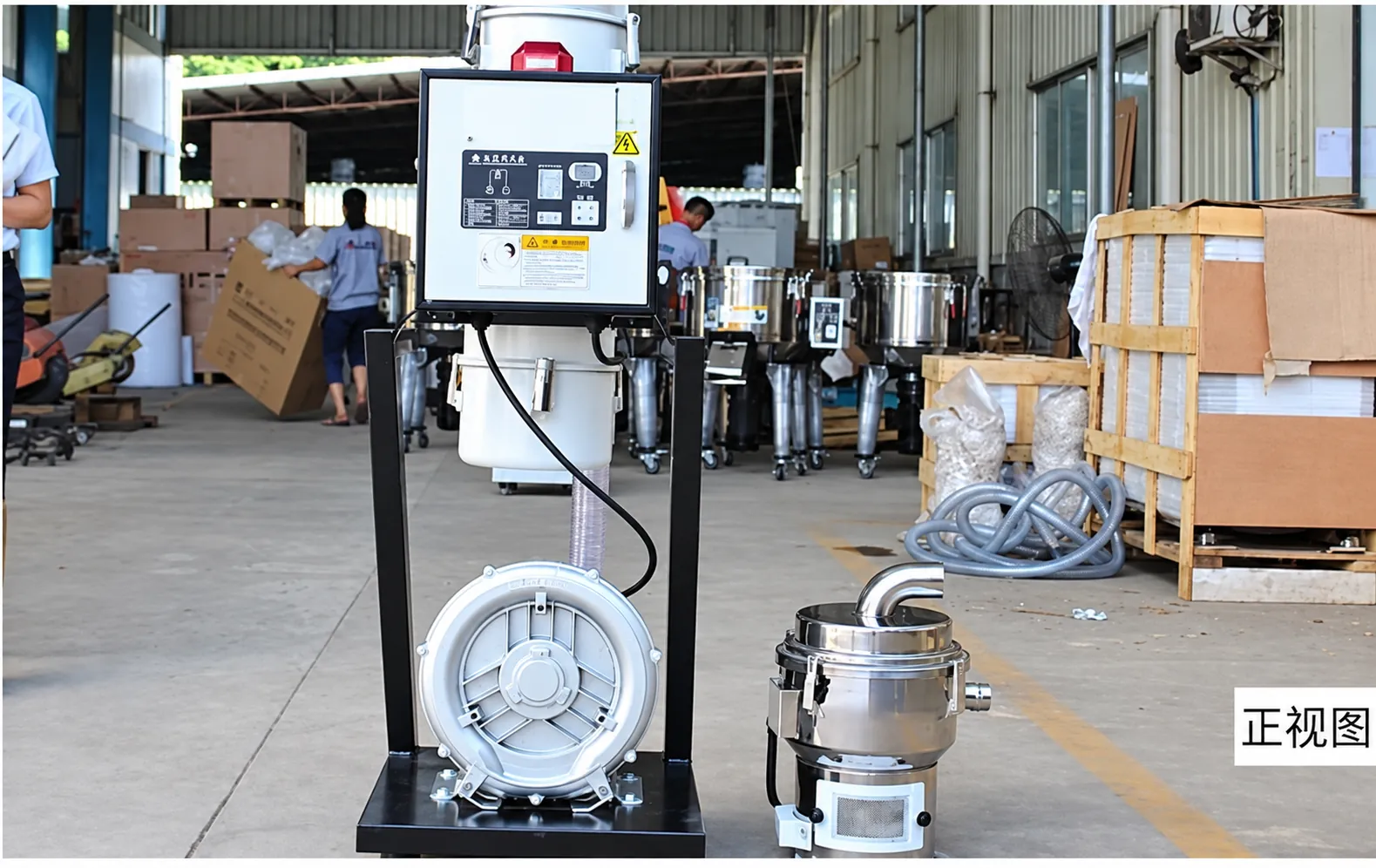
Heavy-Duty Side-Channel Vacuum Pump / Regenerative Blower

High-efficiency side-channel regenerative blower or three-phase induction vacuum pump engineered for continuous industrial operation. Provides deep vacuum and high air velocity with low acoustic noise, minimal maintenance, and zero carbon-brush wear.

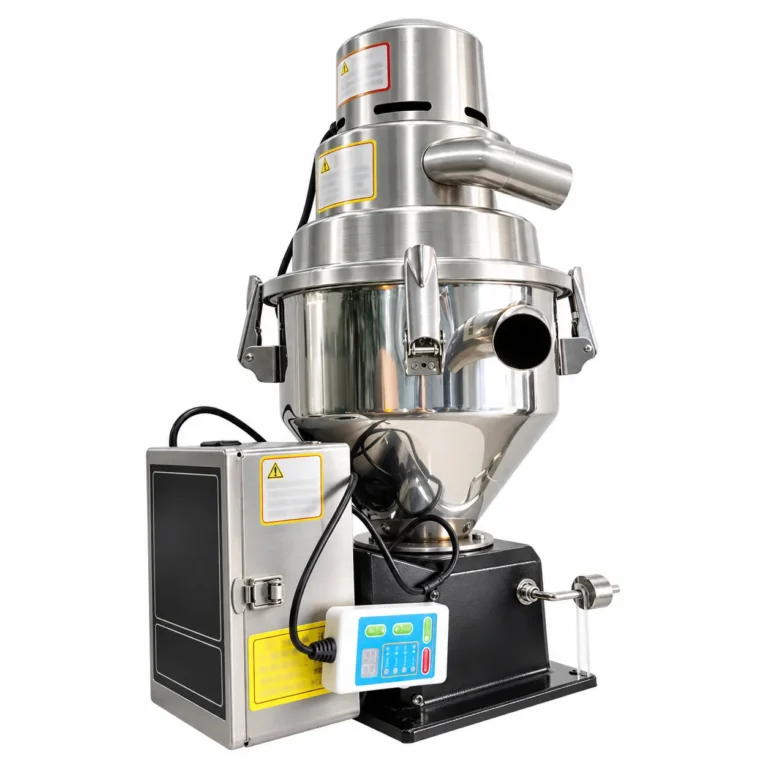
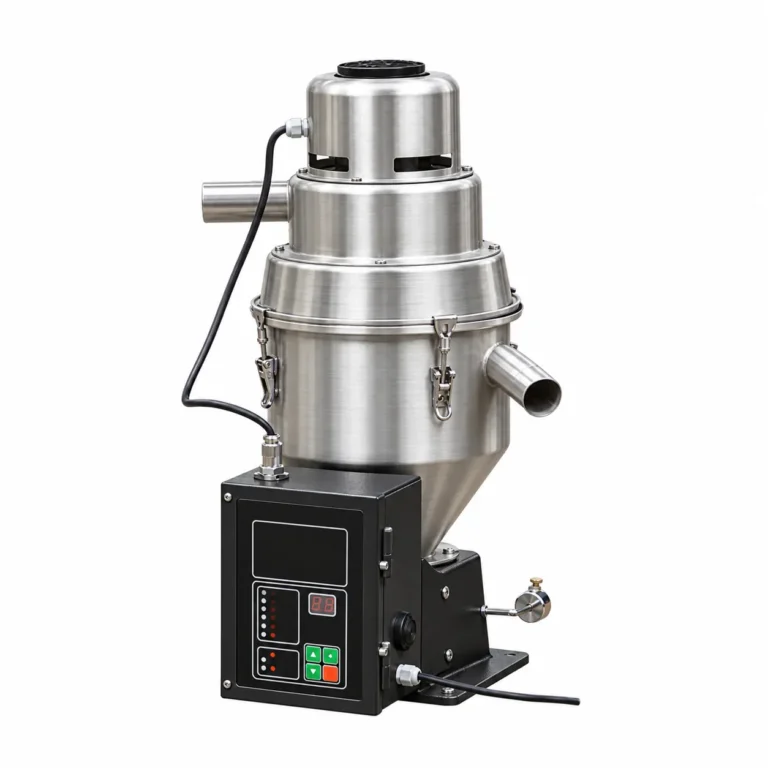
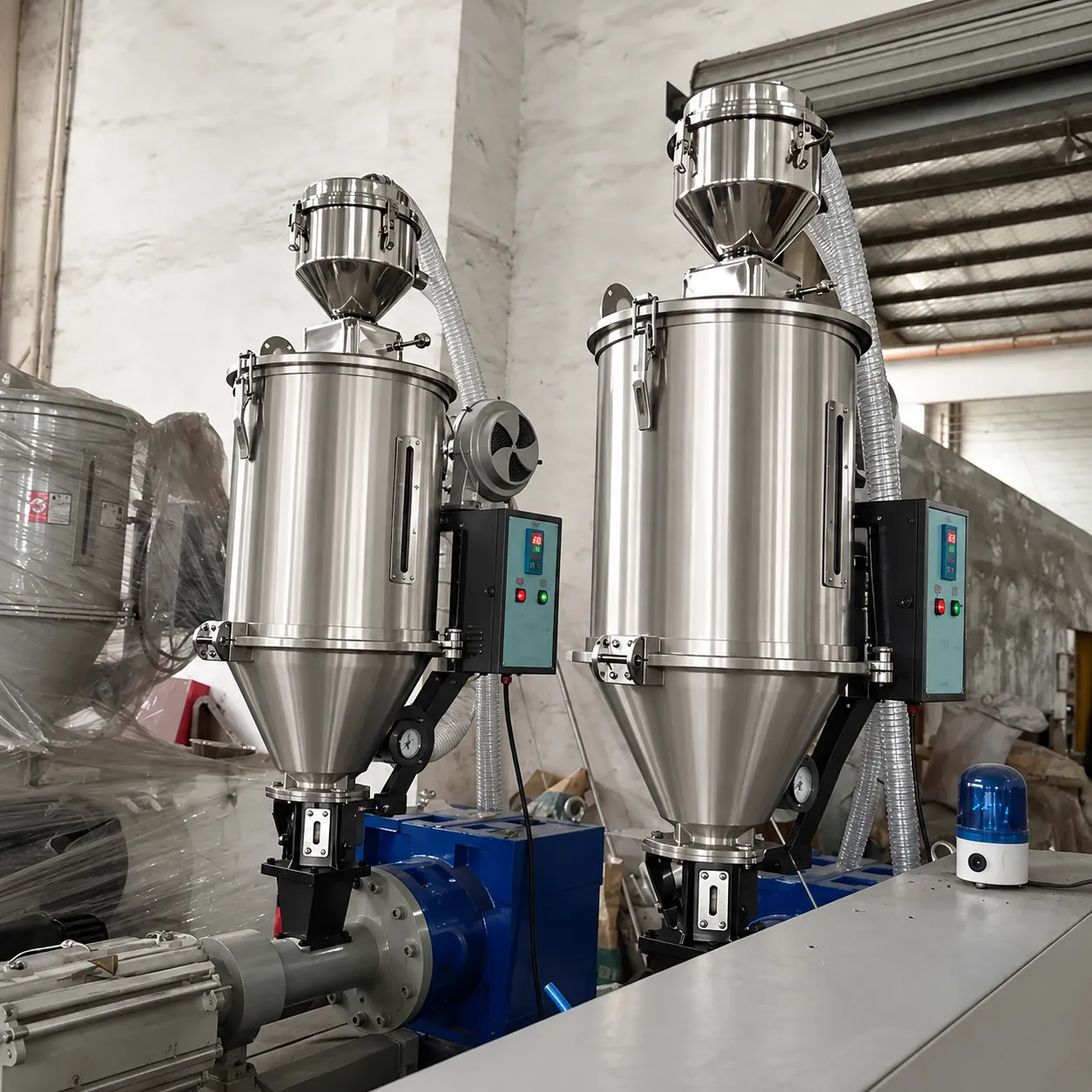
Stainless Steel Vacuum Receiver Hopper with Quick-Drop Flapper Gate

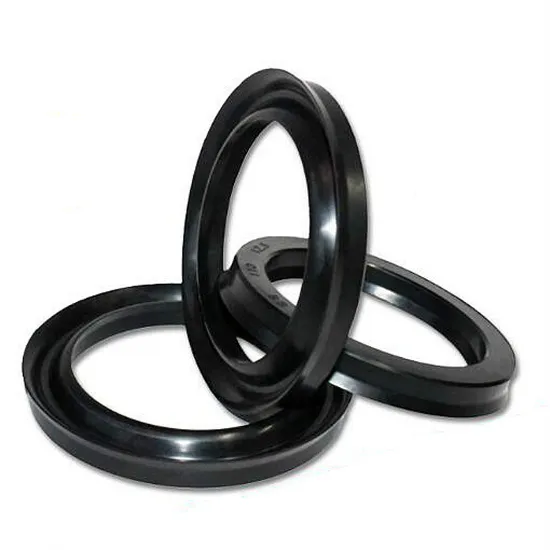
Fabricated entirely from SUS304 stainless steel with smooth polished interiors. Features a weighted flapper dump gate with durable silicone sealing, ensuring instantaneous, spillage-free discharge and tight vacuum sealing during suction cycles.

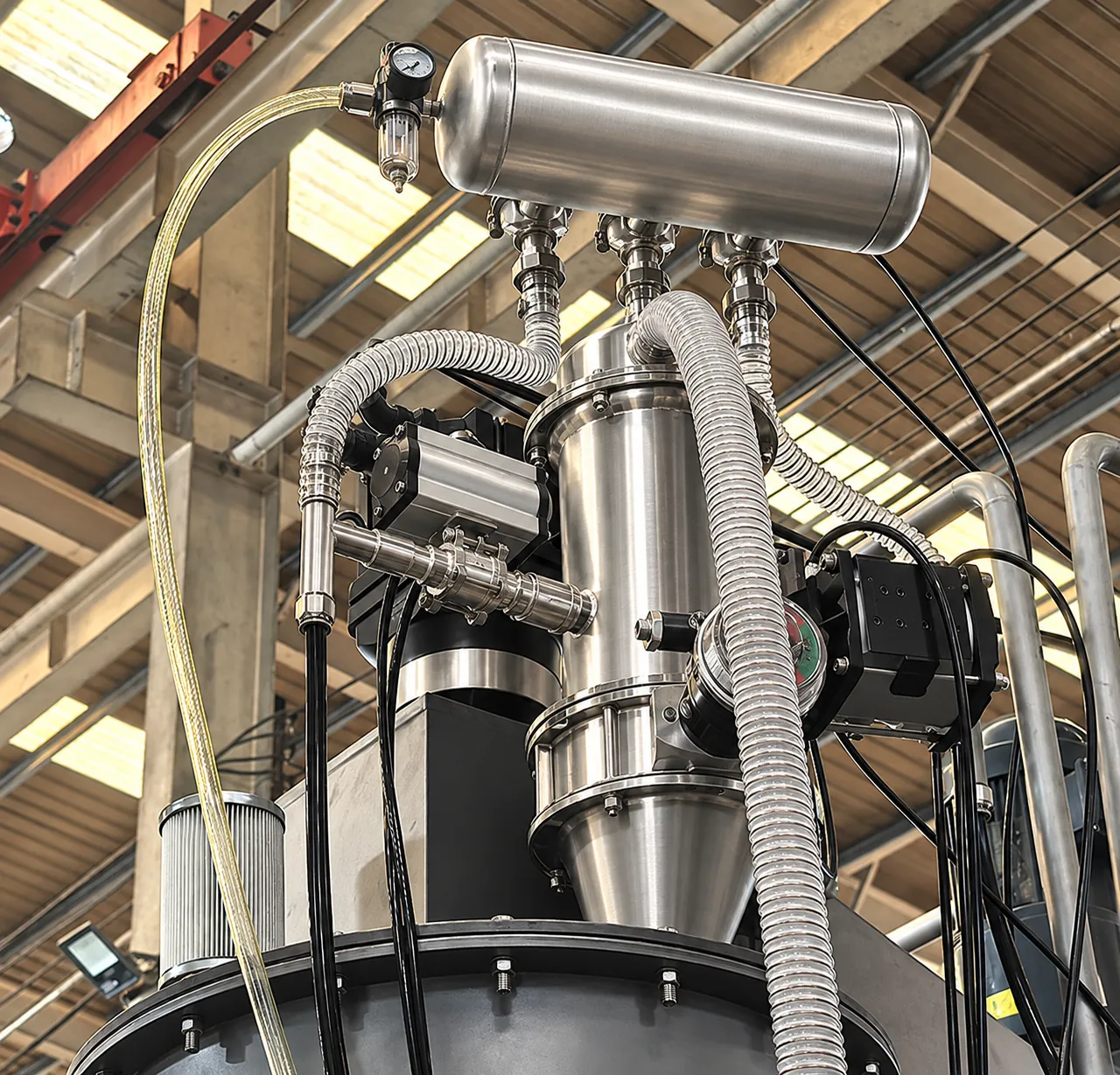
Automatic Pulse-Jet Filter Cleaning System

Equipped with stainless steel wire mesh filters for pellets, or high-efficiency micro-porous pleated polyester cartridges for dusty powders. Automated reverse-pulse jet blowback blasts compressed air through the filter media on each dump cycle, eliminating filter caking.

Microprocessor Control with Alarm Diagnostics

Industrial microcomputer controller with clear digital display. Provides precise timing control for suction duration, pulse-jet filter cleaning, dump delay, and incorporates auto-alarm diagnostics for material shortages and motor overload.

Precision Material Level Detection & Automatic Demand Cycle

High-frequency capacitive or inductive proximity level sensor mounted on the discharge flapper or receiver wall. Accurately senses downstream hopper level to trigger instant automated top-up cycles before extruders run dry.

Material and process

Where it fits — and where it does not

Read the conditions together: a machine is selected for the material and the output, not from its name alone.

Suitable materials and conditions

Optimized for dust-free, automated pneumatic transfer of free-flowing polymer pellets, virgin resins, masterbatches, micropellets, and washed regrind flakes across common industrial resins including PP, PE, HDPE, LDPE, ABS, PS, PC, PET, and PA. Also handles dry powder additives and mineral fillers when fitted with high-efficiency pleated polyester filters and reverse-pulse jet blowback.

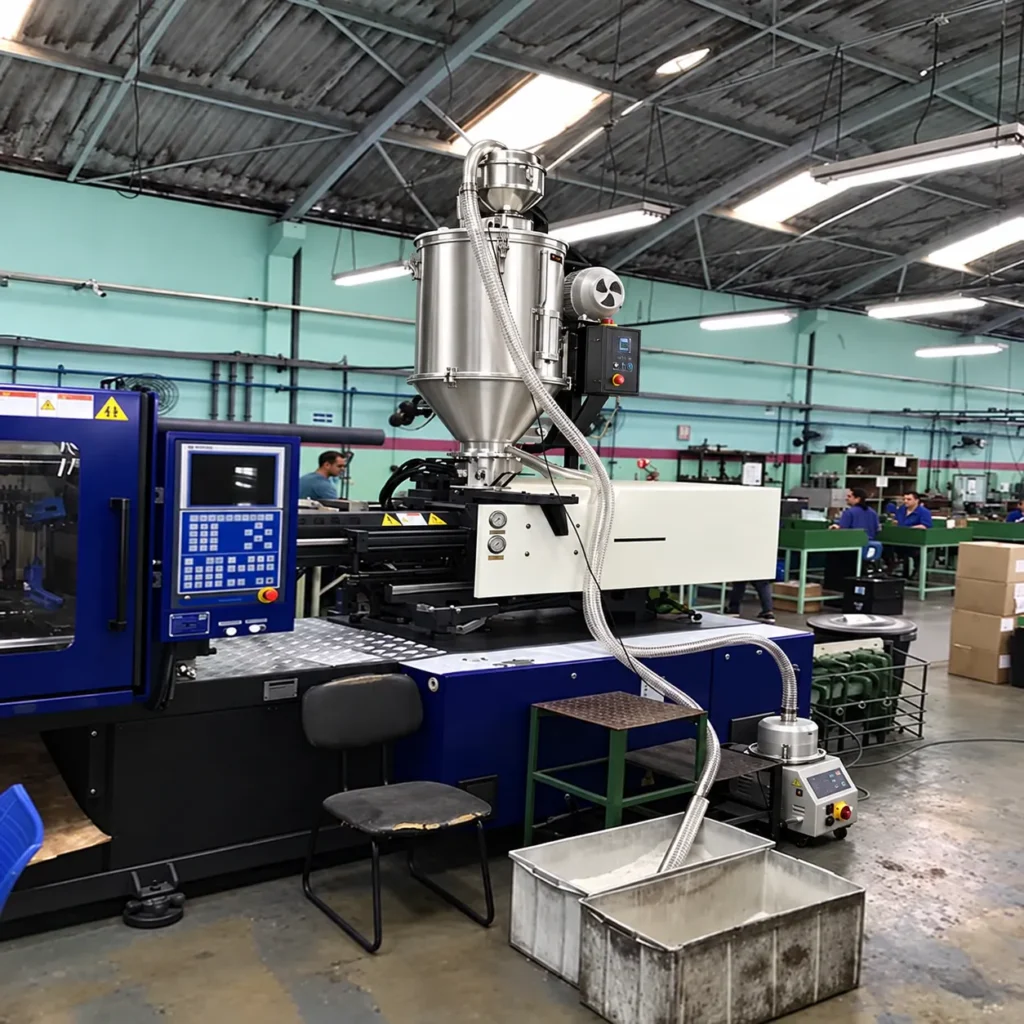
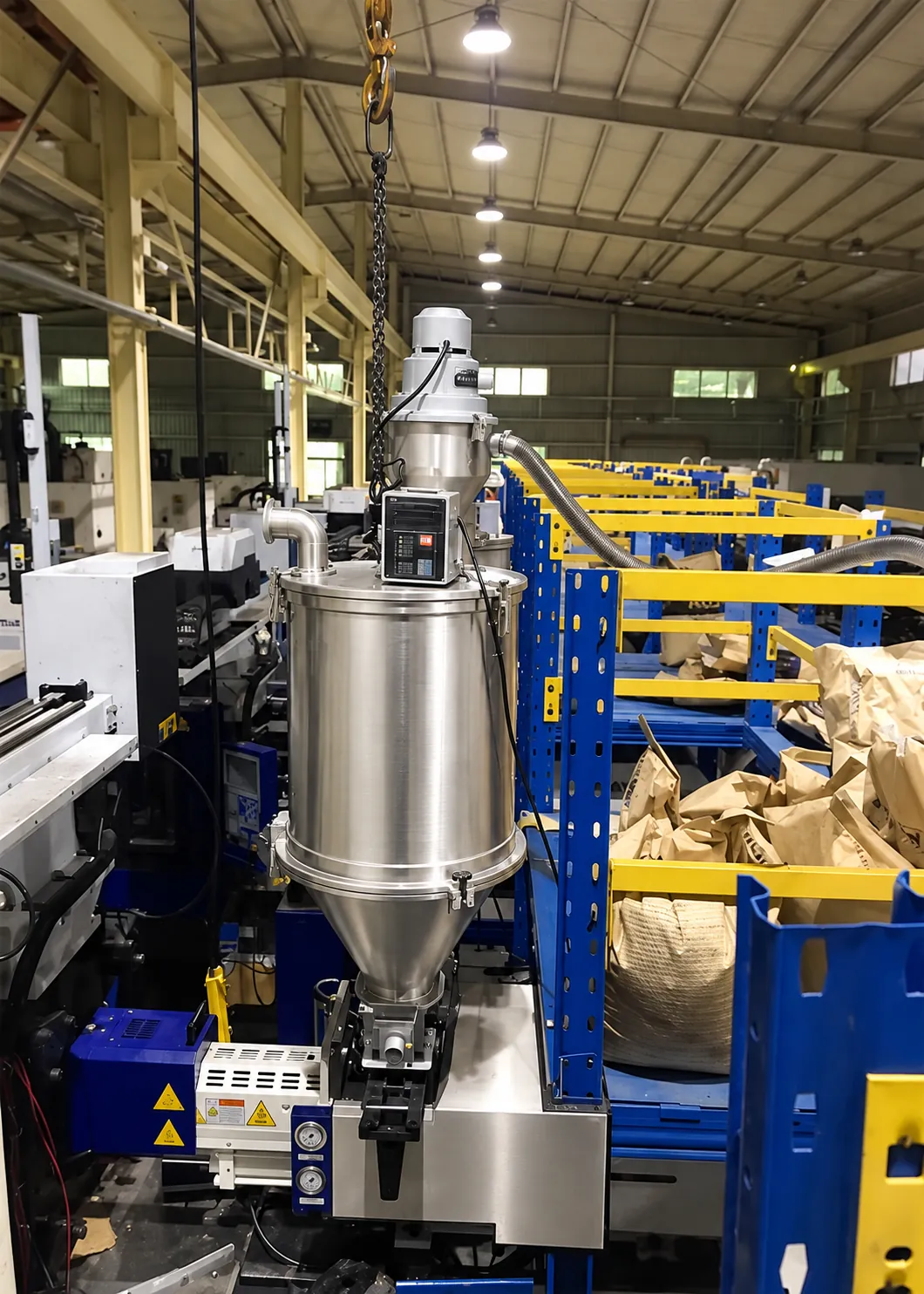
Ideally deployed for transferring materials over 3 to 25 meters horizontally and 3 to 10 meters vertically. Widely utilized for automated charging of compounding extruder feed throats, gravimetric loss-in-weight blender bins, desiccant drying hoppers, and injection/blow molding machine throats directly from gaylords, bulk bags, or floor-level storage bins.

Limitations and when it does not apply

Intermittent negative-pressure transfer system; operating boundaries include:

  • Conveying distance & lift: Standard units optimized up to 10–25 m run and 6–10 m lift; longer distances (>30–50 m) require positive-pressure dilute-phase systems.
  • Sticky liquids & soft elastomers: Free oils or warm tacky elastomers (soft TPE/TPU) smear on hose walls and blind filter cartridges.
  • Dense cohesive powders: Non-free-flowing powders prone to dynamic caking require dedicated powder receivers with fluidizing cones rather than standard pellet loaders.
  • Angel hair & fluffy film scrap: Low-bulk-density film scraps or stringy streamers cause bird-nesting in lances and elbows; specify scrap cyclones or mechanical augers instead.

Feed condition and requirements

Accepts free-flowing virgin polymer granules, micro-pellets, masterbatch chips, sorted regrind flakes, and non-caking dry powders. Compatible with standard bulk densities between 0.30 kg/L and 1.2 kg/L.

Feed material must be free of liquid moisture, oil contamination, tramp metal, and oversized foreign chunks larger than the pickup lance intake nozzle. For fine powder feeding, the loader must be configured with the high-efficiency pleated polyester filter cartridge and pulse-jet reverse blowback system.

Output condition and boundaries

Delivers clean, pulse-free batch drops directly into extruder throats, injection molding drying hoppers, loss-in-weight feeder bins, or gravimetric blender chambers.

Discharge is instantaneous upon vacuum cycle completion as the bottom flapper gate swings open by gravity; material integrity is preserved with zero pellet deformation or thermal degradation.

Throughput

Capacity range

Read a figure together with the basis below it: the same machine reaches different numbers on different materials.

Basis for the capacity figures

Rated conveying throughputs (ranging from 150 kg/h for compact standalone units up to 3,500 kg/h for separate-vacuum centralized receiver systems) are rated on standard free-flowing virgin polymer pellets (bulk density 0.60 kg/L) over an equivalent distance of 4 meters horizontal and 3 meters vertical elevation, utilizing two standard 90° pipe bends.

Throughput derating applies under longer distances, additional piping elbows, and divergent bulk materials: fine powders and low-bulk-density regrind flakes require larger vacuum receiver chambers, extended cycle suction timing, and higher air-to-cloth filter ratios to avoid premature filter blinding.

Models

Models in this range

The figures are the reference values entered for each model. The model for your line is confirmed against your material and output before it is quoted.

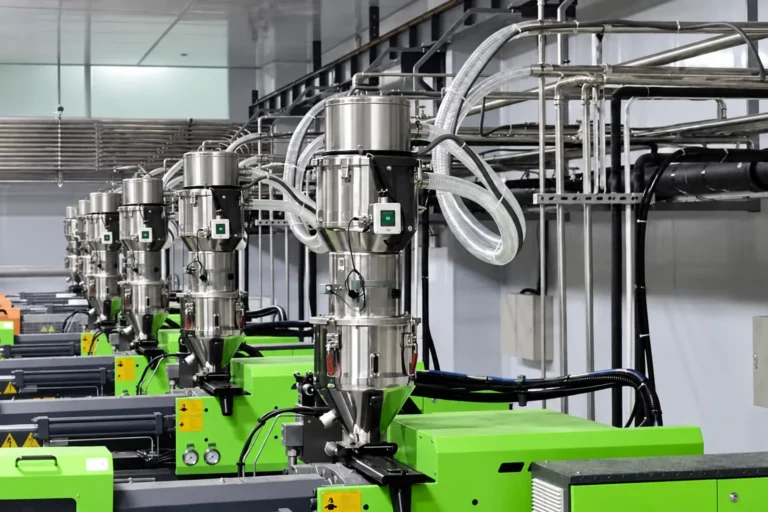
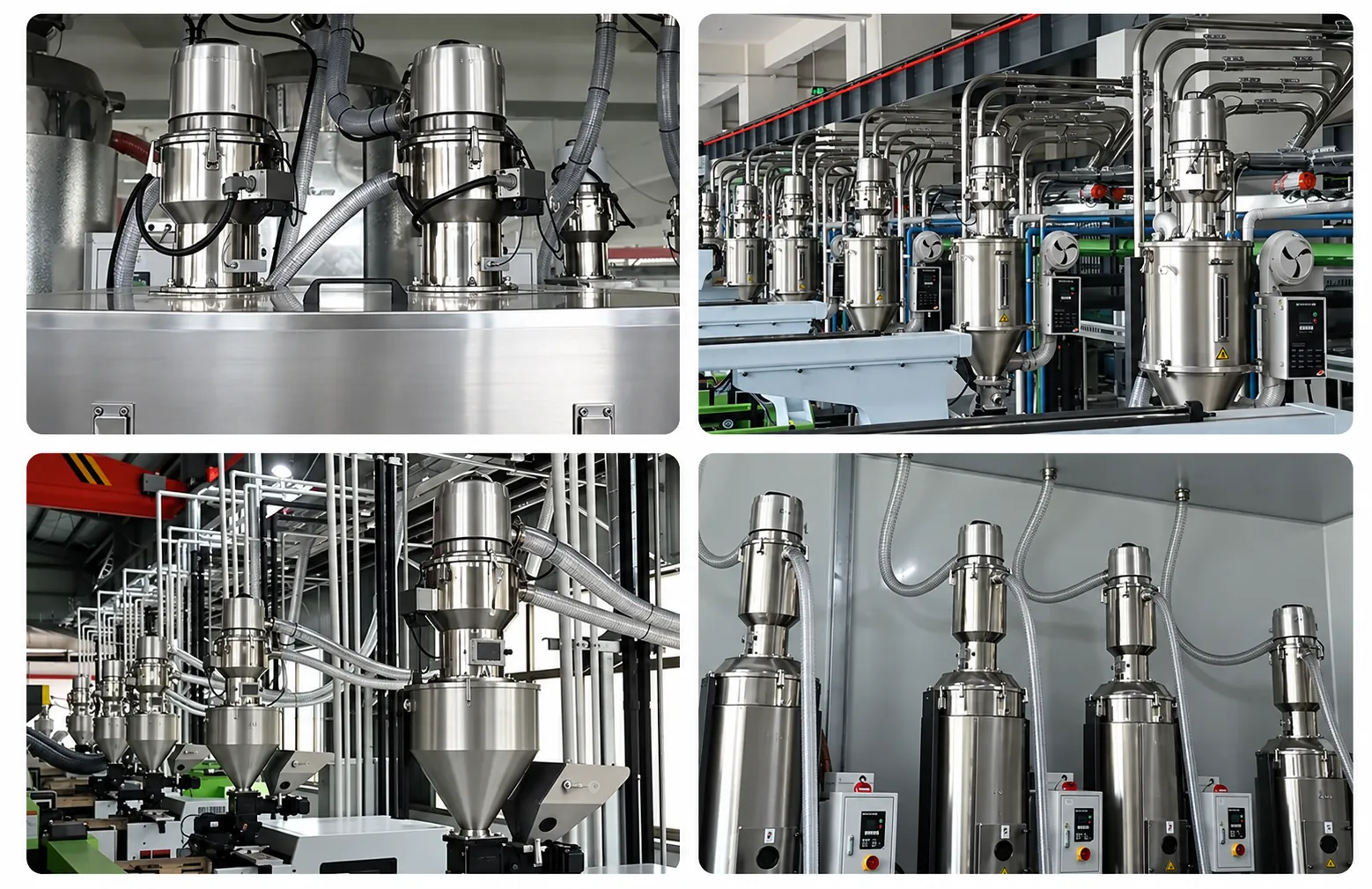
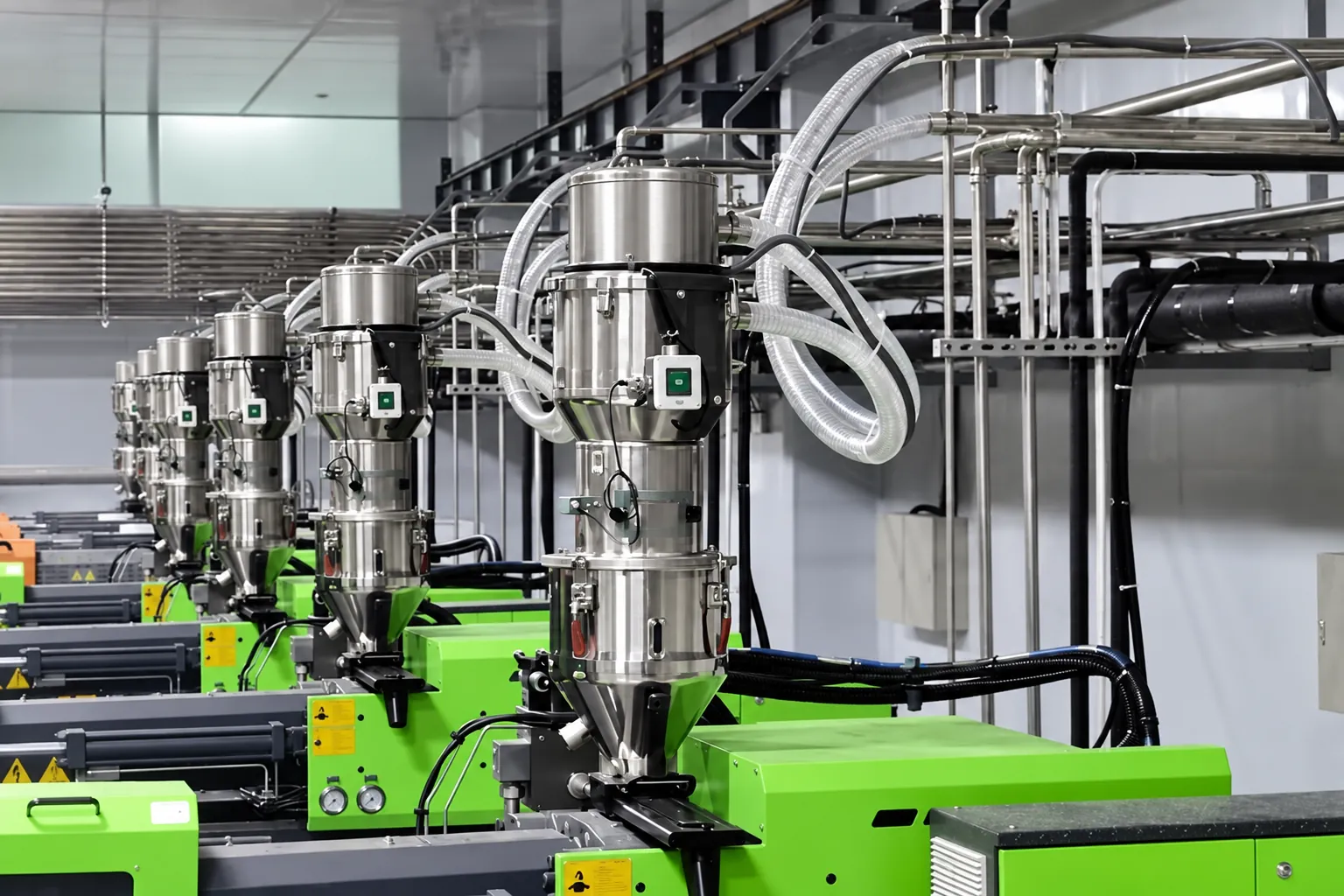
Vacuum loading to injection molding machines and their drying hoppers

Resin, regrind and masterbatch are drawn from floor silos and octabins and charged to the machine hoppers and to the dehumidifying drying hoppers across the shop. One blower carries a run of receivers, and a proportional valve holds the virgin-to-regrind ratio at each machine.

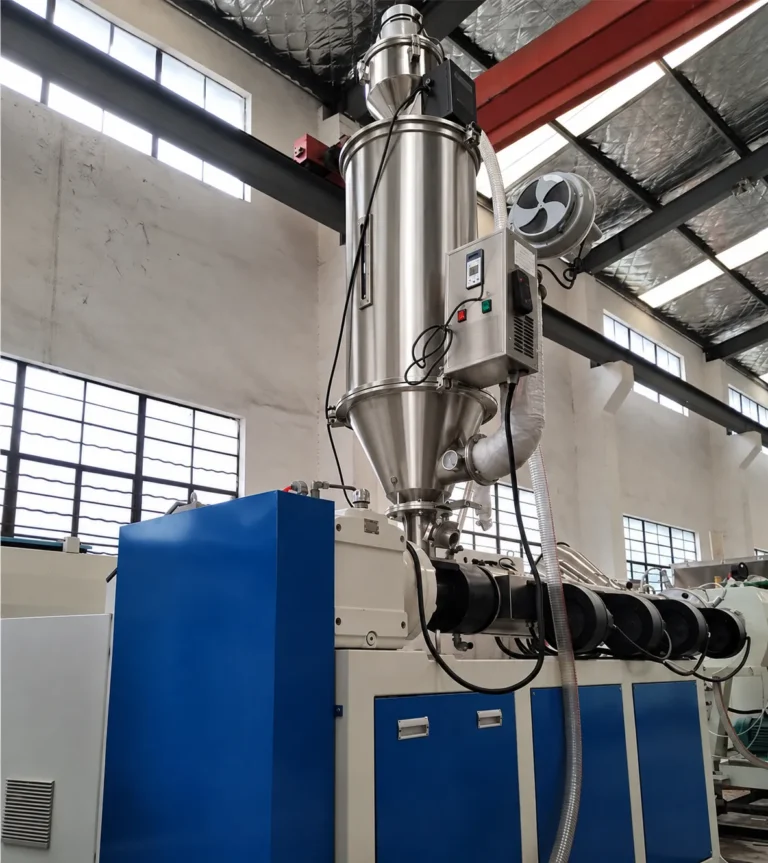
Powder loading for a conical twin-screw PVC pipe extrusion line

PVC dry blend goes from the mixing room silo or octabin straight to the extruder hopper, so nobody carries compound to the line. The powder configuration carries a pleated polyester cartridge with reverse-pulse blowback, and wear-resistant elbows at the pipe bends.

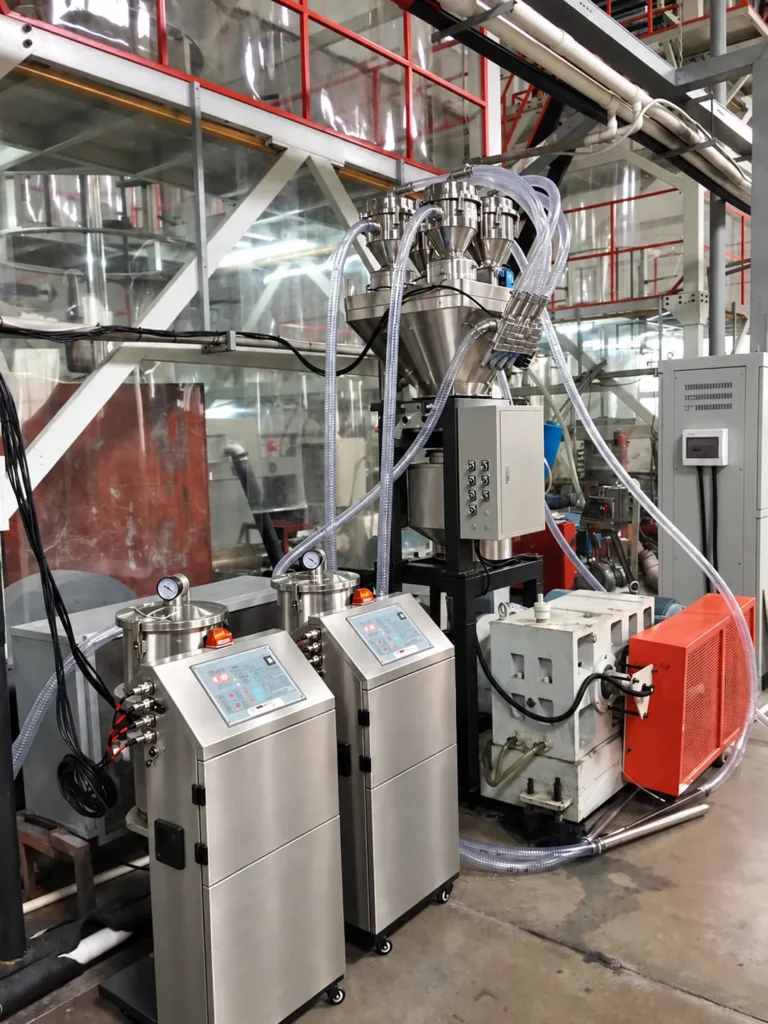
Pellets and filler loading on a compounding and pelletizing line

Pellets, regrind and mineral filler are charged to the mixer and to the extruder feed hopper on the recipe, with two receivers and a proportional valve holding the ratio. The fines the filler carries are handled by the pulse-jet reverse blowback filter.

Scope of supply

What is included, and what is not

The quotation states the scope for the confirmed configuration; the groups below describe how a supply is normally split.

Included as standard

  • SUS304 stainless steel vacuum receiver hopper High-polish stainless steel receiver body with clamp-lock top lid, transparent acrylic sight glass, and gravity counterweight discharge flapper gate.
  • High-efficiency industrial side-channel vacuum blower Direct-drive regenerative vacuum blower with intake sound silencer, inlet protection filter, and motor thermal overload protection.
  • Microprocessor digital control cabinet Integrated or handheld pendant controller with digital cycle timing, automatic level sensing logic, visual error alarms, and power disconnect switch.
  • Standard conveying hose and stainless steel suction lance Includes 4 meters of flexible antistatic PU steel-wire conveying hose, hose clamps, and SUS304 suction lance with adjustable air bleed collar.
  • Automatic filter cleaning mechanism Mesh filter screen for pellet models, or automated reverse-pulse jet compressed air blowback system with pressure accumulator tank for powder models.
  • Proximity level sensor with mounting bracket Capacitive level switch for automated demand-driven feeding interlocked with processing machine hoppers.

Optional items

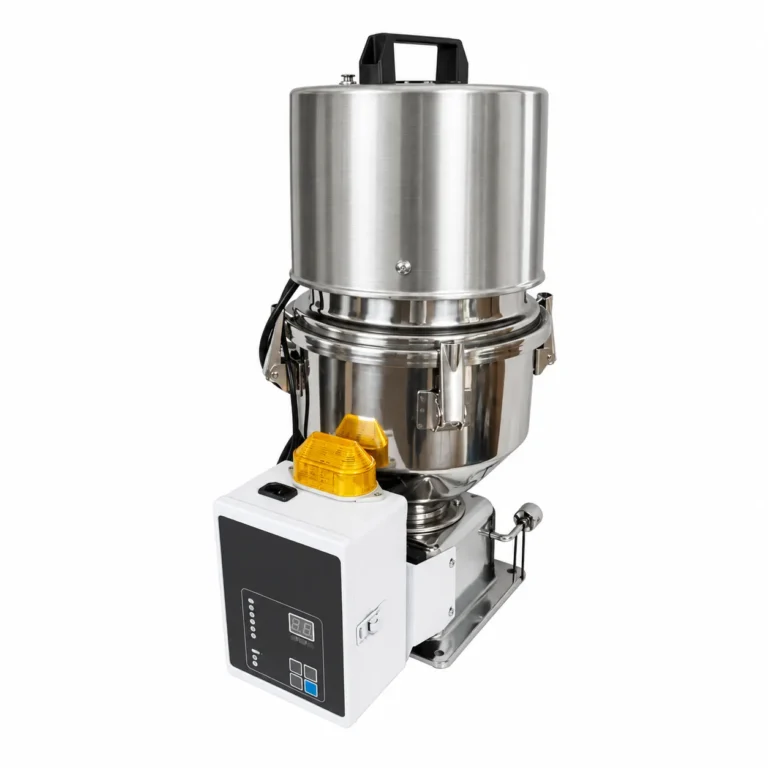
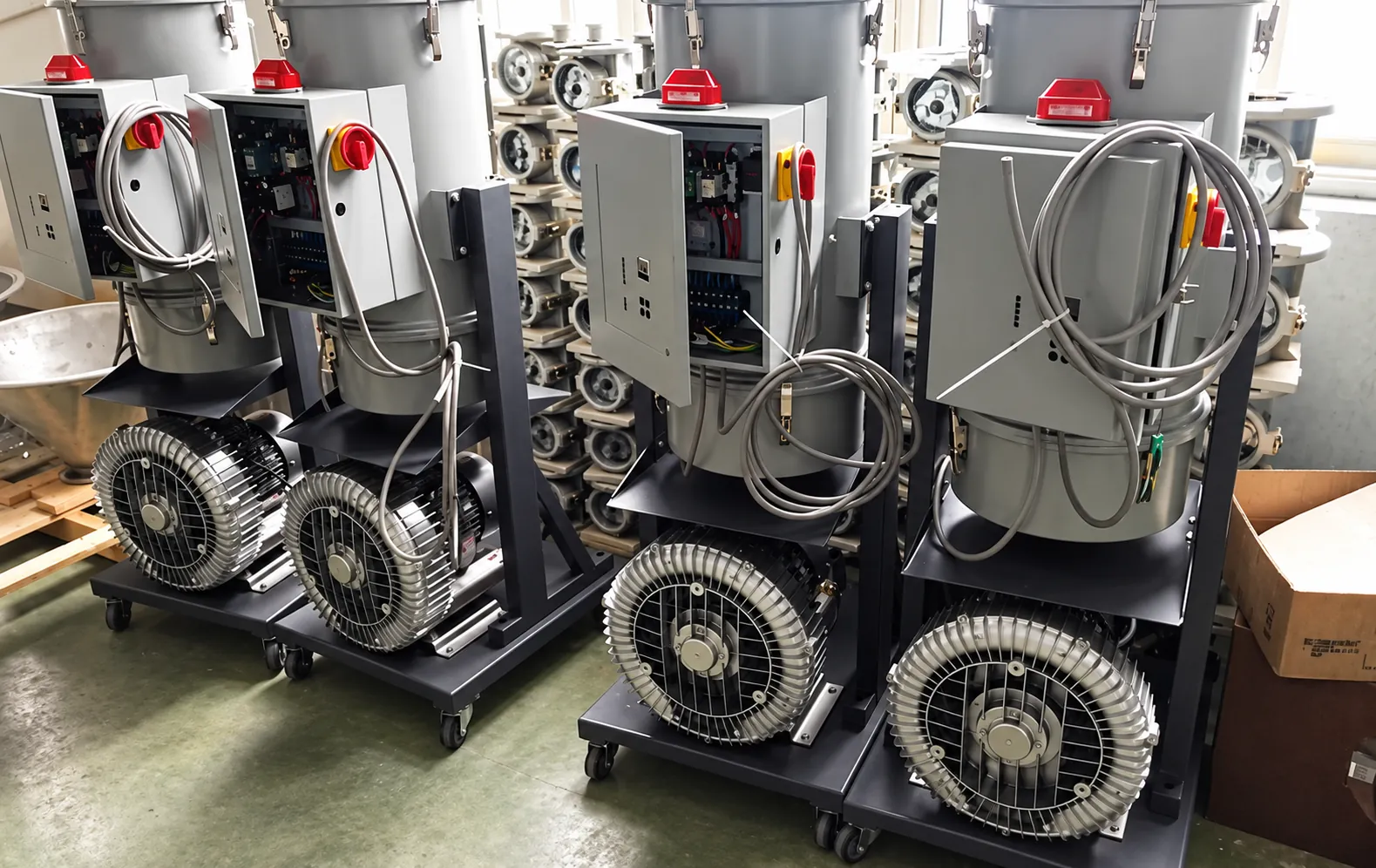
  • Self-contained vs. separate vacuum blower configuration Self-contained integrated motor on receiver hopper for low-headroom single-machine setups; separate vacuum blower with standalone receiver hopper for heavy-duty continuous or multi-hopper lines.
  • Pulse-jet reverse blowback filter system Integrated compressed air reservoir and solenoid pulse valve for automatic pulse cleaning of pleated polyester filter cartridges during each discharge cycle (essential for fine powders and dusty regrind).
  • Wear-resistant ceramic or glass-lined piping elbows Specialized long-radius induction-hardened, ceramic-backed, or heavy borosilicate glass pipe bends for abrasive glass-fiber-reinforced or high-filler compounds.
  • Proportional two-material mixing valve Pneumatic two-way proportional valve mounted on conveying line for automated recipe blending of virgin pellets and regrind directly during the vacuum cycle.
  • Stainless steel SUS316L / mirror-polished contact surfaces High-spec metallurgy and sanitary Ra ≤ 0.4 µm polishing for medical-grade resins, optical-grade PC/PMMA, or corrosive PVC dry blends.
  • High-temperature resin configuration Viton / silicone seals, high-temp suction hoses, and insulated receiver hoppers for hot resins discharging directly from desiccant dryers at up to 160°C.

Not included

  • Interconnecting plant piping and pipe supports Rigid stainless steel conveying tubing runs exceeding standard 4m hose kit, ceiling hanging clamps, and floor stanchions outside machine scope.
  • Main power supply drops and external branch fusing Electrical line runs from plant power distribution board to the machine disconnect switch.
  • Compressed air supply piping and central dryer Compressed air supply tubing up to the local filter-regulator shutoff valve.
  • Downstream machine throat hoppers and gravimetric bins Extruder throats, loss-in-weight feeder hoppers, and drying bins unless explicitly quoted as an integrated turnkey feeding package.

Installation planning

Utilities, interfaces and site readiness

These are the connections the machine and the line around it have to agree on before the layout is fixed.

Utility requirements

Power supply
380 V / 415 V / 460 V / 220 V (customizable), 50/60 Hz, 3-phase AC; compact standalone models available in 220 V single-phase.
Water
Not required (air-cooled regenerative blower design).
Compressed air
0.5–0.7 MPa (5–7 bar), clean, dry, oil-free instrument air required for pulse-jet filter cleaning and pneumatic flapper seals (consumption: approx. 0.05–0.15 m³/min during pulse blasts). Not required for basic mesh-filter pellet units.
Exhaust and ventilation
Integrated exhaust muffler on blower discharge; optional exhaust duct connection flange (DN50–DN75) available to route warm motor exhaust outside cleanroom or climate-controlled environments.
Other notes
Vacuum blower power ranges from 0.75 kW to 7.5 kW depending on model throughput and conveying distance. Electrical supply and compressed air connection must be in place prior to commissioning.

Interface requirements

Mechanical: Standard bottom mounting flange or quick-clamp collar sized to fit standard drying hoppers, machine throat adapters, or loss-in-weight bins (DN100–DN200). Material inlet suction port (standard OD 38 mm, 51 mm, or 63 mm) connecting to antistatic polyurethane conveying hose.

Electrical & Automation: Three-phase or single-phase power connection to the control panel. Auxiliary dry terminal contacts provided for remote Master Run/Stop, external line fault signaling, and interlock with upstream proportional mixing valves or central silo manifold controllers.

What the customer prepares on site

The customer is responsible for providing stable mounting support on the extruder hopper, drying bin, or mezzanine floor engineered to support the operating receiver weight. Customer installs main electrical supply wiring, provides dry, oil-free compressed air piped directly to the receiver filter manifold, and secures all rigid stainless steel conveying piping with proper anti-static ground bonding across all pipe couplings.

Spare parts

Wear parts and recommended spares

The parts that wear in normal service, and the spares worth keeping on site. How often a part is replaced depends on the material and the duty the machine runs, so the basis is confirmed for each machine.

Recommended spares

Pleated Polyester Filter Cartridge / Stainless Steel Filter Screen

Inspect weekly; clean via pulse jet or manual blowdown. Replace pleated cartridges every 6–12 months or when persistent filter blinding causes suction flow degradation.

Primary filtration element inside the vacuum receiver. Prevents fines from entering the vacuum blower impeller. Keep two replacement elements on site. Specify loader model and filtration micron rating when ordering.

Discharge Flapper Silicone Gasket / Flap Seal

Inspect monthly for cuts, pellet indentation, or elasticity loss; replace if vacuum suction leak is detected during cycling.

Seals the bottom gravity dump gate during the negative-pressure suction cycle. Critical for maintaining system vacuum efficiency.

Side-Channel Blower Carbon Vanes / Bearings / Air Filter

Clean or replace blower intake air filter monthly; inspect blower bearings annually for abnormal noise or vibration.

Suction inlet protection filter and motor bearings on the regenerative blower unit. Prevents atmospheric dust ingress into precision impeller clearances.

Capacitive Proximity Material Level Sensor

Check sensing calibration quarterly; keep one spare sensor in maintenance reserve.

Mounted at the receiver discharge gate or downstream hopper throat to trigger automatic loading cycles.

Blades, screens and other normal consumables are outside the standard warranty. How a spare part is identified and ordered is set out under Warranty & Spare Parts.

Selection

How to choose a model

Work through what you already know. The rest is settled in the conversation, not before the first message.

Follow these engineering guidelines when selecting and sizing an industrial vacuum hopper loader:

  • Equivalent Distance Calculation: Sizing must account for total equivalent distance: add 1.5–2.0 meters of equivalent length for every 90° pipe elbow. A system conveying 10 meters horizontally with four 90° bends has an equivalent conveying length of 16–18 meters.
  • Pellet vs. Powder Filter Media: For virgin pellets and clean masterbatch, a stainless steel wire mesh screen (30–60 mesh) is sufficient. For regrind with fines, micropellets, or mineral powders, a high-efficiency pleated polyester cartridge (0.5–2 µm rating) with automated compressed air reverse-pulse jet blowback is mandatory to prevent blower vacuum drop.
  • Integrated vs. Separate Vacuum Design: Choose compact integrated loaders (blower mounted directly on receiver) for standalone machines with low ceiling height. For high throughputs (> 500 kg/h), long conveying distances, or high-dust applications, specify separate vacuum units where the heavy blower and dust collection canister remain accessible on the floor.
  • Abrasive & Glass Fiber Resins: For compounds containing > 15% glass fiber or abrasive mineral fillers, always specify stainless steel conveying lines with long-radius ceramic-backed or borosilicate glass elbows to eliminate pipe wall wear-through.

Information we need from you

  1. 01 Material type and physical form Specify exact polymer resin (e.g., PP, PE, ABS, PET, PA, TPU), material form (virgin pellets, micropellets, shredded flakes, or dry micronized powder), and bulk density (kg/L or g/cm³).
  2. 02 Conveying routing and spatial geometry Actual horizontal conveying distance (meters), vertical elevation height (meters), and the exact number of 90° or 45° bends along the line routing.
  3. 03 Hourly conveying throughput and batch frequency Required hourly delivery rate (kg/h) and operating mode (continuous extruder replenishment or intermittent batch transfer).
  4. 04 Material temperature and abrasive/corrosive nature Material discharge temperature (e.g., freshly dried resin at 80°C–120°C from a dehumidifying hopper), presence of abrasive mineral fillers (CaCO3, talc, glass fiber), or sticky plasticizer additives.
  5. 05 Site utilities and electrical supply Local three-phase and single-phase electrical supply (voltage, frequency, phase) and available dry instrument compressed air (pressure and supply line size).

Request a Quote A model name, a material or a drawing is enough to start.

Photos and videos

The machine itself

Next step

Request a Quote

Tell us the material, the process and what you need to achieve. Technical details can be completed later together with our sales team.

Request a Quote
Request a Quote