_画板-1的副本-300x300.png)
Solution
Central Desiccant Drying and Gravimetric Glass Fiber Compounding System
Central desiccant drying…
Application
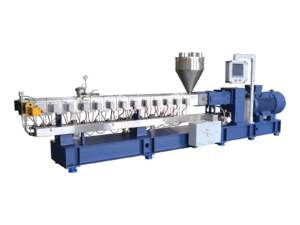
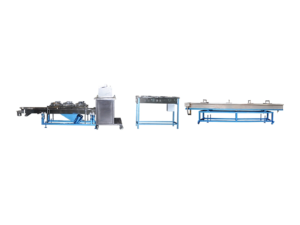
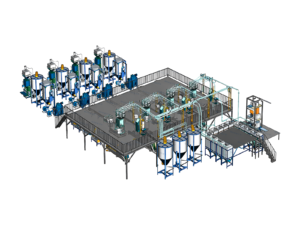
Glass-fiber reinforced engineering plastic compounding profile detailing honeycomb desiccant drying, dry-air conveying, downstream side feeding, and the complete Strand Pelletizer System.

This industrial application profile focuses on engineering plastic compounding plants producing high-performance, structural-grade fiber-reinforced thermoplastics (PA6, PA66, PBT, PC, PPS, PPA) containing 15% to 50% chopped E-glass fibers for automotive under-the-hood components, power tool housings, and industrial electrical switchgear.
Compounding glass-fiber reinforced engineering plastics involves two critical quality and operational conflicts: first, base polyamides and polyesters are highly hygroscopic. If unmolten resin pellets contain trace moisture exceeding 0.02% (200 ppm) entering the high-temperature extruder barrel (260°C–300°C), catastrophic hydrolytic chain scission instantly occurs, plummeting intrinsic viscosity, destroying mechanical tensile strength, and causing severe splay silver streaks in molded parts. Second, glass fiber bundles are fragile and brittle. If added through the main feed throat with virgin pellets, abrasive shearing pulverizes fibers into micro-dust, losing reinforcement aspect ratio. This engineered application combines deep honeycomb rotor desiccant drying (-40°C to -50°C dew point), closed-loop dry-air vacuum conveying, gentle downstream twin-screw side feeding into the fully molten polymer pool, and a complete Strand Pelletizer System with classifier dedusting, preserving critical fiber retention length and maximizing impact toughness.
The scenario
Engineering plastic compounding plants, toll compounders, and automotive material suppliers specializing in reinforced polyamide (PA6/PA66), polyester (PBT/PET), and polycarbonate (PC) compounds.
Structural-grade, dust-free cylindrical glass-fiber reinforced thermoplastic pellets packaged in 25 kg moisture-barrier aluminum-foil bags or 1,000 kg lined bulk bags, ready for tier-1 automotive injection molding.
Produce automotive structural grade glass-fiber reinforced pellets with zero hydrolytic degradation (core moisture ≤ 200 ppm), high fiber retention length, and zero glass-fiber “fish-eye” agglomerates.
Material
The properties named here are the ones the equipment questions turn on — they are confirmed per project, from samples where it matters.
Hygroscopic engineering thermoplastic resins: virgin PA6, PA66, PBT, PC, PPS pellets (bulk density 0.60–0.70 kg/L, initial moisture 0.1%–0.5%), chopped E-glass fiber bundles (filament diameter 10–13 µm, chopped length 3–4.5 mm, silane sizing), thermal stabilizers, lubricants, and flame retardants.

Process
The flow is the usual shape of the scenario; the machines for each step are chosen per project — see the solutions below.

Raw Material Preparation
Continuously dehumidifies hygroscopic resin pellets with -40°C to -50°C dew-point air for 4–6 hours to lower core moisture to ≤ 200 ppm.
Feeding and Material Transfer
Conveys dried resin from the desiccant hopper to the extruder feed throat using closed-loop dry air, preventing ambient moisture re-absorption.
Compounding
Melts base resin in barrel zones 1–4; downstream twin-screw side-feeder introduces chopped glass fibers gently into the molten pool to preserve fiber length.
Cooling
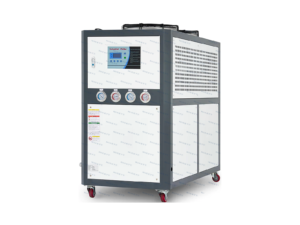
Extrudes continuous reinforced strands into a temperature-controlled water bath to freeze polymer structure without fiber pullout.
Pelletizing
Solid cemented tungsten carbide rotary cutter shears dried abrasive strands into uniform cylindrical pellets with clean, vertical cut faces.
Post-Pellet Treatment
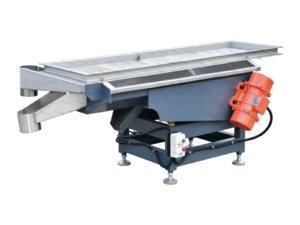
Dual-deck vibrating screen removes rare long stringers and dedusts abrasive fiber fuzz before packaging.
Requirements
1. Honeycomb Desiccant Dehumidification: Virgin hygroscopic resin pellets must be dried using -40°C to -50°C dew point air for 4–6 hours, lowering core moisture below 0.02% (200 ppm) to prevent hydrolytic degradation.
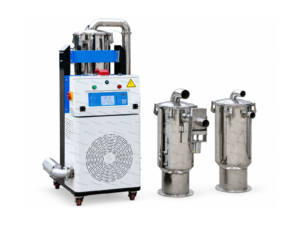
2. Closed-Loop Dry-Air Pneumatic Conveying: Dried pellets must be transferred to machine hoppers using dry air loops, preventing rapid ambient humidity re-absorption during pneumatic transit.
3. Downstream Side-Feeding into Melt Pool: Chopped glass fibers are metered via loss-in-weight gravimetric feeders into a specialized twin-screw side-feeder at barrel section 5/6, gently folding fibers into molten polymer to minimize filament breakage.
4. Continuous Strand Cooling & Tungsten-Carbide Cutting: The Strand Pelletizer System integrates water bath cooling, high-velocity air-knife dewatering, and solid cemented tungsten-carbide helical rotors with stellite bed knives to ensure clean cut pellet faces and resist abrasive glass fiber wear.
Resin Moisture Content: Polymer moisture entering extruder feed throat strictly ≤ 0.02% (200 ppm) verified by Karl Fischer titration (ASTM D6869).
Fiber Length Retention: Number-average fiber length Ln ≥ 320 µm in finished pellets to guarantee Izod impact and tensile modulus.
Pellet Morphology: Clean cylindrical cut (Ø2.5–3.0 mm x 3.0 mm length), zero whiskers or broken fiber fuzz, fines content ≤ 0.05%.
Selection
These are the questions a quotation is built from — answering them up front shortens the first round.
Fit
The boundaries are part of the scenario: they keep equipment from being quoted into a case it cannot serve.
Best fit for high-performance engineering plastics compounders producing 15% to 50% chopped glass fiber or carbon fiber reinforced polyamide (PA6, PA66, PA12), polybutylene terephthalate (PBT), polycarbonate (PC), and polyphenylene sulfide (PPS) compounds for structural automotive, aerospace, and electrical applications.
Requires assessment when compounding halogen-free flame-retardant (HFFR) formulations with red phosphorus or melamine polyphosphate, where specialized low-temperature screw configurations, explosion-proof vents, and nitrogen-purged feed hoppers are mandatory.
Not suitable for direct long-fiber thermoplastic (LFT-D / LFT-G) roving pultrusion lines producing 10–25 mm continuous impregnated pellets (which require continuous fiber wire-coating crosshead dies rather than twin-screw compounding).
Variants
A variant is written down only where the process and the decision actually differ.
Polyamide 66 with 30% to 50% chopped E-glass fibers and heat stabilizers for automotive engine covers and intake manifolds.
Requires desiccant drying of virgin PA66 down to ≤ 150 ppm moisture, and downstream twin-screw side feeding to maintain number-average fiber length Ln ≥ 320 µm.
High-tensile strength compound (tensile strength ≥ 175 MPa, tensile modulus ≥ 9,500 MPa) with exceptional thermal resistance (HDT > 240°C).
Polybutylene terephthalate with 20% to 30% chopped glass fibers and brominated/halogen-free flame retardants for electrical connectors.
Requires dual-vent high-vacuum devolatilization to extract flame-retardant reaction volatiles and prevent mold deposit plate-out.
High dielectric strength, low warpage compound achieving UL94 V-0 at 0.8 mm thickness and CTI 600V.
Photos
Photos go here once real views of this scenario are cleared to publish.


Before an inquiry
Request a Quote Send these points with your inquiry; the scenario can then be quoted against your line, not against an assumption.
Where to go next
Solution
Central desiccant drying…
Solution
Integrated continuous st…
Tell us the material, the process and what you need to achieve. Technical details can be completed later together with our sales team.