_画板-1的副本-300x300.png)
Solution
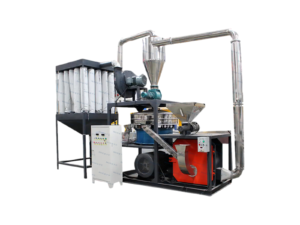
Closed-Loop Plastic Micronization and Air-Classified Pulverizing System
Closed-loop airflow plas…
Application
Rotomolding powder and masterbatch carrier application profile covering vacuum loading, water-cooled turbo pulverizing, and air classification screening.

This industrial application profile outlines the pneumatic suction feeding, precision air-cooled turbo pulverizing, and inline classification system engineered specifically for masterbatch manufacturers and rotomolding powder processors producing ultra-fine polymer powders (20 to 100 mesh, ~150 to 850 µm).
Micronizing thermoplastic pellets into rotomolding and masterbatch powders involves a critical physics bottleneck: approximately 85% to 90% of mechanical drive motor energy in a pulverizer is immediately converted into frictional heat. Because polyolefins (LLDPE, LDPE, HDPE, EVA) have low melting temperatures (105°C–130°C) and poor thermal conductivity, temperature inside the grinding chamber rapidly spikes above softening thresholds. This causes polymer to "smear" across cutting teeth, "popcorn" into stringy unground chunks, and blind grinding discs, triggering motor overload shutoffs. Furthermore, poor powder particle morphology produces low bulk density and erratic dry flowability, causing air-pocket pinholes and voids in finished rotomolded water tanks and kayaks. This application integrates negative-pressure vacuum loading, precision water-jacketed turbo pulverizing with aerodynamic air-cushion cooling, closed-loop cyclone separation, and inline linear vibrating classification with oversize blowback, ensuring spherical powder morphology, high bulk density, and non-stop milling capacity.
The scenario
Rotational molding resin processors, color masterbatch manufacturers, powder coating producers, and PVC compounding facilities requiring precise polymer micronization.
Uniform, spherical, free-flowing thermoplastic powder (20 to 100 mesh) packaged in 25 kg valve bags or 500 kg bulk bags, certified for rotational molding of large hollow vessels, automotive ducting, and masterbatch color carrier blending.
Transform standard polyolefin pellets into ultra-fine, free-flowing 20–100 mesh powder with zero thermal disc blinding, high bulk density, and zero oversized coarse grains.
Material
The properties named here are the ones the equipment questions turn on — they are confirmed per project, from samples where it matters.
Thermoplastic virgin polymer pellets or clean rigid regrind: LLDPE (rotational molding grades), LDPE, HDPE, EVA, and rigid PVC regrind flakes. Pellets Ø2.5–3.5 mm, free of tramp metal, moisture content ≤ 0.1%.

Process
The flow is the usual shape of the scenario; the machines for each step are chosen per project — see the solutions below.

Feeding and Material Transfer
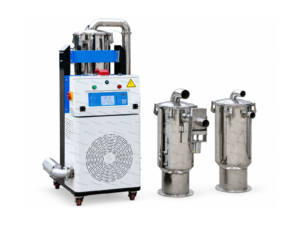
Pneumatically conveys virgin pellets from storage octabins to pulverizer feed hopper with high-strength magnetic tramp metal capture.
Raw Material Preparation
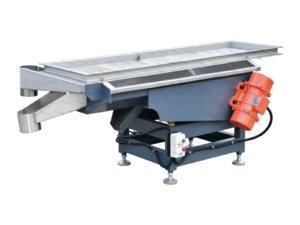
Vibratory feeder introduces pellets into high-speed grinding chamber; water jackets and high-volume airflow keep temperature below 65°C.
Cooling
Induced draft fan conveys ground powder pneumatically into an aerodynamic cyclone separator, discharging through a rotary airlock valve.
Post-Pellet Treatment
Linear vibrating screen classifies powder; qualified powder discharges to packing, while oversize grains are blown back to mill inlet.
Requirements
1. Dual Water-Jacket Thermal Control: Independent water cooling jackets on both stationary door and grinding chamber body maintain chamber surface temperatures below 65°C, preventing polymer melting and disc blinding.
2. Continuous Induced-Air Negative Pressure: Heavy-duty backward-curved draft fan draws high-velocity air through the mill chamber, providing aerodynamic air-cushion cooling while instantly conveying ground powder out of the cutting zone.
3. Load-Sensing Automated Feeding: Microprocessor-controlled vibratory feeder automatically modulates pellet infeed rate based on mill motor amperage load, preventing motor stalling or over-temperature spikes.
4. Closed-Loop Oversize Blowback: Linear vibrating screen scalps off particles > 35 mesh, returning them pneumatically via a venturi injector to the mill inlet for 100% material yield.
Mesh Distribution: ≥ 98.0% passing through target 35 mesh (500 µm) screen, 0.00% retained on 20 mesh (850 µm).
Bulk Density: Finished LLDPE powder bulk density ≥ 0.35 kg/L (ASTM D1895).
Dry Flowability: Standard funnel dry flow time ≤ 25 seconds / 100g, ensuring smooth, void-free rotational mold cavity filling.
Selection
These are the questions a quotation is built from — answering them up front shortens the first round.
Fit
The boundaries are part of the scenario: they keep equipment from being quoted into a case it cannot serve.
Best fit for rotomolding powder producers and color masterbatch carrier manufacturers milling virgin LLDPE (rotomolding grade), LDPE, HDPE, EVA, and rigid PVC regrind from standard pellets into 20–100 mesh free-flowing powder with throughputs from 250 kg/h to 1,000 kg/h.
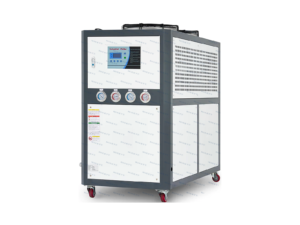
Requires assessment when grinding ultra-high-melt-index polymers (MFI > 20 g/10 min) or low-melting EVA (VA content > 14%), where supplementary industrial chiller water (< 10°C) and auxiliary air dehumidification must be configured to prevent thermal gumming.
Not suitable for rubber crumb, ultra-soft elastomeric pellets (Shore hardness < 75A), or engineering polymers with high glass transition points (PEEK, PI) which require cryogenic liquid nitrogen freezing (cryogenic milling).
Variants
A variant is written down only where the process and the decision actually differ.
Virgin LLDPE pellets (MFI 3.0 to 7.0 g/10 min) milled to 35 mesh (500 µm) for rotational molding of septic tanks, chemical containers, and kayaks.
Employs turbo-type high-speed multi-wing rotor and circular stator ring generating strong aerodynamic vortex cushioning to round particle edges.
Spherical powder particle morphology with bulk density ≥ 0.35 kg/L and dry flow time ≤ 25 seconds / 100g (ASTM D1895).
Virgin HDPE or LLDPE milled to ultra-fine 60 to 100 mesh (150–250 µm) as carrier powder for high-loading pigment dispersion in masterbatches.
Configured with fine-pitch serrated rotary discs, closed-circuit vibratory screener, and continuous venturi coarse return blowback.
Micro-fine powder with massive specific surface area, allowing complete dry-pigment electrostatic adhesion and dispersion.
Photos
Photos go here once real views of this scenario are cleared to publish.


Before an inquiry
Request a Quote Send these points with your inquiry; the scenario can then be quoted against your line, not against an assumption.
Where to go next
Solution
Closed-loop airflow plas…
Solution
Integrated post-pelletiz…
Tell us the material, the process and what you need to achieve. Technical details can be completed later together with our sales team.