Auxiliary equipment & integrated systems
e-mail [email protected] Language EN ES

Equipment

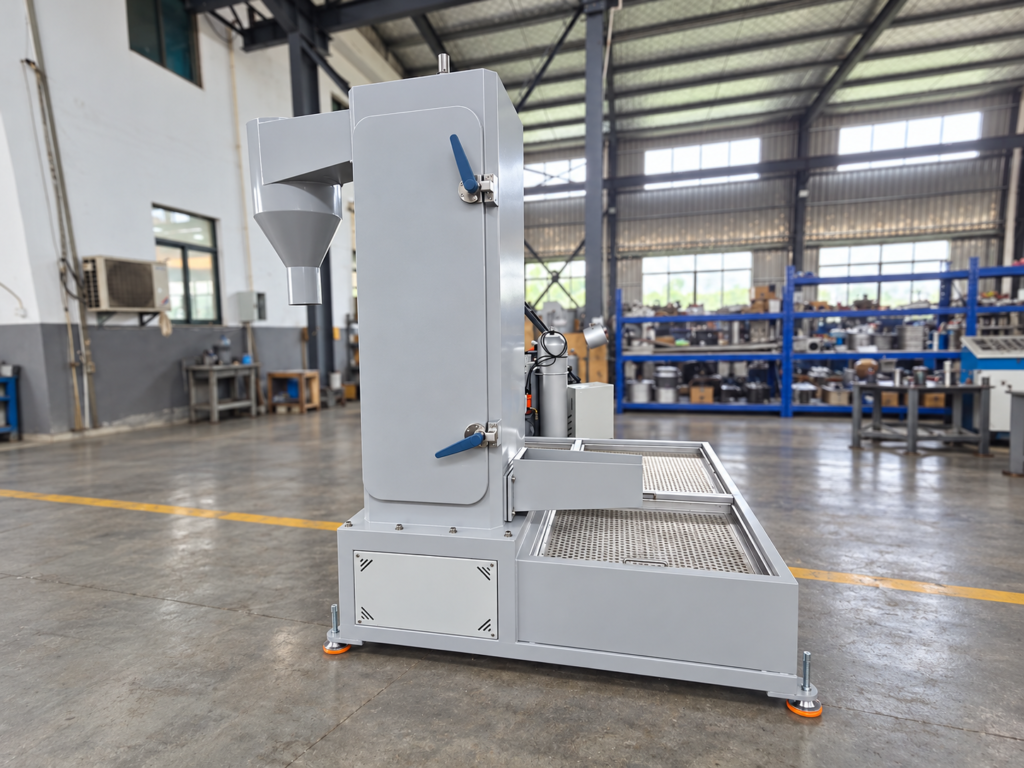
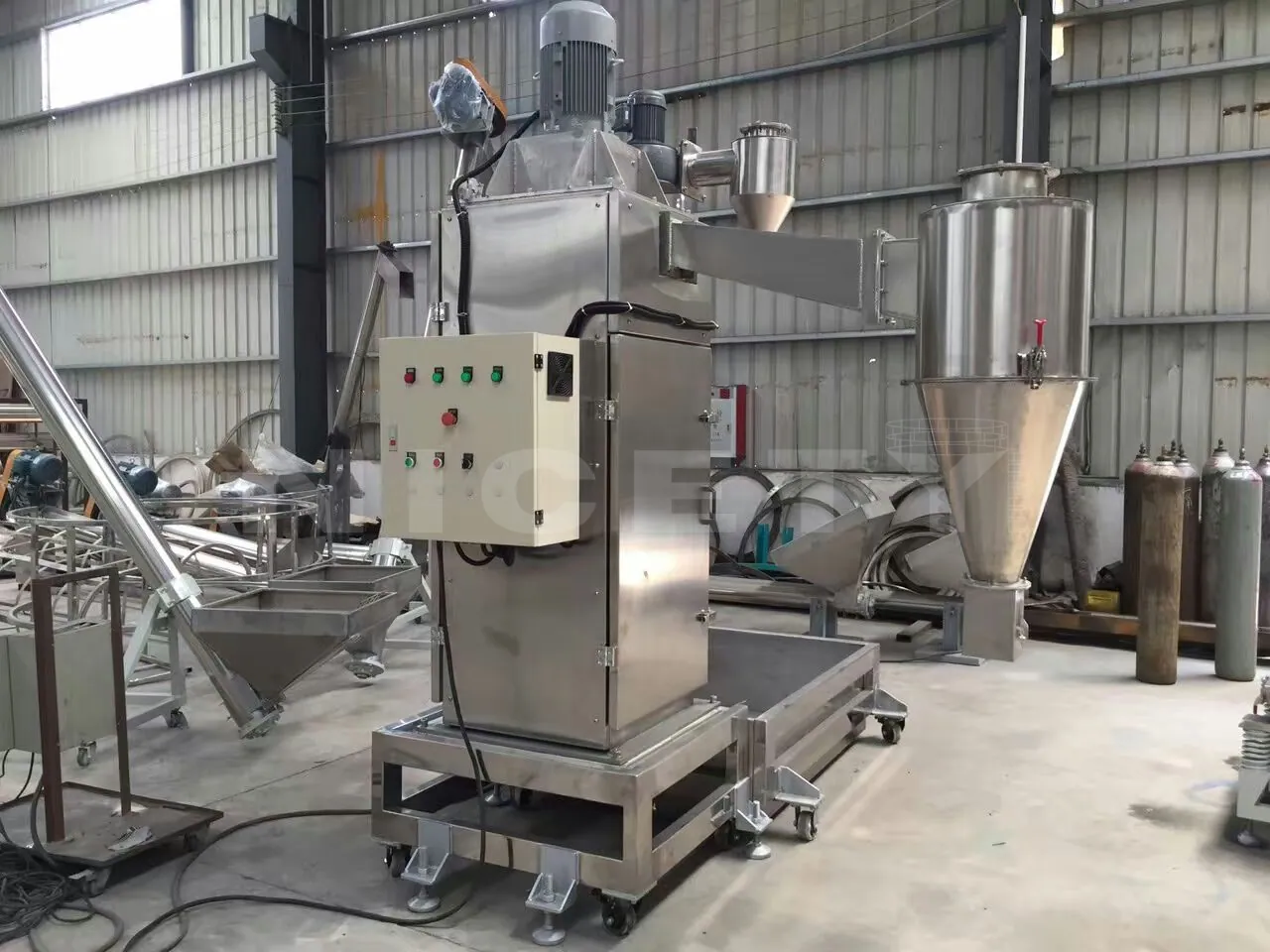
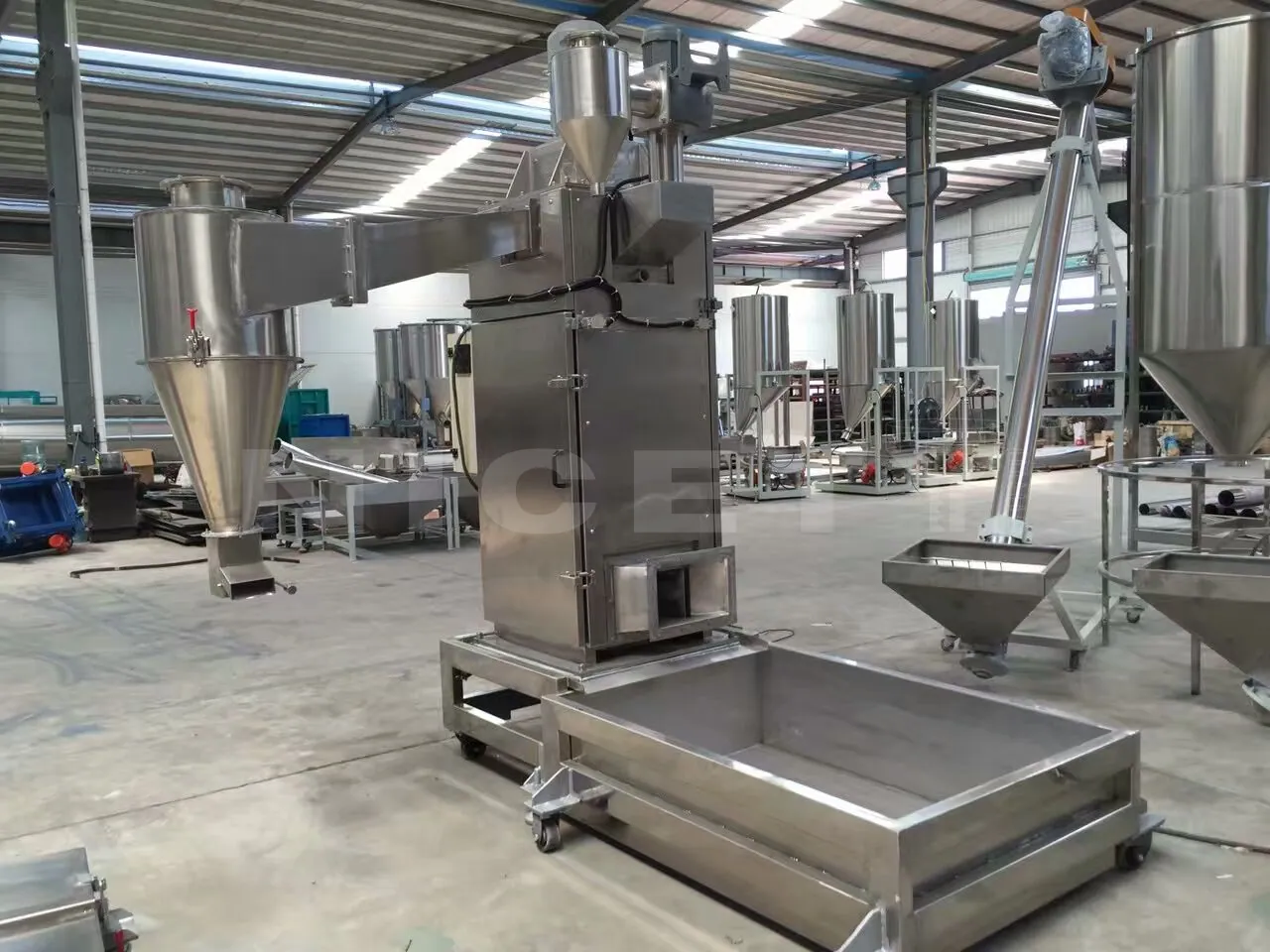
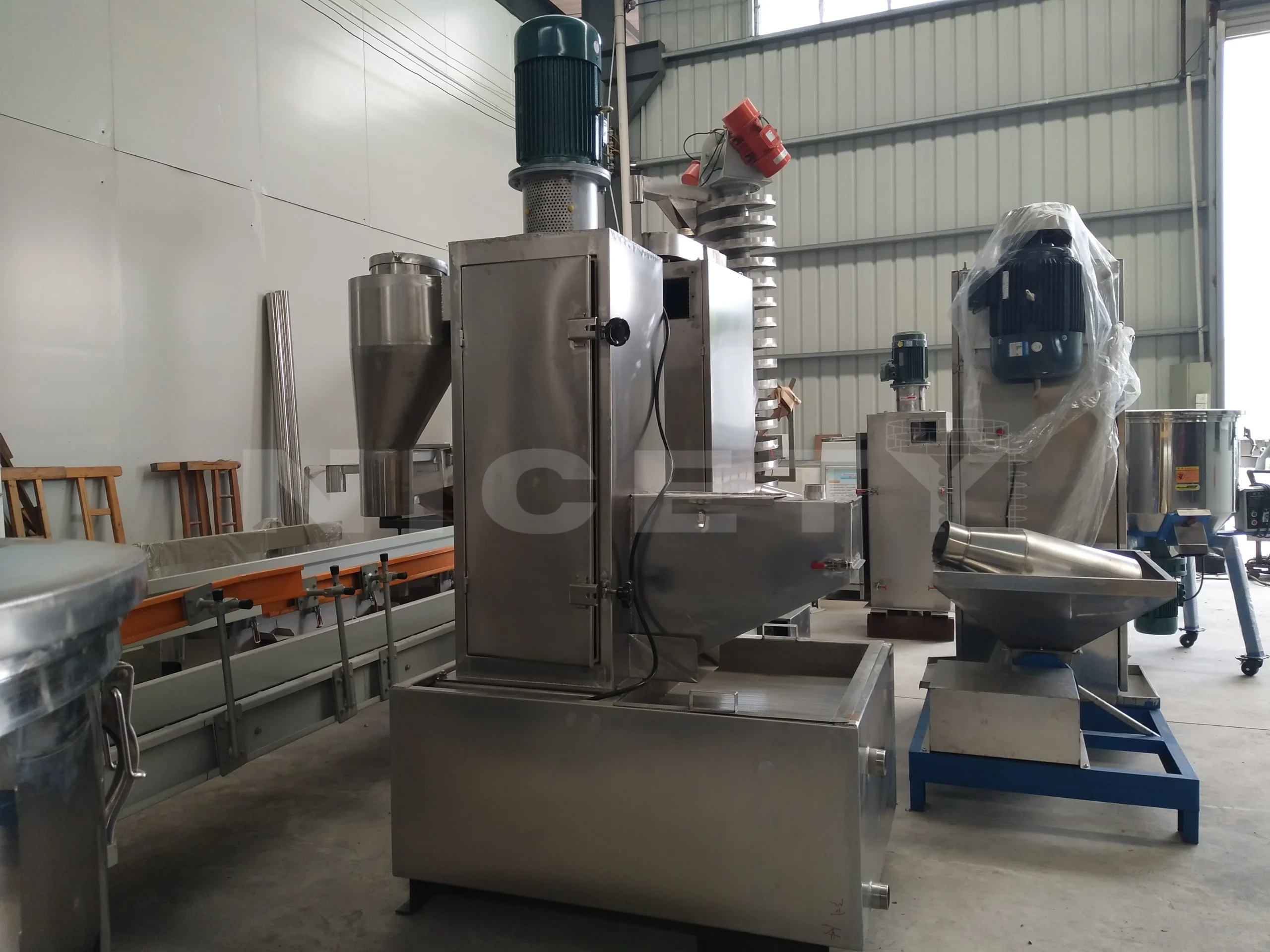
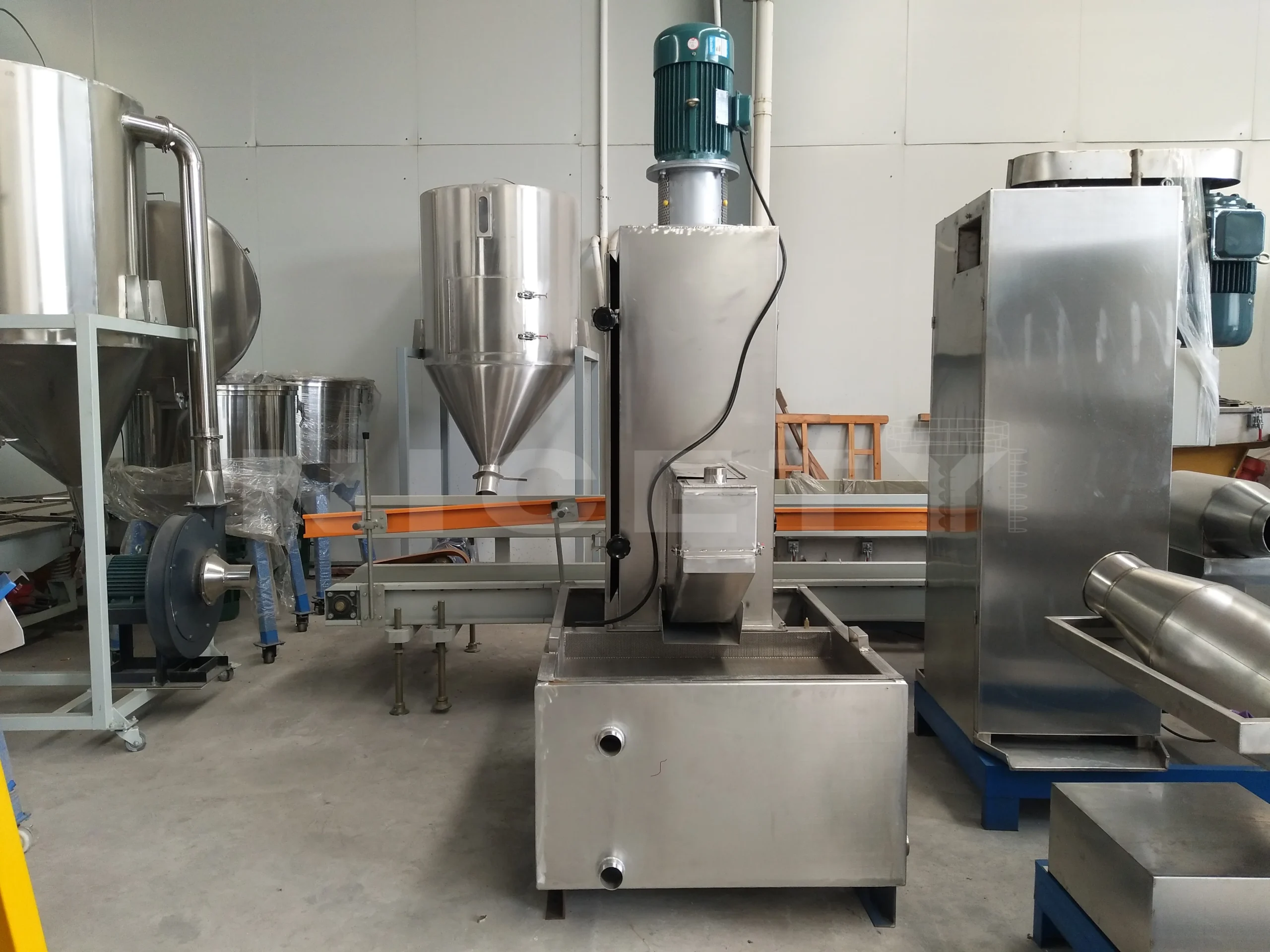
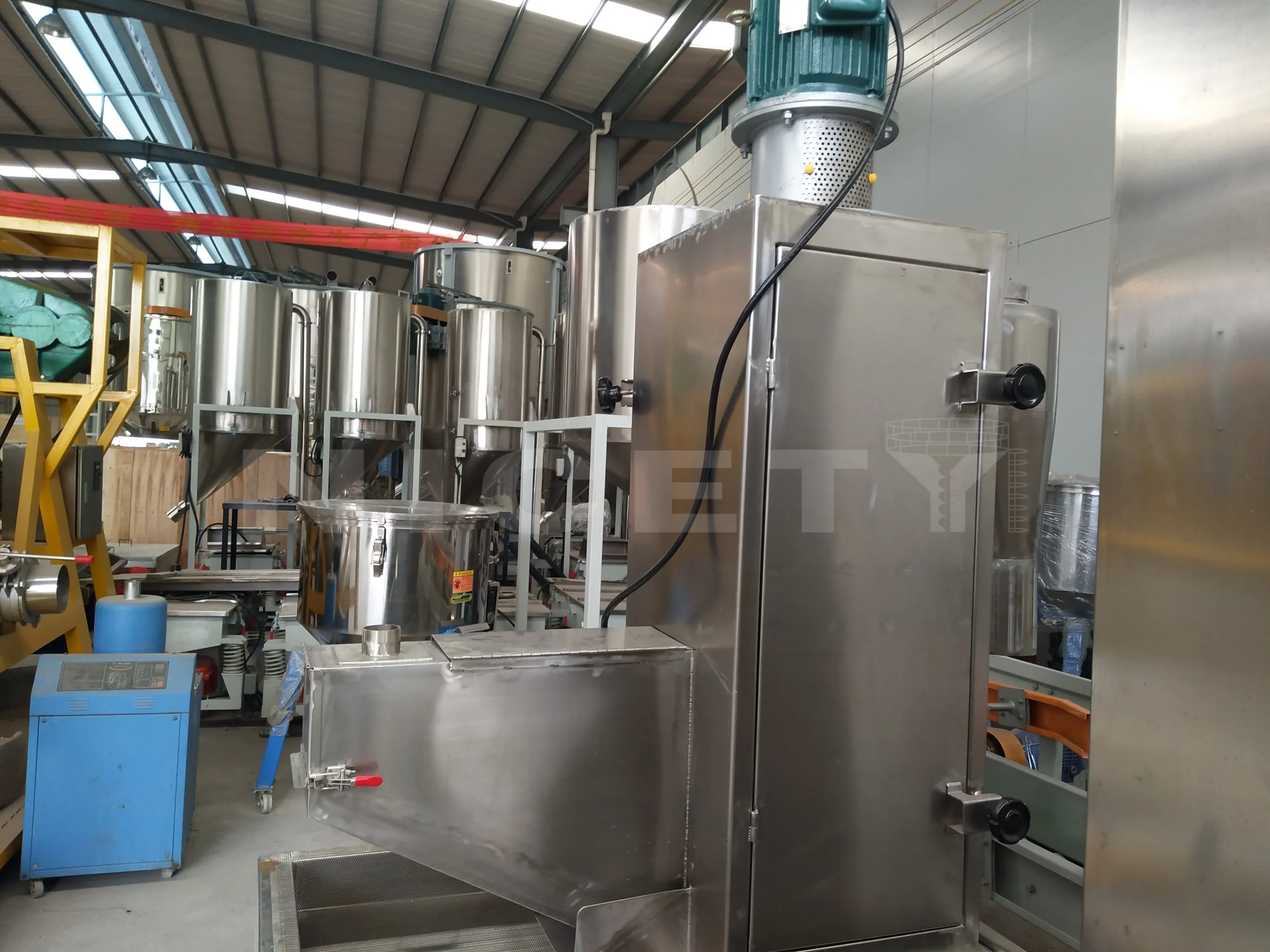
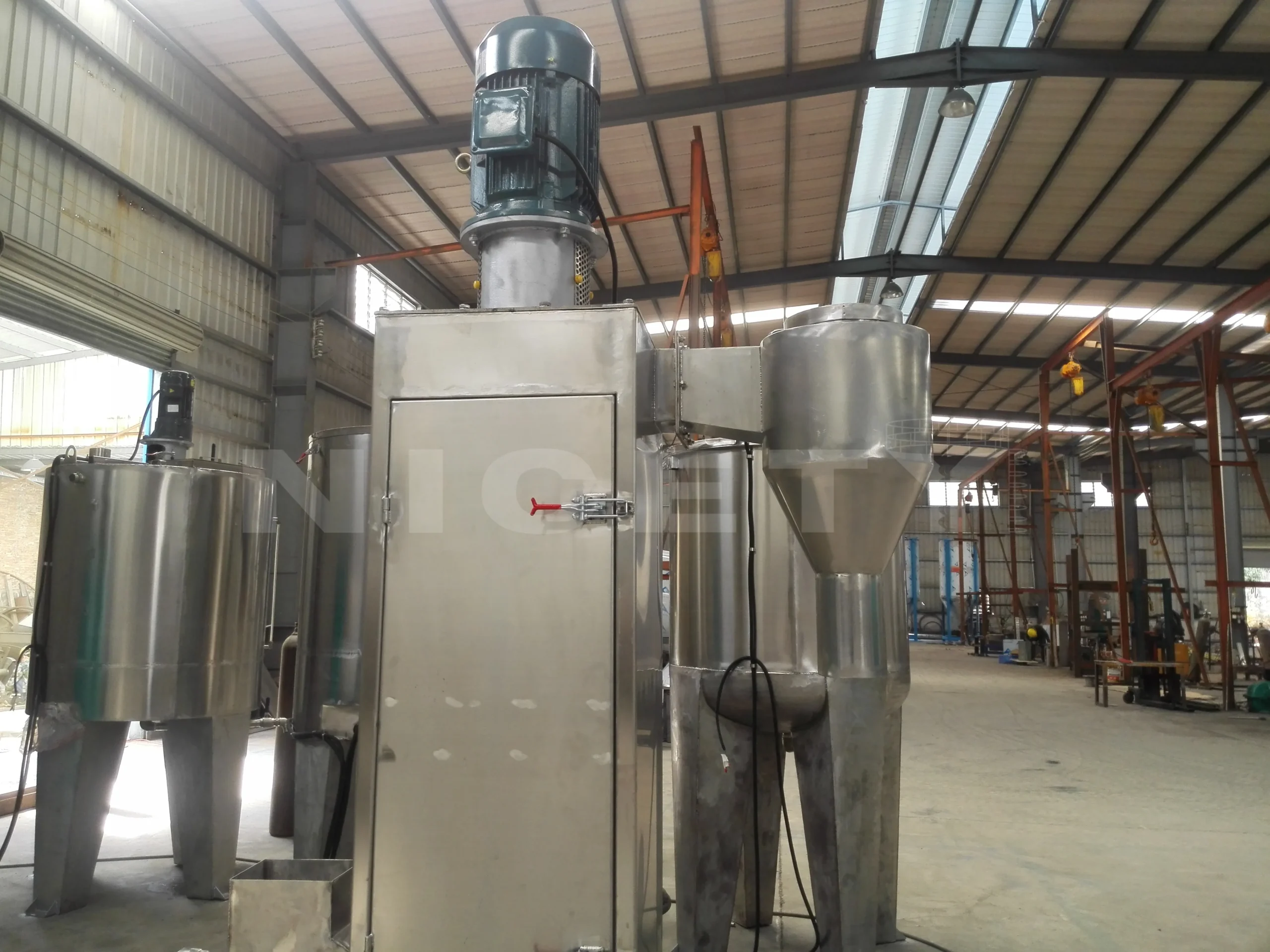
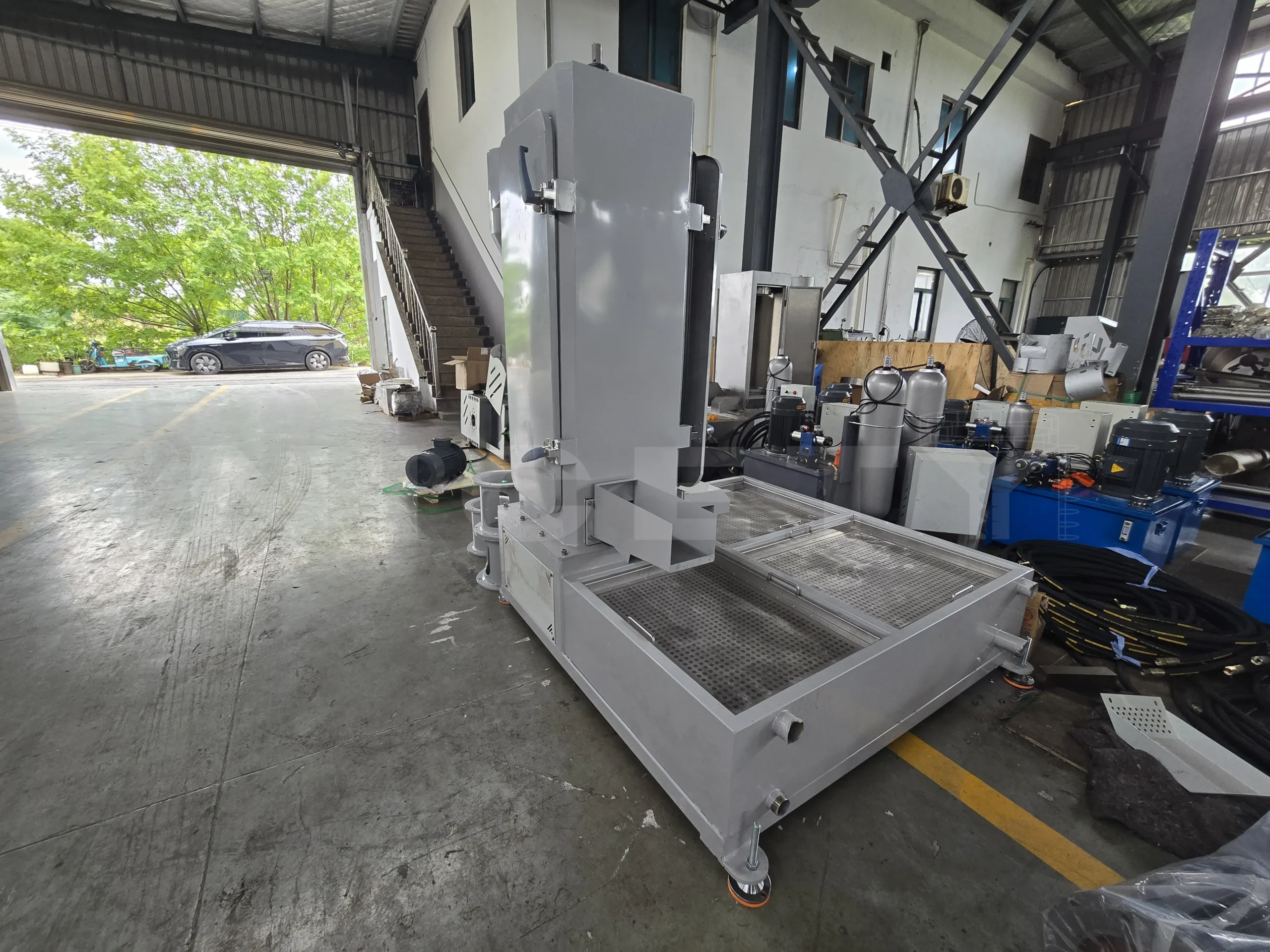
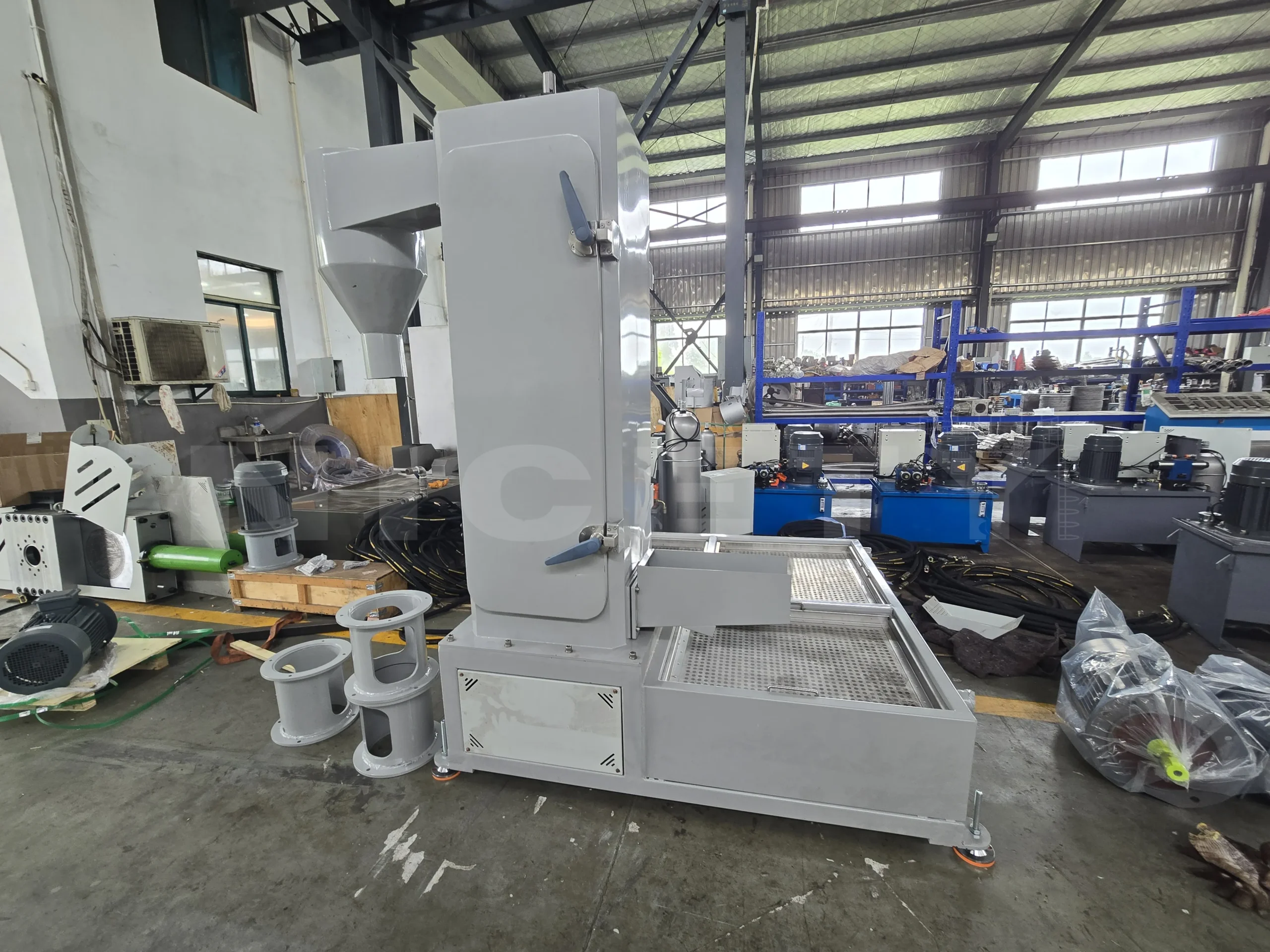
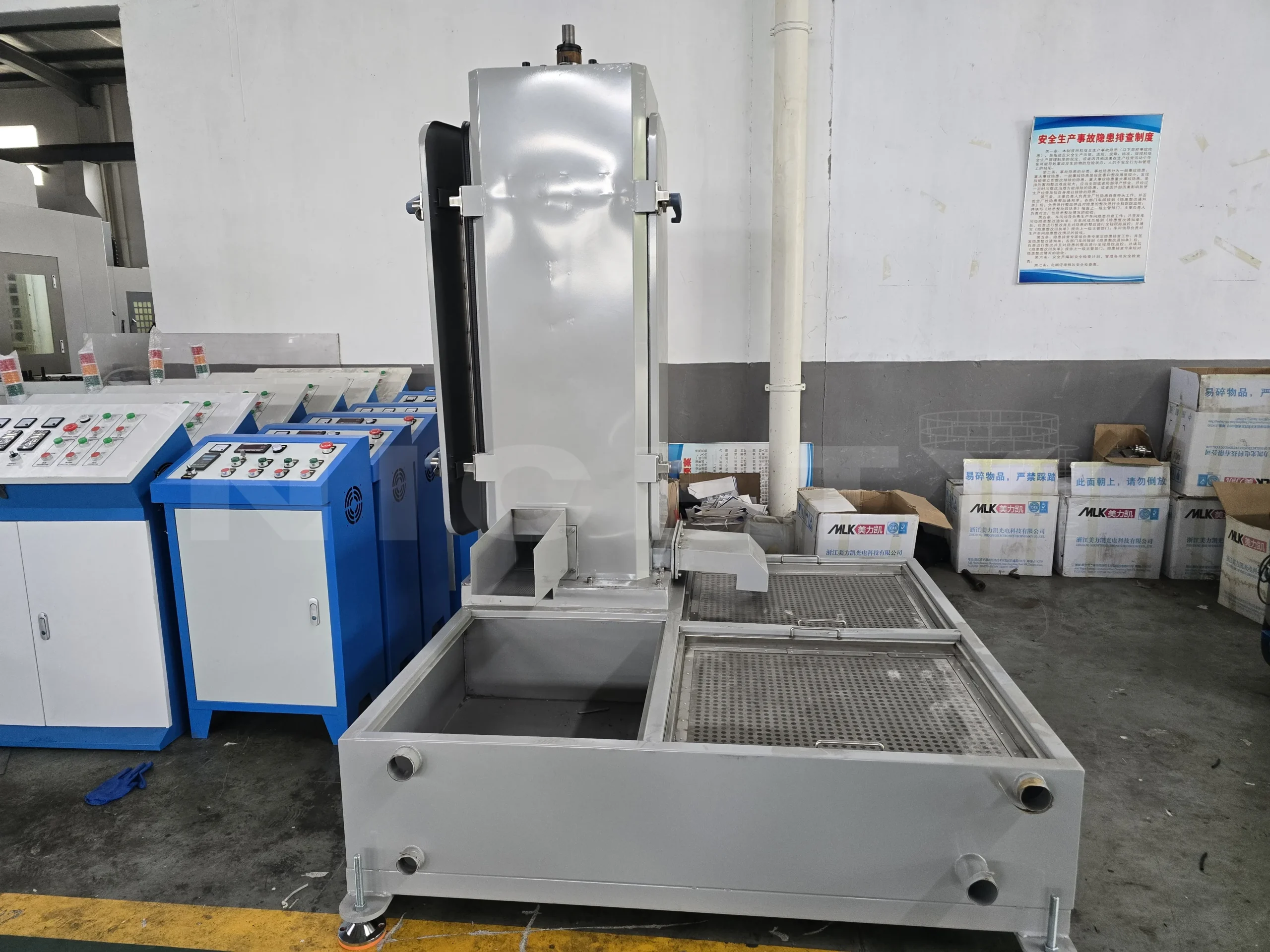
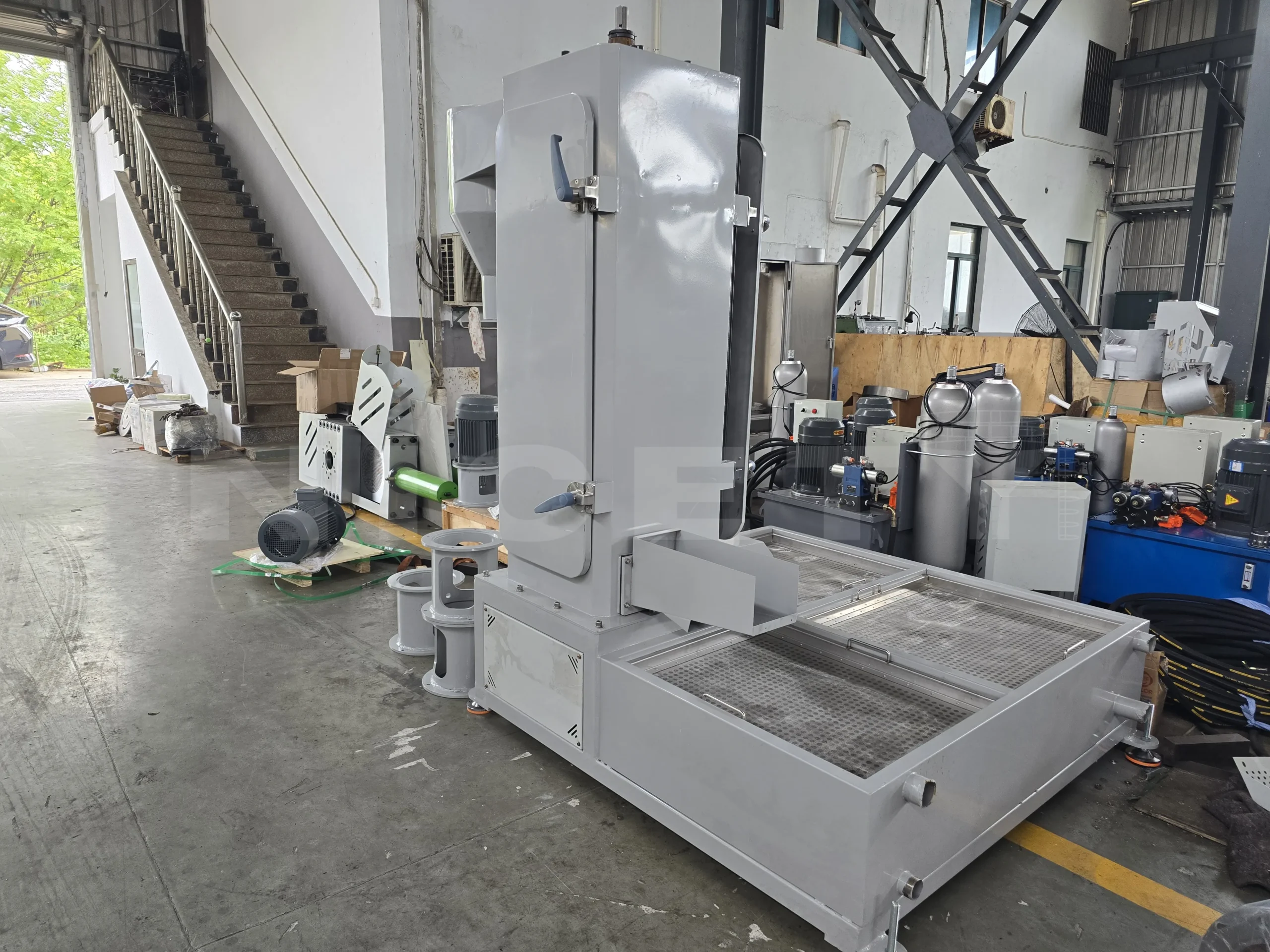
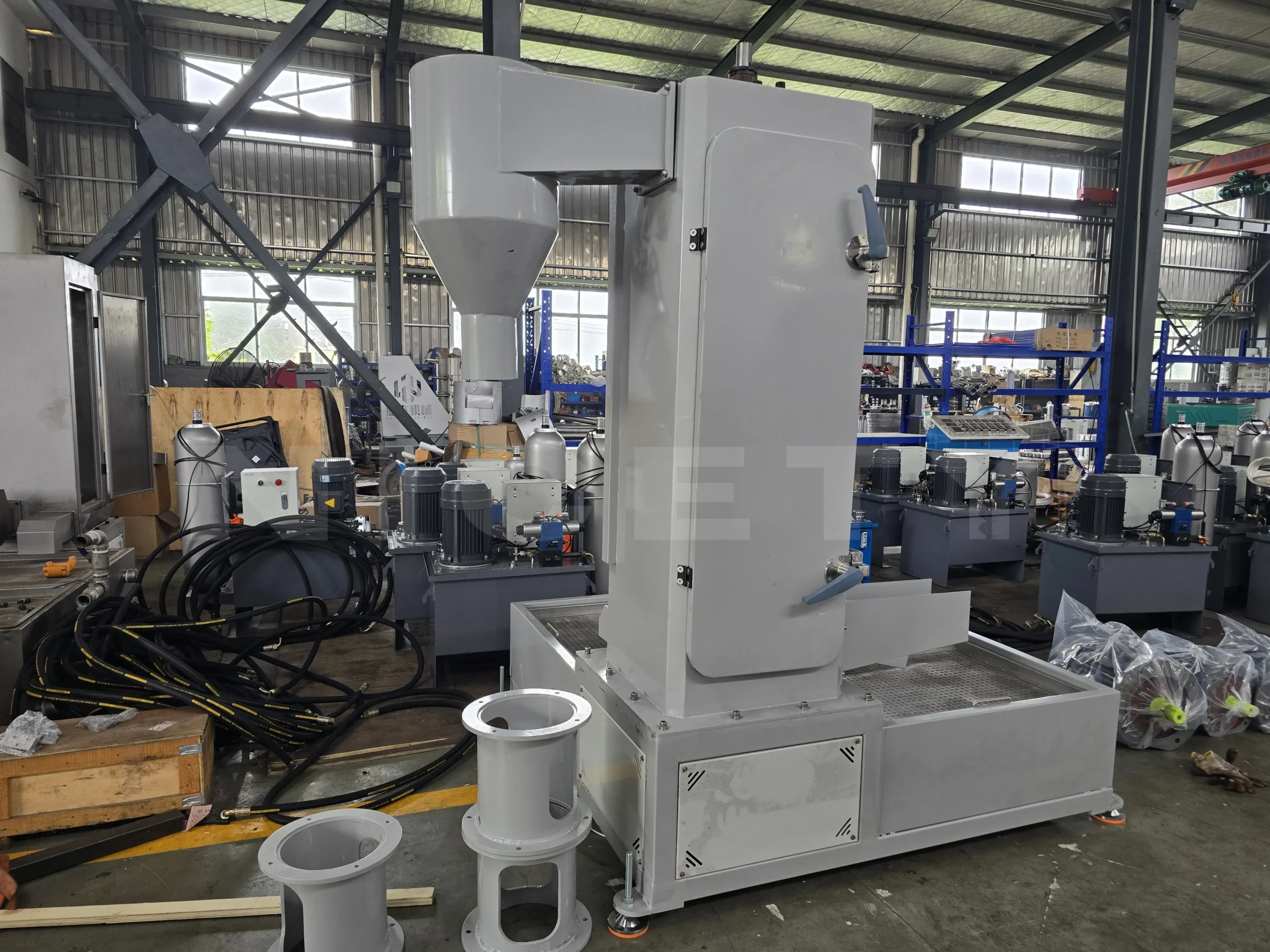
Vertical Centrifugal Dryer

High-efficiency continuous vertical centrifugal dewatering machine for rapid surface moisture separation from plastic pellets, micropellets, and washed regrind.

  • Drying, Cooling and Dewatering Equipment
  • Pelletizing Equipment and Auxiliaries
  • Dewatering and Drying
  • Extrusion and Melt Processing
  • Post-Pellet Treatment
  • ABS
  • HDPE
  • LDPE
  • PA66
  • PE(Polyethylene)
  • PET
  • PP(Polypropylene)
  • Recycled plastics
  • Resin
  • Pellets
  • Regrind
  • High surface moisture on the material
  • Insufficient cooling
  • Line output limited by auxiliaries
Capacity range
300–1000 kg/h
Models
NC-LT350 · NC-LT380 · NC-LT420 · NC-LT460
Rated power
7.5–15 kW
Basis for the capacity figures
Regrind & Flakes

Reference values for the model or models named above. The confirmed configuration, the capacity basis and the scope of supply are stated in the quotation and the drawings.

Overview

What this machine does

Separates water continuously from plastic pellets, micropellets, and washed flakes via high-speed vertical centrifugal action, reducing surface moisture to ≤ 0.05%–0.1%.

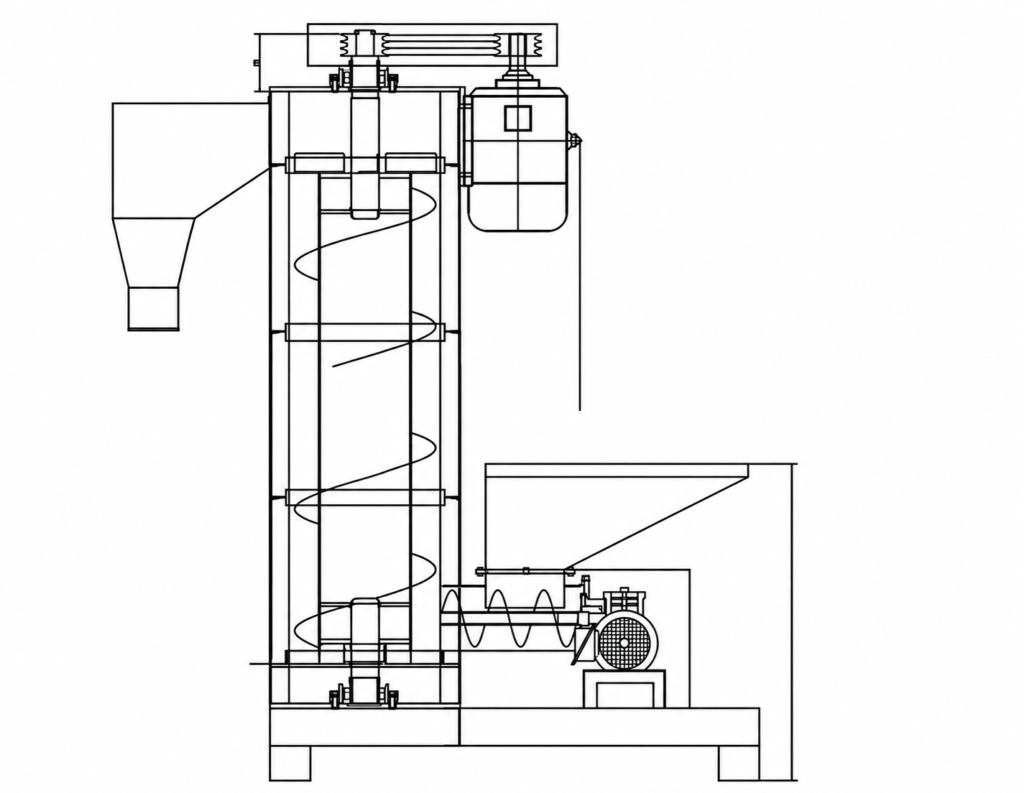
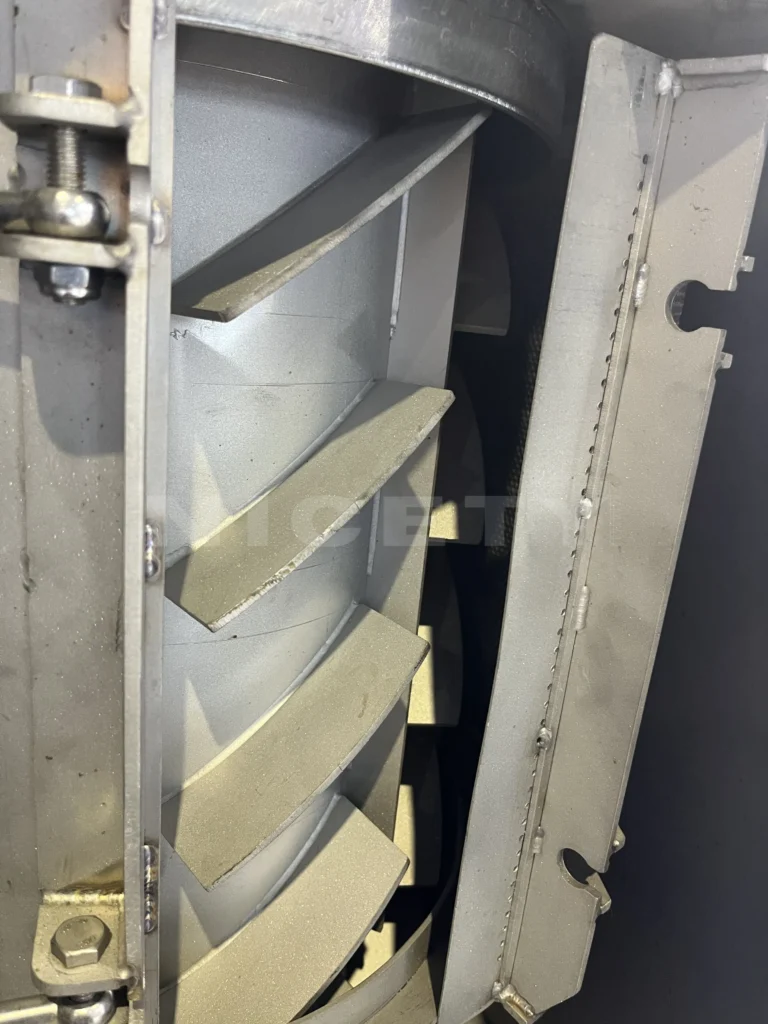
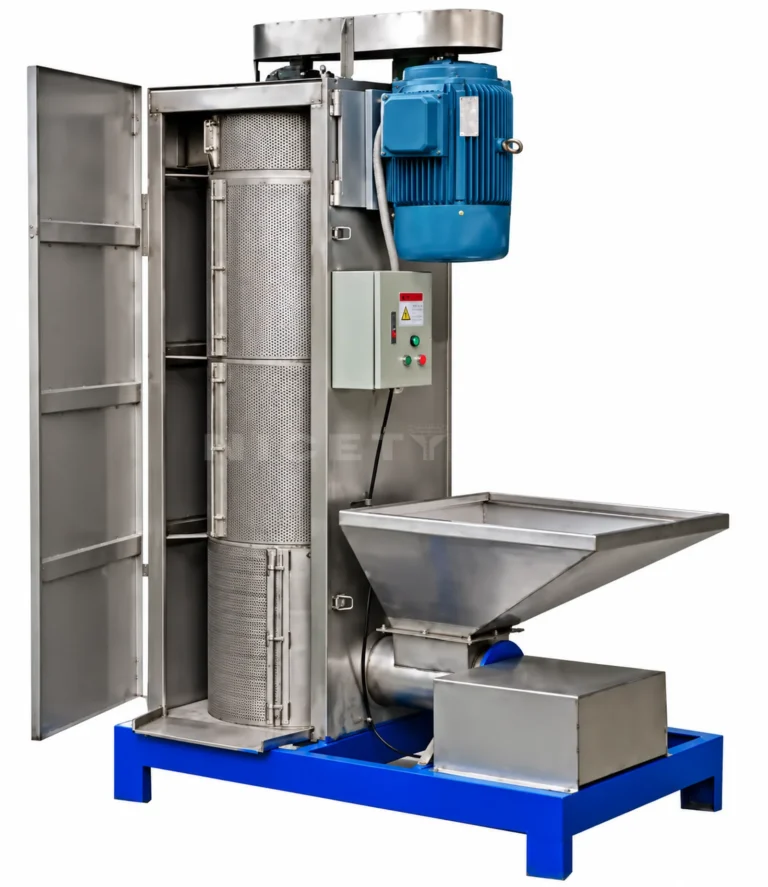
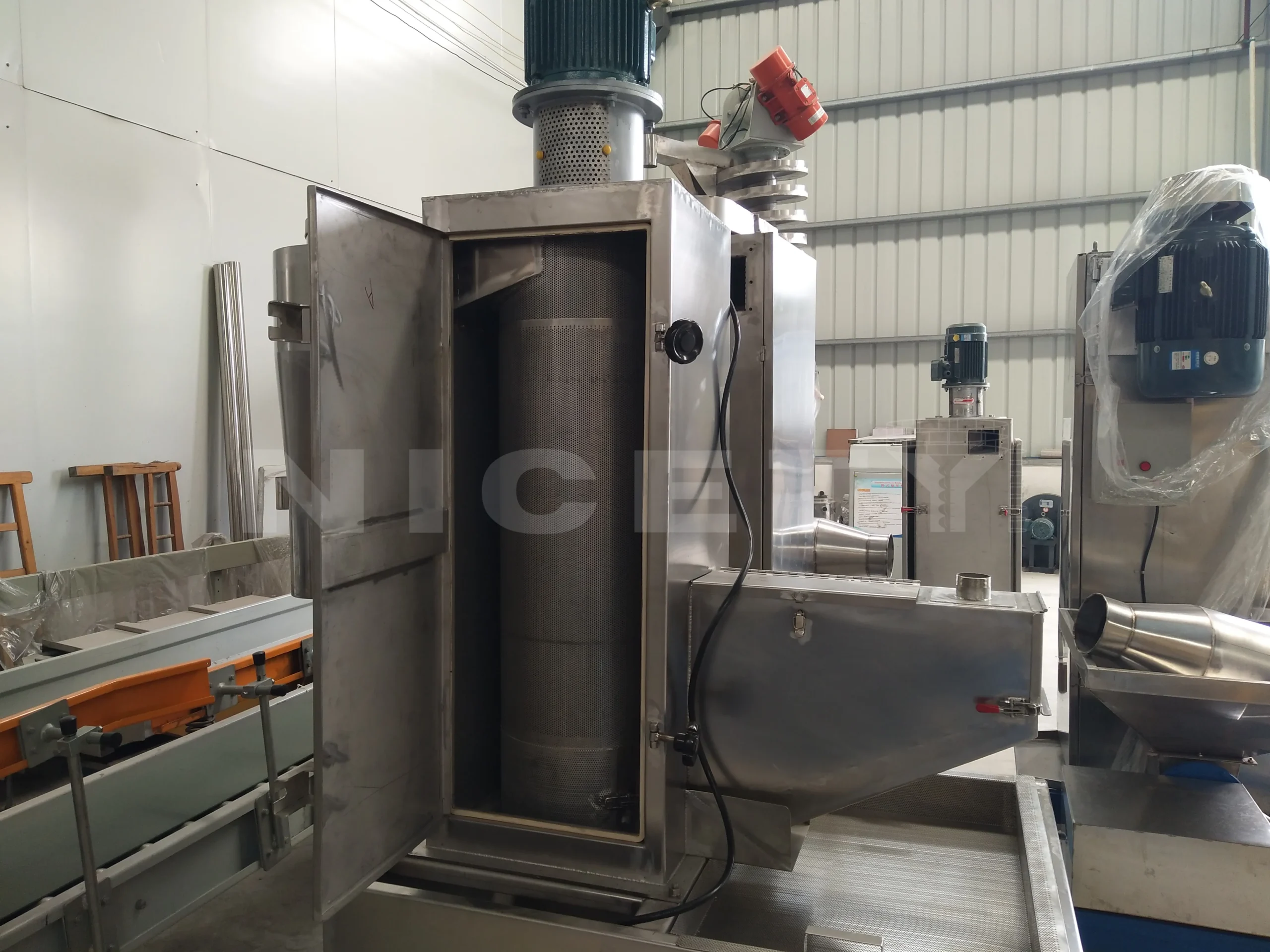
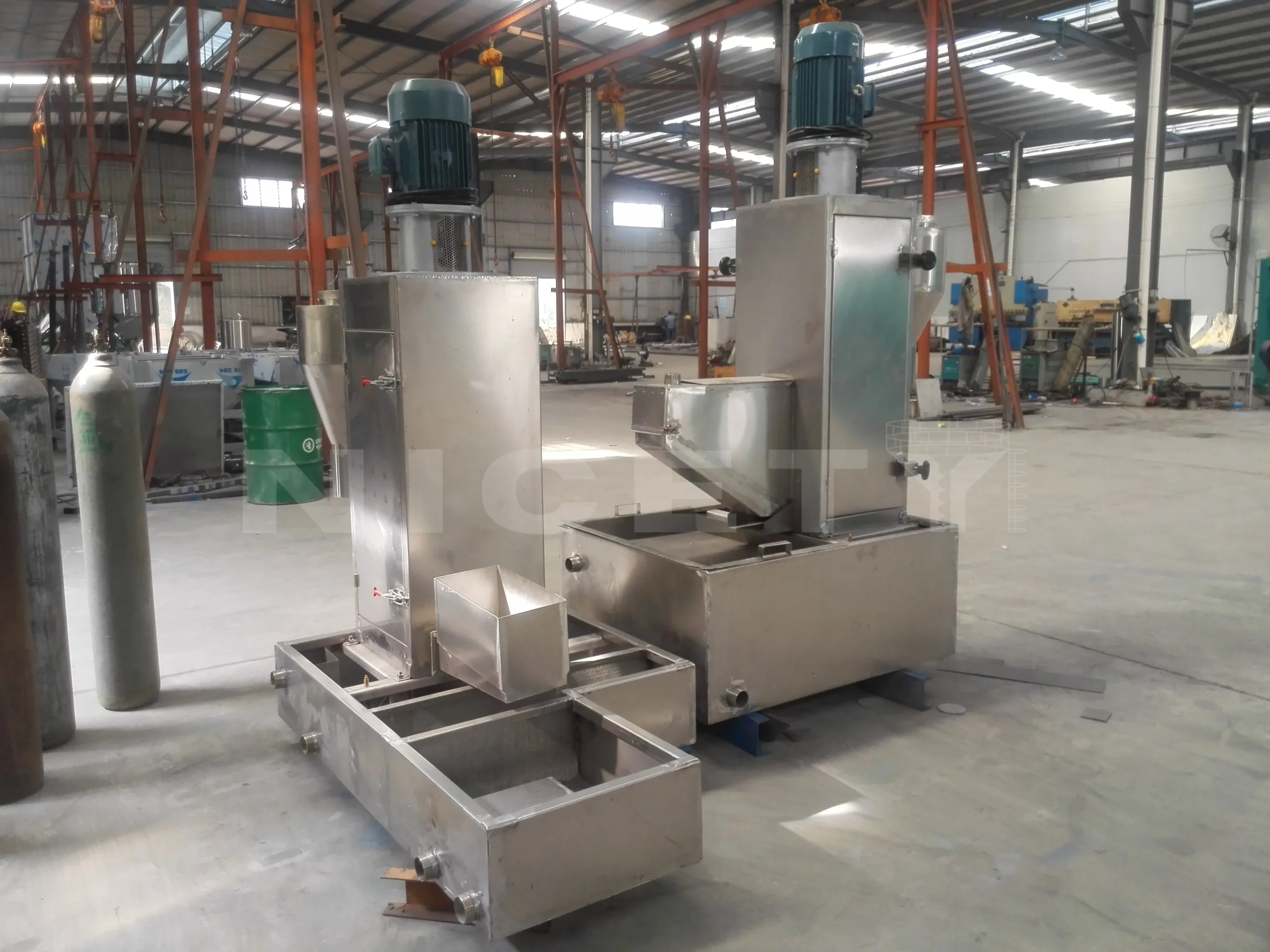
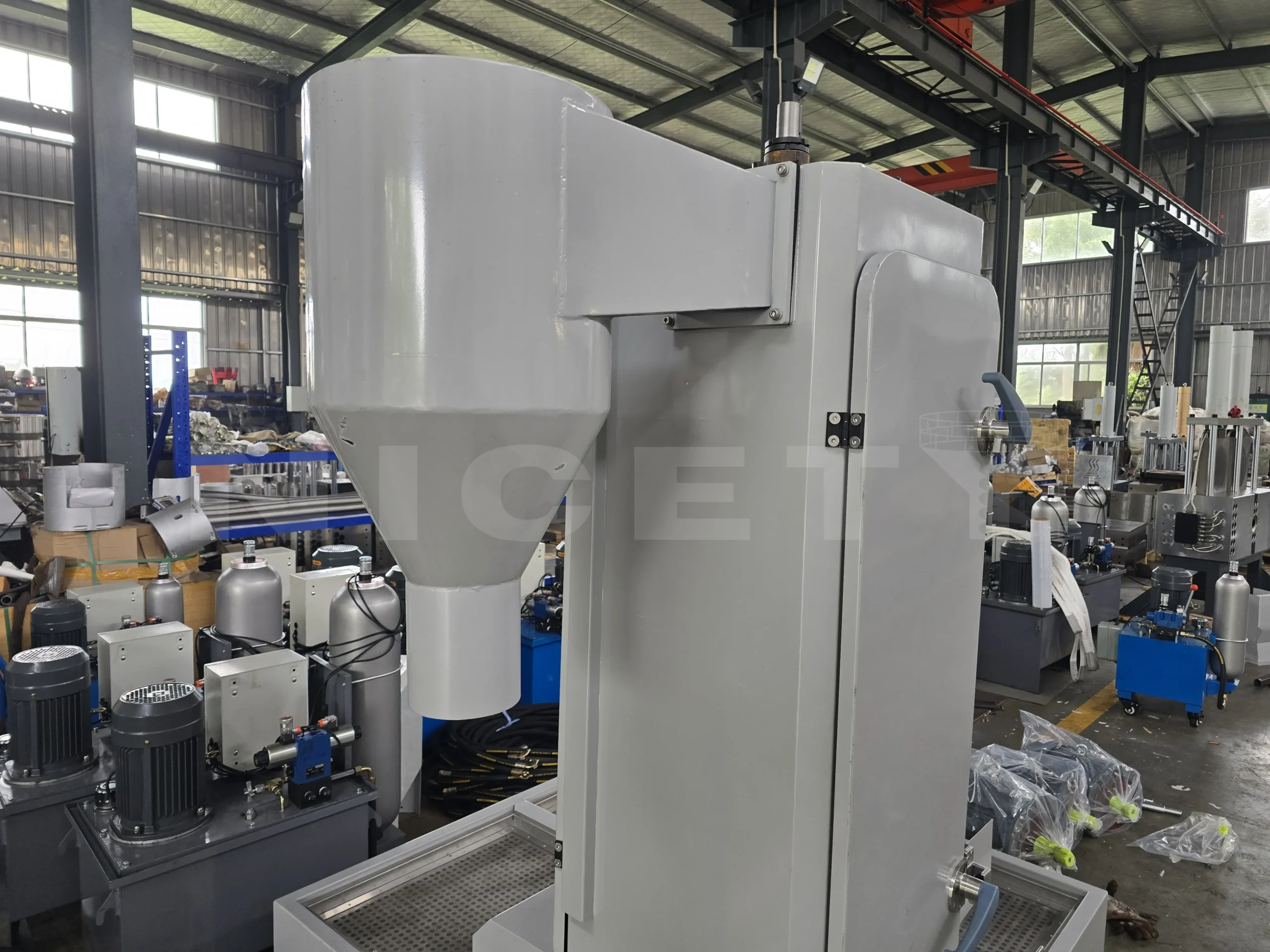
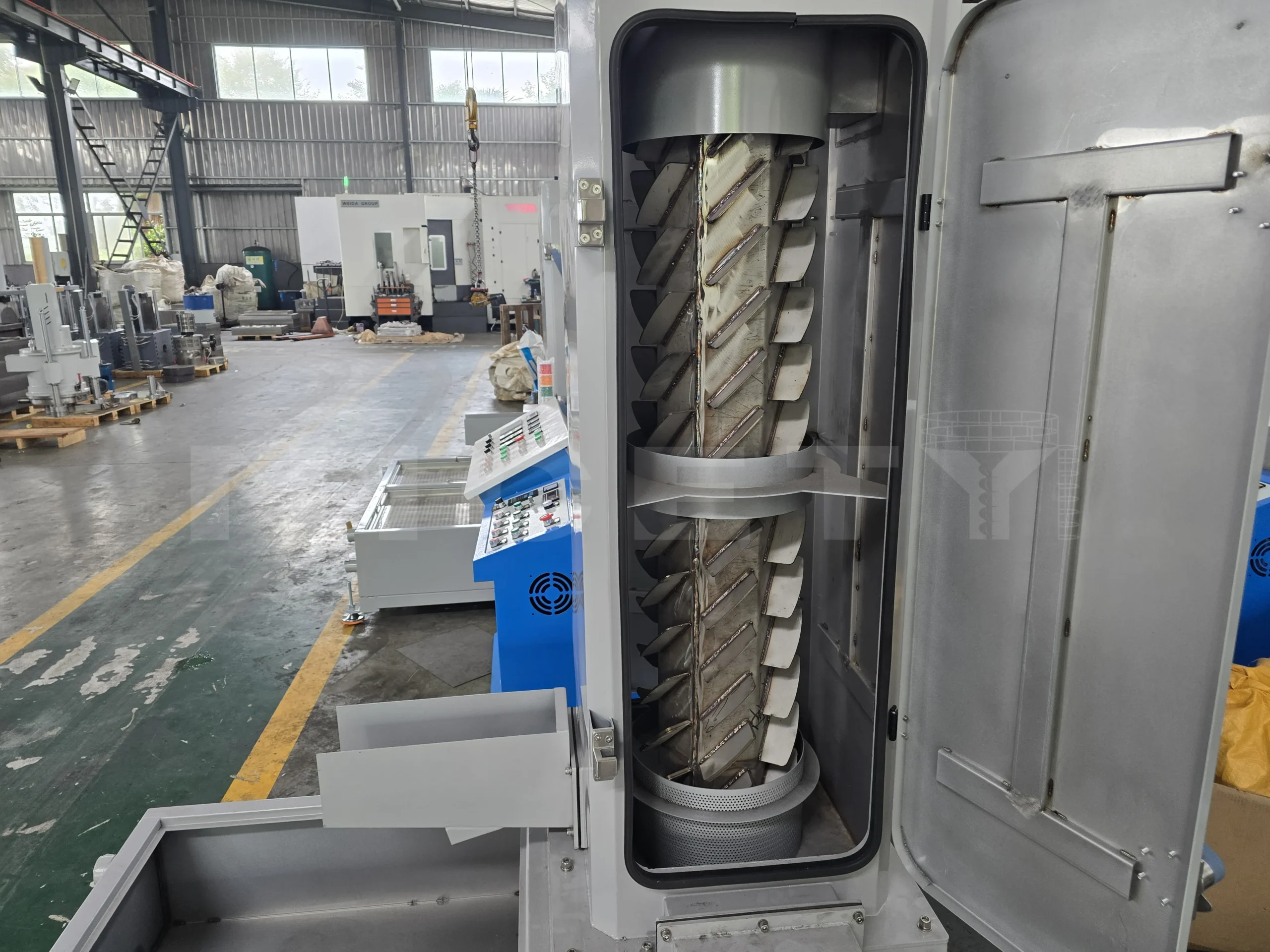
The Vertical Centrifugal Dryer (centrifugal dewatering machine / spin dryer) delivers continuous, high-efficiency mechanical dewatering for polymer pellets, micropellets, and washed plastic flakes directly downstream of water-cooling pelletizing systems or recycling wash lines. Operating on centrifugal acceleration generated by a high-speed rotating rotor equipped with multi-tiered angled lifter paddles, the slurry enters the bottom chamber where solid particles are driven upward along a precision cylindrical screen basket while water is forcibly separated through screen perforations.

Unlike thermal drying hoppers that consume substantial electrical heat and require prolonged residence times, the vertical centrifugal dryer utilizes pure kinetic energy to strip surface moisture down to ≤ 0.05%–0.1% on standard virgin/compound pellets in a continuous single-pass process lasting only seconds. The counter-current upward flow combined with top-mounted vapor exhaust fans prevents condensation back-dripping, delivering surface-dry pellets ready for immediate classification, storage, or direct packaging.

Key features

The parts that do the work

Each picture names one part of the machine and what it does for the material and the batch.

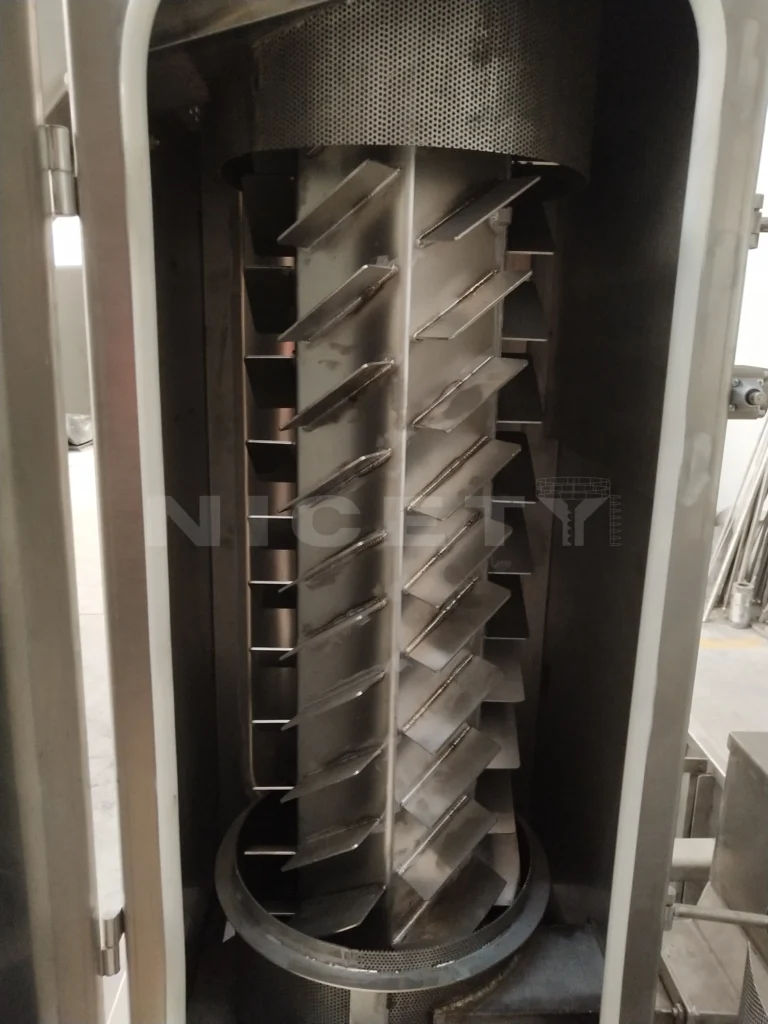
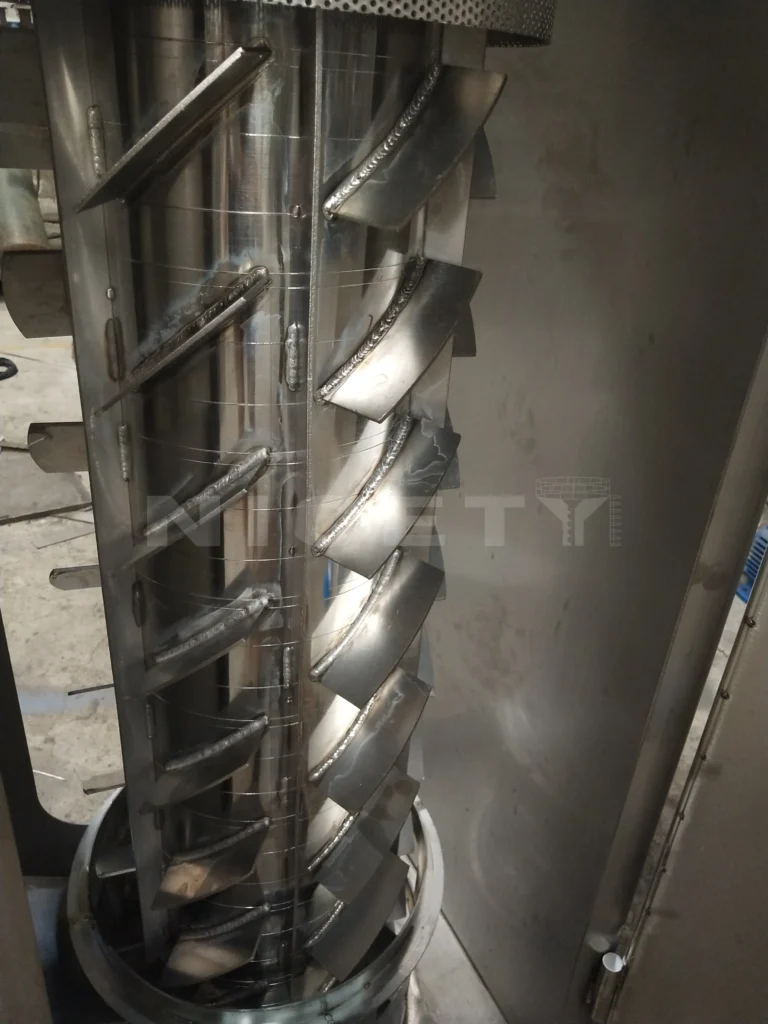
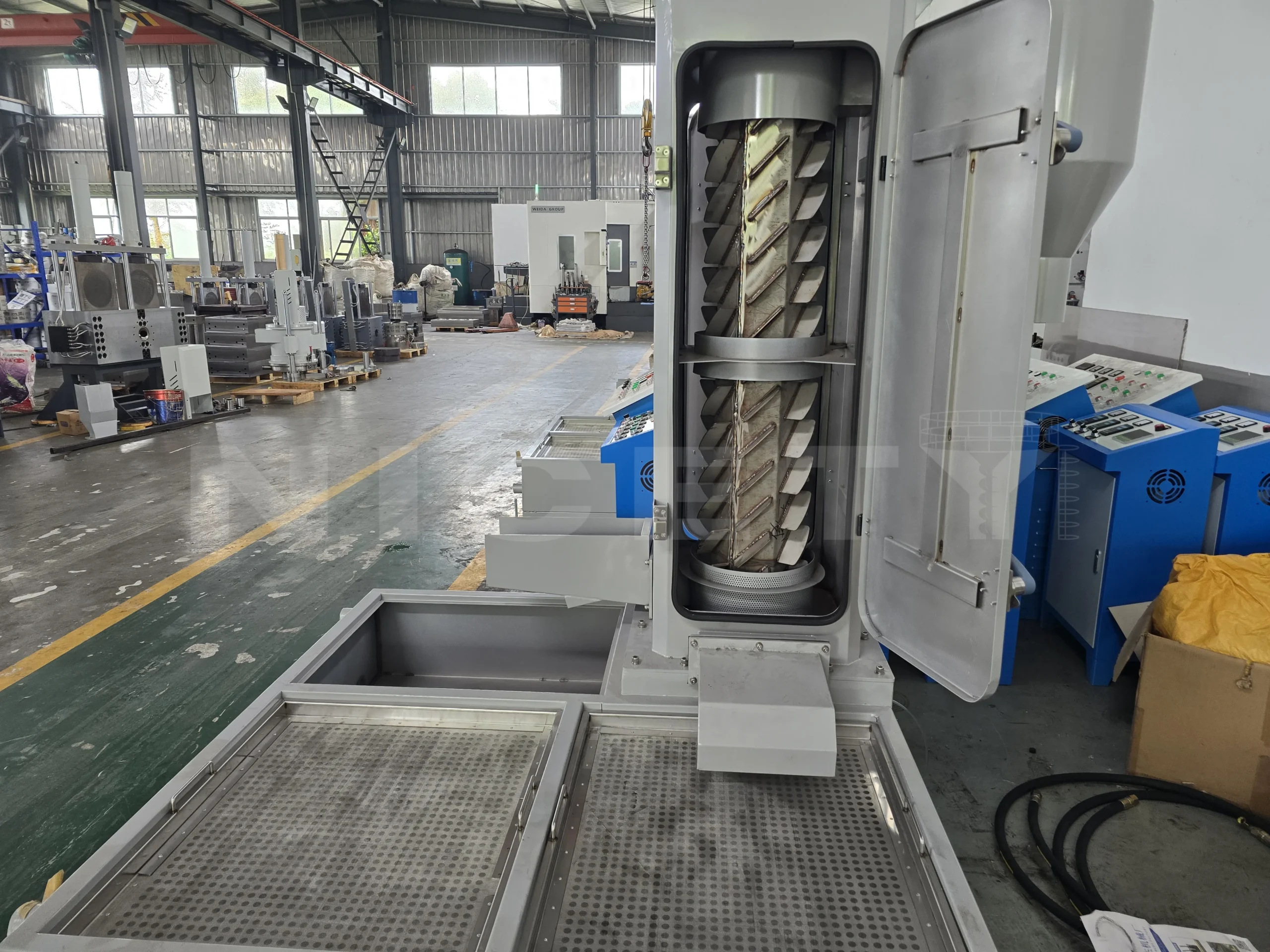
Dynamically Balanced Multi-Stage Rotor Assembly

Dynamically balanced high-speed multi-stage rotor fitted with precision-angled lifting blades. Gently lifts pellets axially upward while applying high centrifugal force, separating water cleanly without fracturing brittle pellets or creating excess fines.
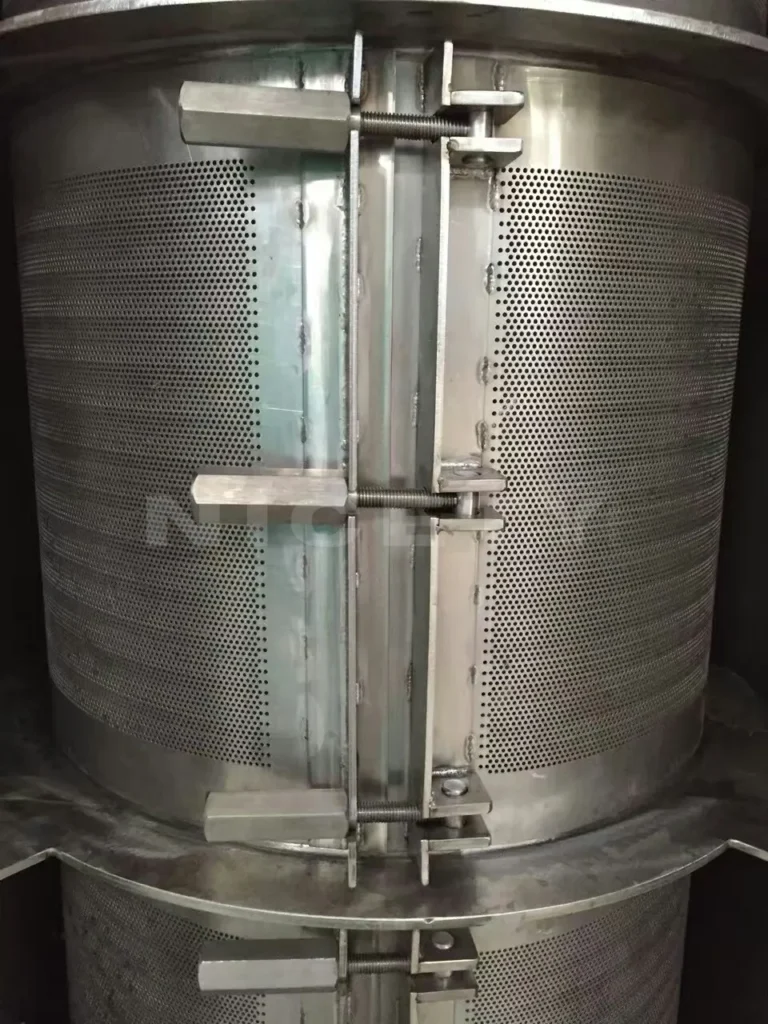
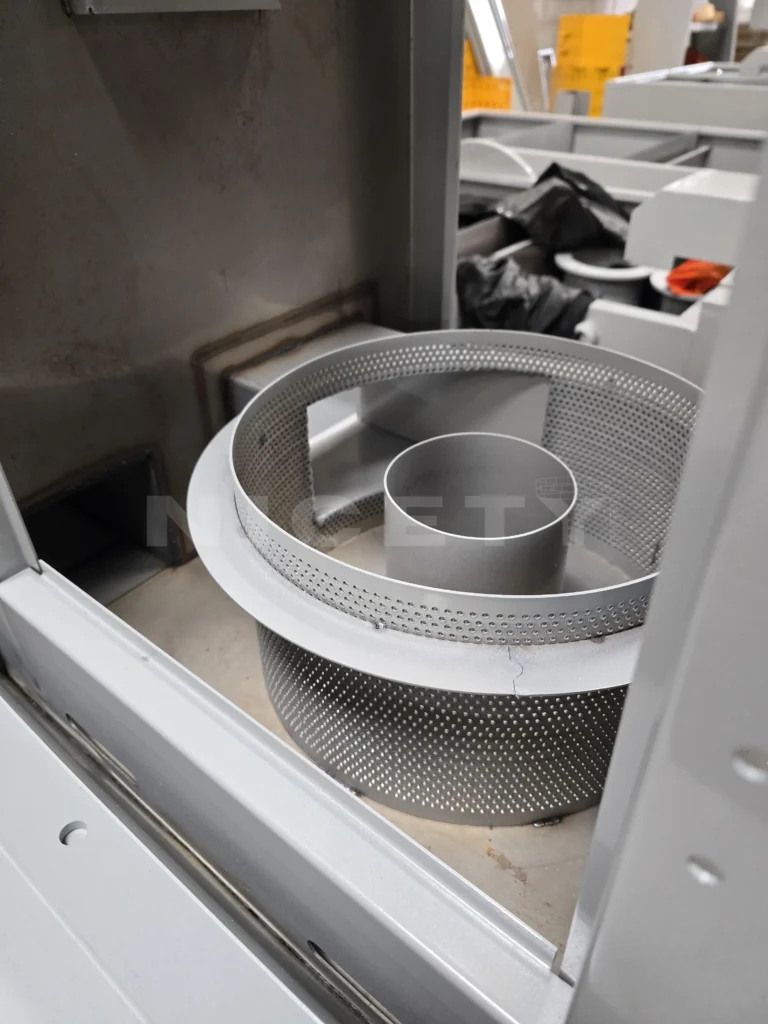
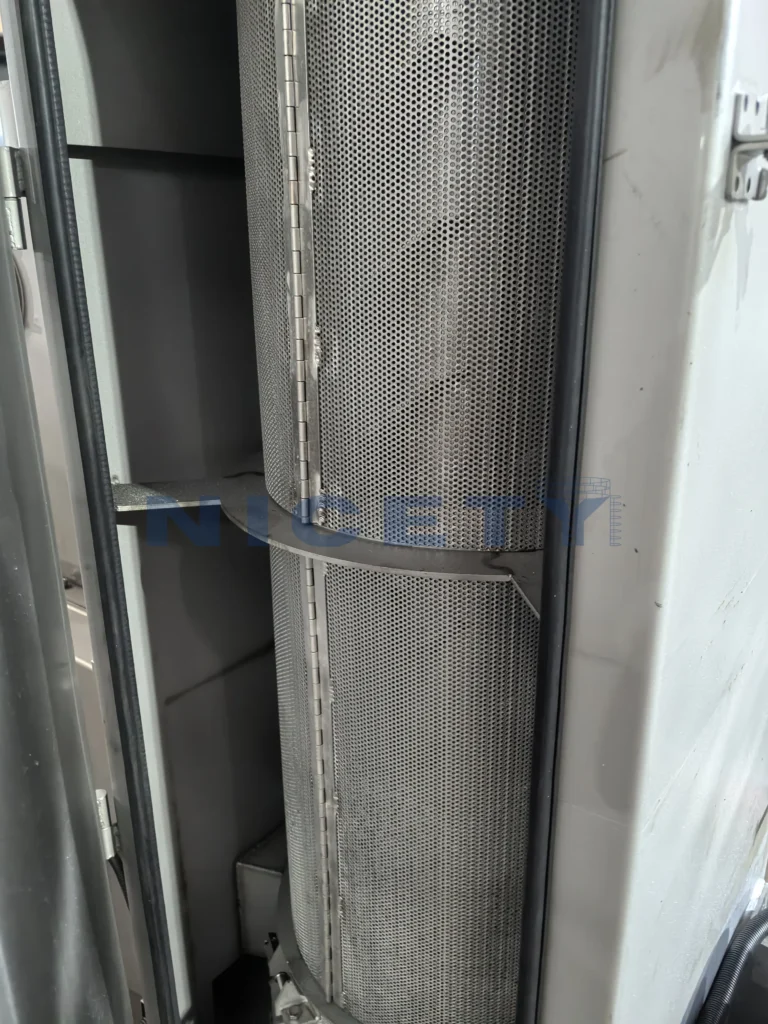
Quick-Change Segmented Screen Basket

Segmented cylindrical screen basket fabricated from heavy-gauge stainless steel with smooth, non-blinding perforations. Quick-release hinged or clamp design allows complete screen removal and replacement in under 15 minutes.

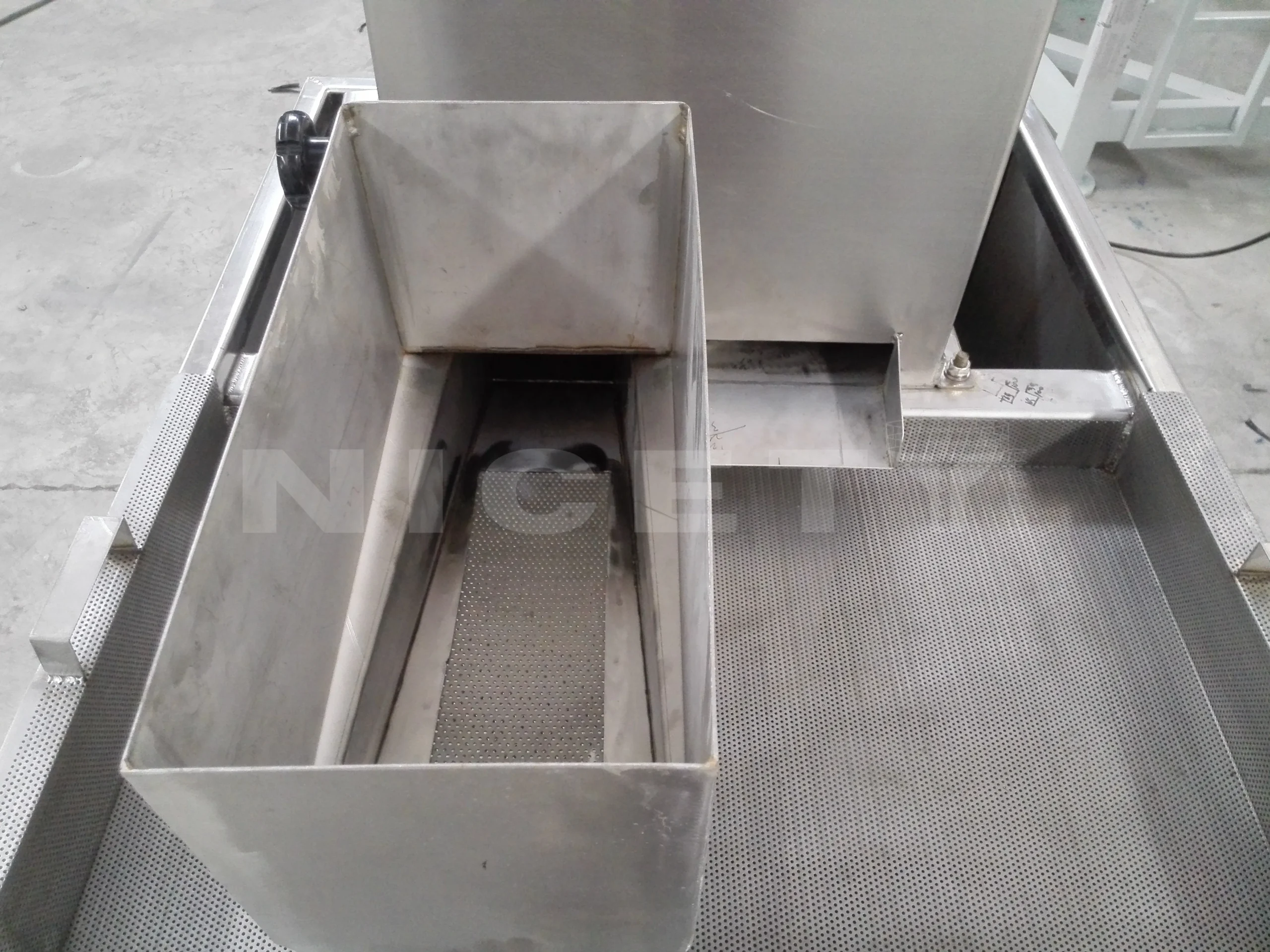
High-Volume Gravity Water Drainage Sump

Direct bottom tangential water flume and slurry inlet designed for smooth, low-turbulence entry. Rapidly drains separated process water through an oversized bottom drain outlet to prevent internal flooding and backpressure.

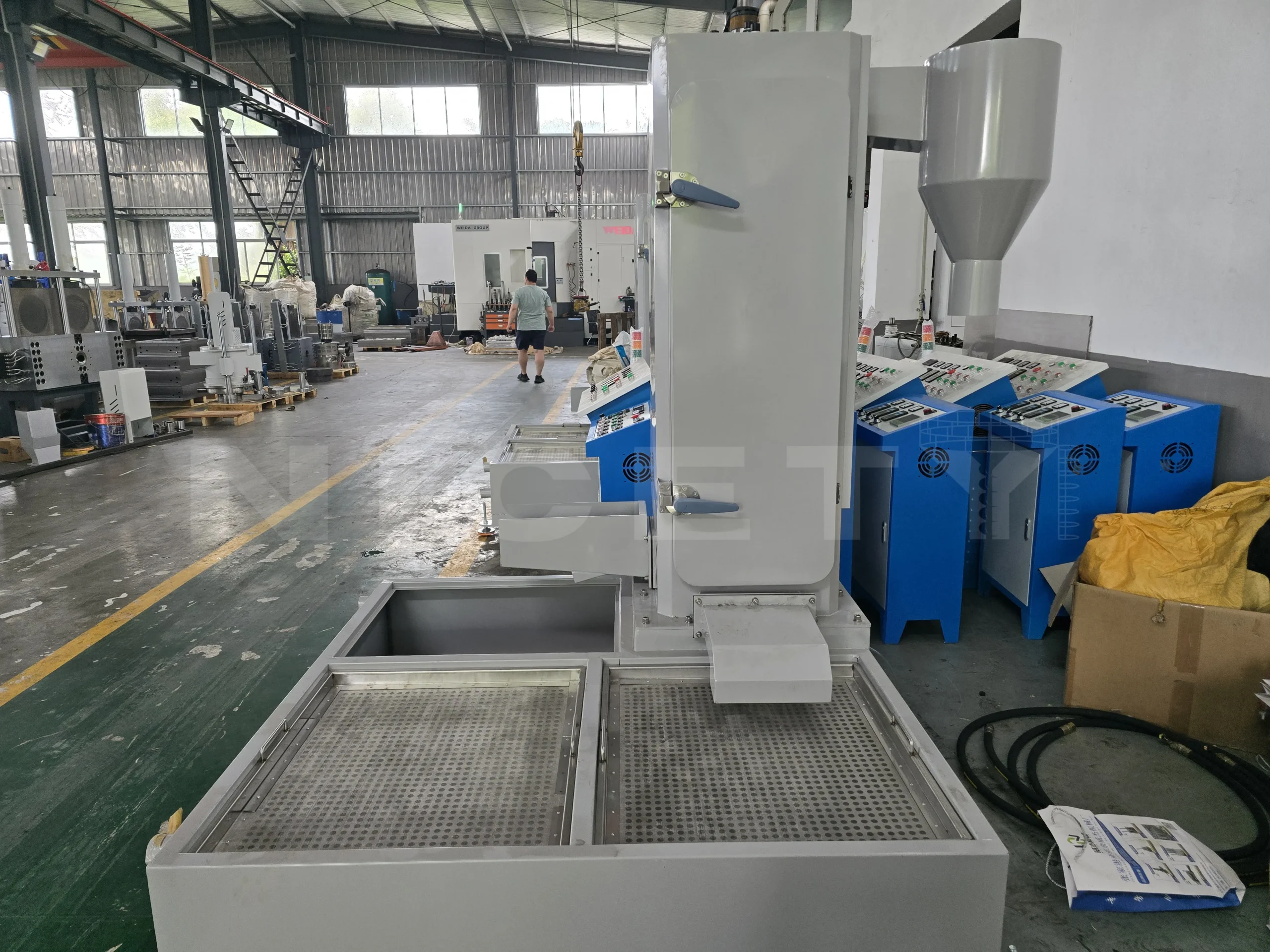
Full-Length Quick-Access Inspection Doors

Full-height split access doors equipped with quick-action clamping latches and safety interlock limit switches. Provides instant 360° access for thorough washdown, screen inspection, and color changeover cleaning.

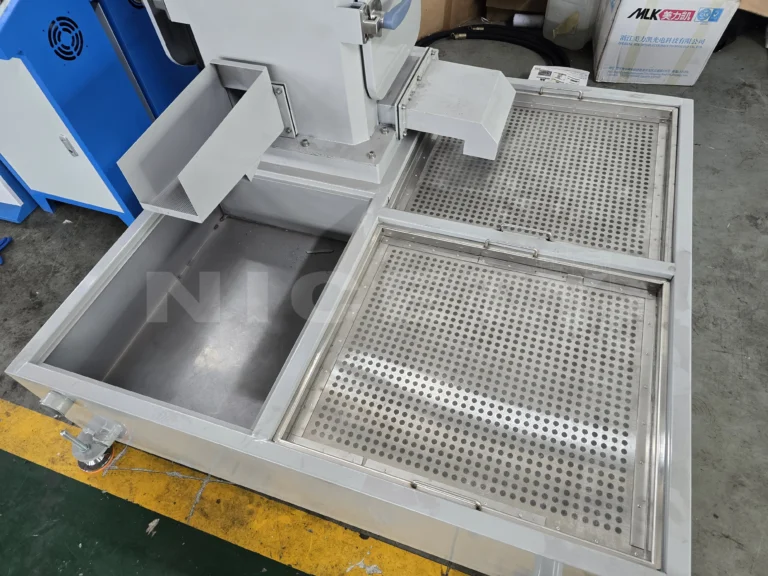
Tempered Process Water Circulation Tank

Heavy-duty stainless-steel tempered water reservoir engineered to continuously quench, cool, and slurry-convey freshly cut polymer pellets from the die face directly into the dewatering chamber. Maintains stable process water temperatures and surge-free closed-loop circulation for 24/7 continuous pelletizing lines.

Horizontal Infeed Screw Auger for Wash Lines

Dedicated horizontal infeed screw conveyor that continuously forces high-moisture plastic flakes directly into the bottom of the drying rotor chamber to initiate dewatering. Engineered strictly for washed recycling flakes and irregular regrind—not applicable to post-pelletizing granules or micropellets.

Material and process

Where it fits — and where it does not

Read the conditions together: a machine is selected for the material and the output, not from its name alone.

Suitable materials and conditions

Optimized for rapid mechanical surface dewatering of rigid thermoplastic pellets, masterbatch granules, recycled regrind flakes, and micro-pellets across standard engineering and commodity resins, including PP, PE, HDPE, LDPE, ABS, PS, PC, PET, PA, and rigid PVC.

Widely installed downstream of strand water baths, water-ring die-face pelletizers, underwater pelletizing water loops, and PET bottle wash lines. Processes solids throughputs from 300 kg/h to 6,000 kg/h, continuously stripping incoming surface water down to ≤ 0.05%–0.1% residual moisture without thermal degradation.

Limitations and when it does not apply

High-speed mechanical surface dewatering unit; key operating boundaries include:

  • Internal moisture removal: Strips external surface water only; hygroscopic resins (PET, PA, PC) holding internal absorbed moisture require downstream desiccant dryers.
  • Soft elastomeric pellets: Very soft polymers (<Shore 70A TPE, soft TPU/EVA) risk smearing against screens under centrifugal impact; low-speed dehydrators recommended.
  • Ultra-fine particles (<0.8 mm): Powders and fines pass through screen perforations with effluent water; engineered strictly for solid pellets and regrind flakes.
  • Slurry temperature limits: Slurry must remain below polymer heat deflection temperature to prevent pellet softening, flattening, and screen perforation blinding.

Feed condition and requirements

Accepts continuous water-pellet or water-flake slurries directly from strand water troughs, water-ring pelletizer chutes, underwater pelletizing water loops, or plastic washing lines. Solids include rigid thermoplastic pellets, micropellets (≥ 1.0 mm), and rigid flake regrind.

Feed slurry must be free of heavy metallic tramp pieces, oversized plastic agglomerates, and long un-pelletized strands that could jam between rotor paddles and the screen basket. Slurry temperature should remain below the polymer’s Vicat softening point to prevent smearing against the screen.

Output condition and boundaries

Delivers continuous, surface-dry plastic pellets (residual moisture typically ≤ 0.05%–0.1% on standard PP/PE/ABS pellets) discharging continuously from the top tangential outlet chute.

Pellets retain their original shape with minimal attrition, zero thermal degradation, and low fines generation, ready for direct feeding into vibrating classification screens, pneumatic transfer silos, or bagging hoppers.

Throughput

Capacity range

Read a figure together with the basis below it: the same machine reaches different numbers on different materials.

300–1000 kg/h

Basis for the capacity figures

Continuous drying throughput ratings (ranging from 300 kg/h up to 6,000 kg/h of dry pellets) are based on standard rigid thermoplastic pellets (e.g., PP, PE, ABS, PET, bulk density ~0.60 kg/L, diameter 2.5–3.5 mm) discharging from strand or underwater cooling troughs with incoming water-to-pellet slurry ratios between 10:1 and 25:1 by volume.

Throughput and final residual moisture are influenced by pellet geometry, hardness, water temperature, and screen perforation size. Irregular regrind flakes and micro-pellets require reduced feed rates and specialized screen sizing (0.8–1.2 mm slots) to avoid screen blinding and maintain moisture targets below 0.1%.

Models

Models in this range

The figures are the reference values entered for each model. The model for your line is confirmed against your material and output before it is quoted.

Scroll the table sideways to read every column →

Model Capacity range Rated power Dimensions Rotor size Feeding Motor
NC-LT350 0.2-0.3 Ton/Hour 7.5 kW L3020×W960×H2350mm Φ350×1545mm 1.5Kw
NC-LT380 0.3-0.5 Ton/Hour 7.5 kW L3100×W1120×H2350mm Φ380×1545mm 1.5Kw
NC-LT420 0.5-0.7 Ton/Hour 15 kW L3240×W1350×H2440mm Φ420×1615mm 1.5Kw
NC-LT460 0.7-0.95 Ton/Hour 15 kW L3340×W1460×H2440mm Φ460×1615mm 1.5Kw

Scope of supply

What is included, and what is not

The quotation states the scope for the confirmed configuration; the groups below describe how a supply is normally split.

Included as standard

  • Heavy-duty vertical centrifugal rotor assembly Multi-stage angled lifting paddles mounted on thick-walled central shaft, dynamically balanced to ISO 1940 G2.5 standard.
  • Full SUS304 stainless steel product contact construction Inner wet chamber, rotor shaft, lifting blades, screen basket, top discharge hood, and water sump fabricated in polished SUS304.
  • Segmented quick-change cylindrical screen basket Precision perforated stainless steel screen with quick-release clamping frame for rapid maintenance.
  • Outboard heavy-duty bearing pedestals with water seals External bearing housings with labyrinth seals, V-rings, and visual drain leakage weep holes.
  • Full-height hinged inspection doors with safety interlocks Split side doors with quick-action clamp handles and magnetic/mechanical safety interlock switches to prevent rotor startup when doors are open.
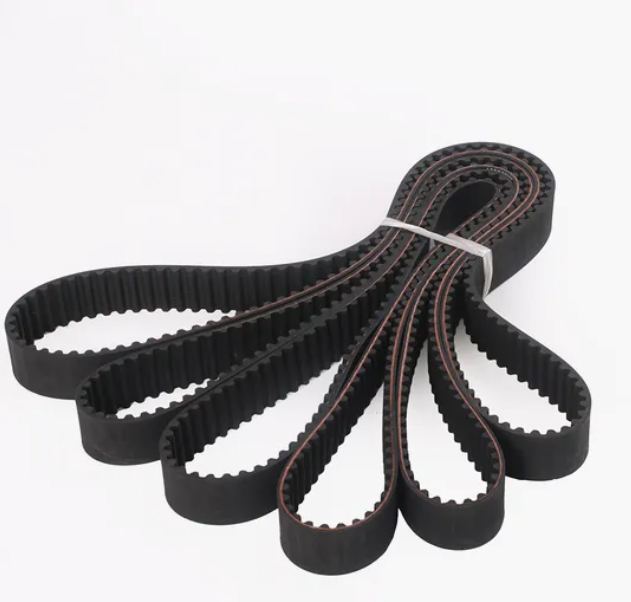
  • High-efficiency TEFC 3-phase drive motor and belt transmission Includes heavy-duty motor, adjustable slide base, precision pulleys, matched V-belts, and protective belt guard.

Optional items

  • Process water circulation pump and cooling tower / chiller Slurry delivery pumps, heat exchangers, cooling towers, and external water filtration tanks outside dryer skid battery limits.

Not included

  • Gravity water drainage flume and civil trenches Floor drainage gutters, sump pits, and building drainage infrastructure.
  • Electrical power cables from distribution panel Primary electrical feeder cables to the machine disconnect switch or control panel.
  • Downstream air conveying or packaging systems Pneumatic transfer blowers, cyclone separators, storage silos, and bagging equipment.

Installation planning

Utilities, interfaces and site readiness

These are the connections the machine and the line around it have to agree on before the layout is fixed.

Utility requirements

Power supply
380 V / 415 V / 460 V / 220 V (customizable), 50/60 Hz, 3-phase AC.
Water
Supplied as water-pellet slurry; clean flushing water required only if automated CIP spray ring option is selected (approx. 10–20 L/min during wash cycles).
Compressed air
Not required for basic dryer operation; 0.5–0.7 MPa clean compressed air required if equipped with optional CIP washdown blowdown or pneumatic discharge diverter valve.
Exhaust and ventilation
Top vapor exhaust collar (DN150–DN200) recommended for ducting warm moist air away from the pellet discharge, or equipped with optional top exhaust fan.
Other notes
Drain flume must maintain free gravity discharge slope. Drive motor power ranges from 5.5 kW to 37 kW depending on hourly pellet throughput and water volume.

Interface requirements

Mechanical: Bottom flanged slurry inlet port (DN100–DN200) or open gravity chute; top dry pellet discharge spout (DN150–DN250) compatible with pneumatic pick-up adapters or vibrating screens; bottom process water drain flange (DN200–DN350) discharging by gravity into the water tank.

Electrical & Automation: Three-phase main power supply to the drive motor / control panel. Control panel interface provides interlock terminals with upstream pelletizer cutters and slurry water pumps, emergency stop circuit, and drive motor thermal protection trips.

What the customer prepares on site

The buyer provides a reinforced level concrete slab engineered for dynamic rotary equipment, free of structural resonance. Buyer arranges main power cabling to the motor terminal box or local control panel, process slurry supply piping, and a gravity drain trench or water flume connection capable of handling maximum recirculating water flows without back-flooding the dryer sump.

Spare parts

Wear parts and recommended spares

The parts that wear in normal service, and the spares worth keeping on site. How often a part is replaced depends on the material and the duty the machine runs, so the basis is confirmed for each machine.

Wear parts

Segmented Stainless Steel Screen Basket Sets

Inspect quarterly for perforation wear, cracking, or elongation; replace when hole enlargement allows pellet loss into the water drain or when severe abrasive scoring occurs.

Primary dewatering filtration screen. Cylindrical segmented design. Keep one complete spare set on site matching your pellet diameter perforation spec. Provide machine serial number and perforation diameter when reordering.

Complete Rotor Shaft with Tungsten Carbide Faced Lifting Blades

Replace the whole rotor shaft when blade edge wear reaches 3–5 mm, when pellets start accumulating in the lower chamber, or after about 3,000 tonnes of material. Inspect every six months.

Angled lifting blades are fixed to the shaft: they cannot be replaced separately, only as a complete balanced shaft assembly. Lifting pellets along the screen wears them continuously under friction and pellet impact. Order by machine serial number.

V-Belts and Motor Drive Sheaves

Check belt tension monthly; replace the full matched set if belts exhibit glazing, fraying, or slip under starting torque.

Matched V-belt set transmitting power from the drive motor to the vertical rotor shaft.

Blades, screens and other normal consumables are outside the standard warranty. How a spare part is identified and ordered is set out under Warranty & Spare Parts.

Selection

How to choose a model

Work through what you already know. The rest is settled in the conversation, not before the first message.

Follow these engineering guidelines when selecting and sizing a vertical centrifugal dryer:

  • Throughput Sizing: Select machine model based on both dry pellet output (kg/h) and total water flow rate (m³/h). In underwater and water-ring systems, high water-to-pellet ratios dictate screen area and drainage sump diameter to prevent centrifugal flooding.
  • Screen Perforation Selection: Match screen hole size to minimum pellet diameter: specify 1.5–2.0 mm round perforations for standard 3 mm pellets; specify 0.8–1.0 mm slotted or laser-cut screens for micropellets (1.0–1.5 mm) to avoid pellet loss in the drain water.
  • Abrasive Fillers & Additives: When processing compounds with > 20% calcium carbonate, talc, or glass fibers, configure the rotor with hard-faced tungsten carbide paddle tips and heavy-gauge hard-chrome-plated screens to extend service life by 3–5 times.
  • Resin Cleanability & Changeover Frequency: For multi-color compounding lines, select the split-casing design with built-in internal CIP spray nozzles to cut color changeover cleaning time from 45 minutes down to 10 minutes.

Information we need from you

  1. 01 Pellet physical dimensions and resin type Specific polymer resin (PP, PE, PET, PA, ABS, TPU, TPE), shape (spherical, cylindrical, lenticular, or shredded flake), pellet diameter and length (mm), and bulk density (kg/L).
  2. 02 Inlet water-pellet slurry flow rate Solid throughput rate (kg/h), process water circulation volume (m³/h), and slurry temperature entering the dryer inlet.
  3. 03 Target residual surface moisture level Required moisture percentage threshold (e.g., ≤ 0.05% for packaging, ≤ 0.1% for intermediate storage) and any downstream thermal drying requirements.
  4. 04 Contamination and abrasive filler content Presence of abrasive mineral fillers (CaCO3, talc, glass fiber) or post-consumer wash line contaminants (sand, grit) requiring hardened metallurgy or wear-resistant paddle plating.
  5. 05 Site layout and installation dimensions Available floor space, vertical ceiling headroom for rotor lifting during screen maintenance, slurry piping orientation, and water discharge pit location.

Request a Quote A model name, a material or a drawing is enough to start.

Photos and videos

The machine itself

Next step

Request a Quote

Tell us the material, the process and what you need to achieve. Technical details can be completed later together with our sales team.

Request a Quote
Request a Quote