Auxiliary equipment & integrated systems
e-mail [email protected] Language EN ES

Equipment

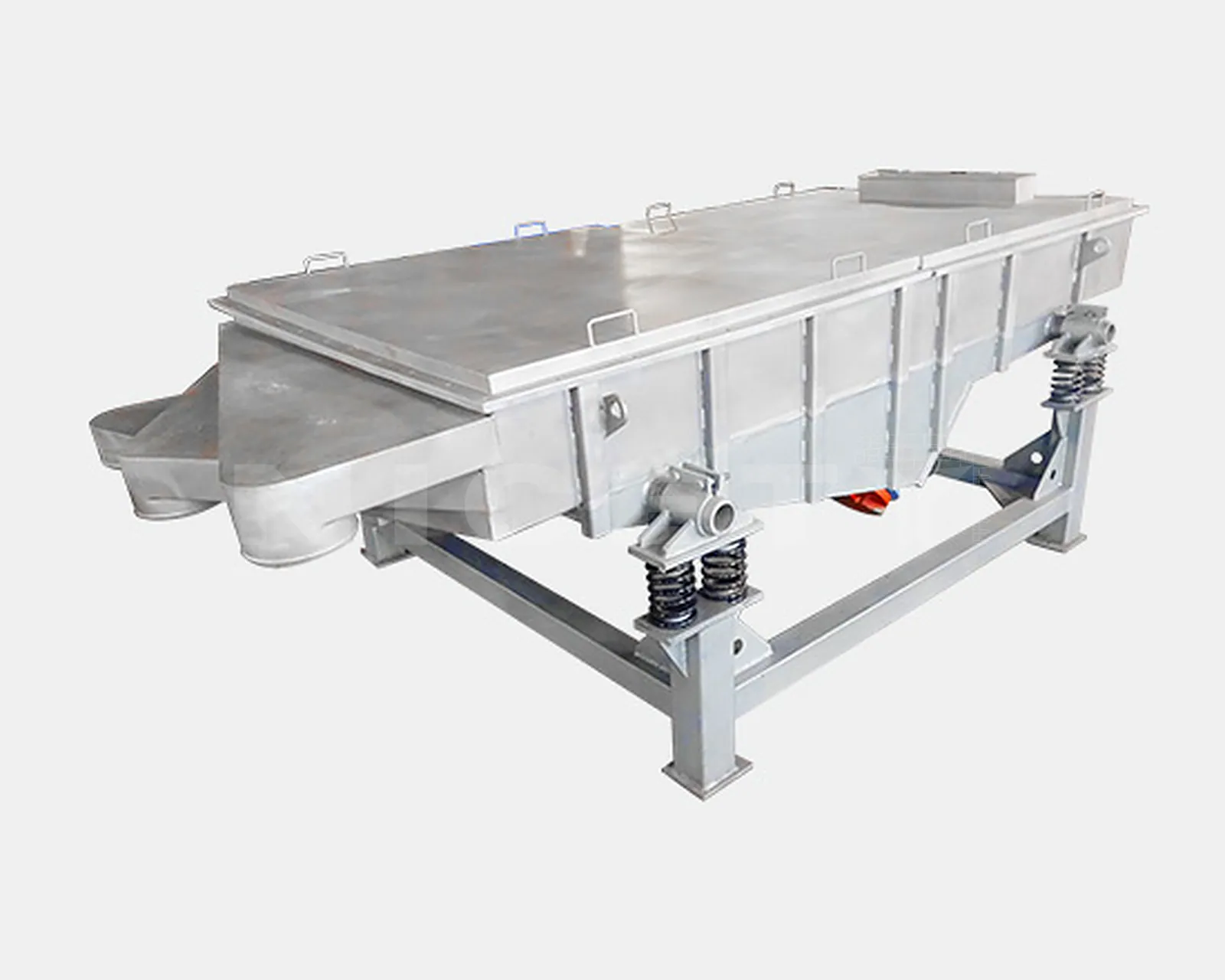
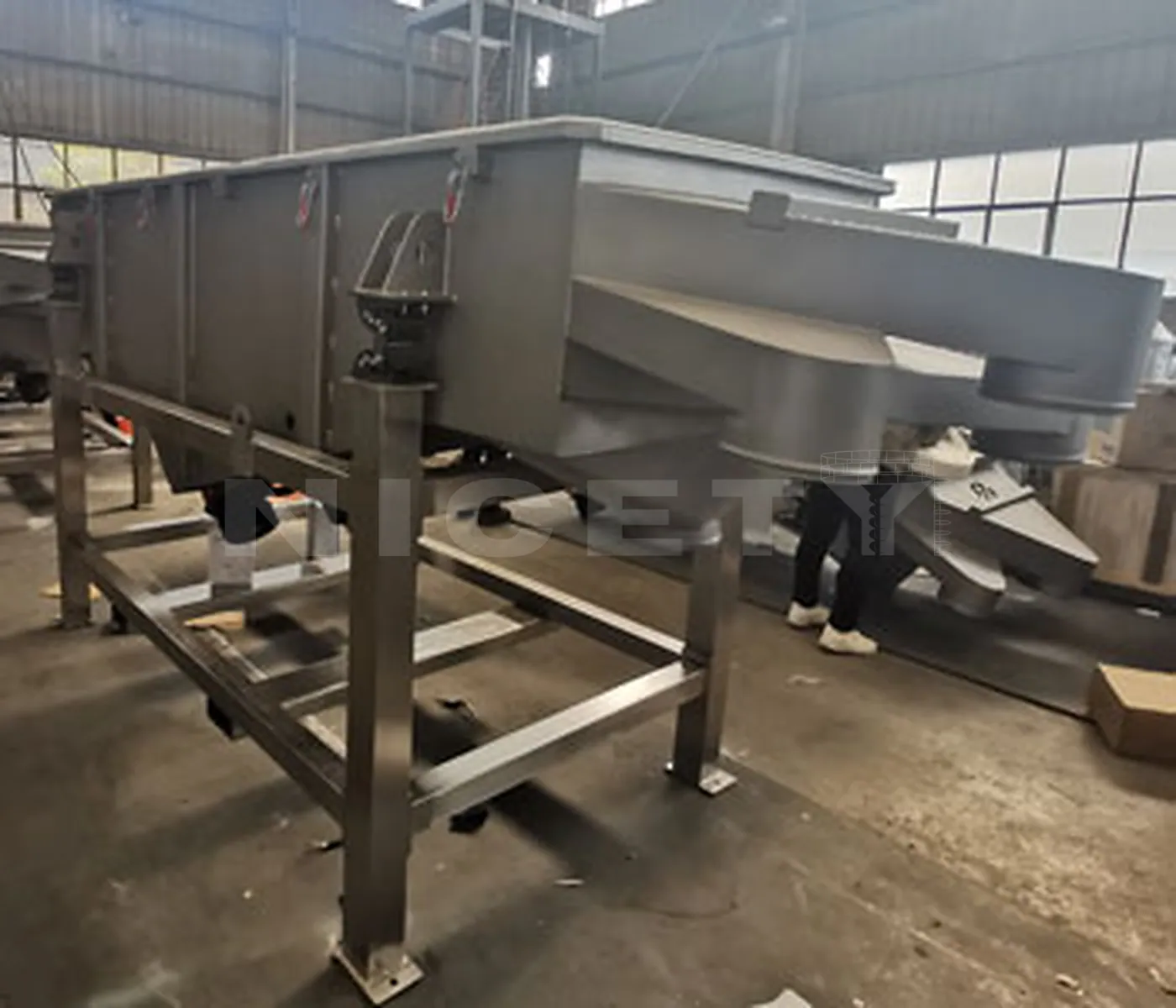
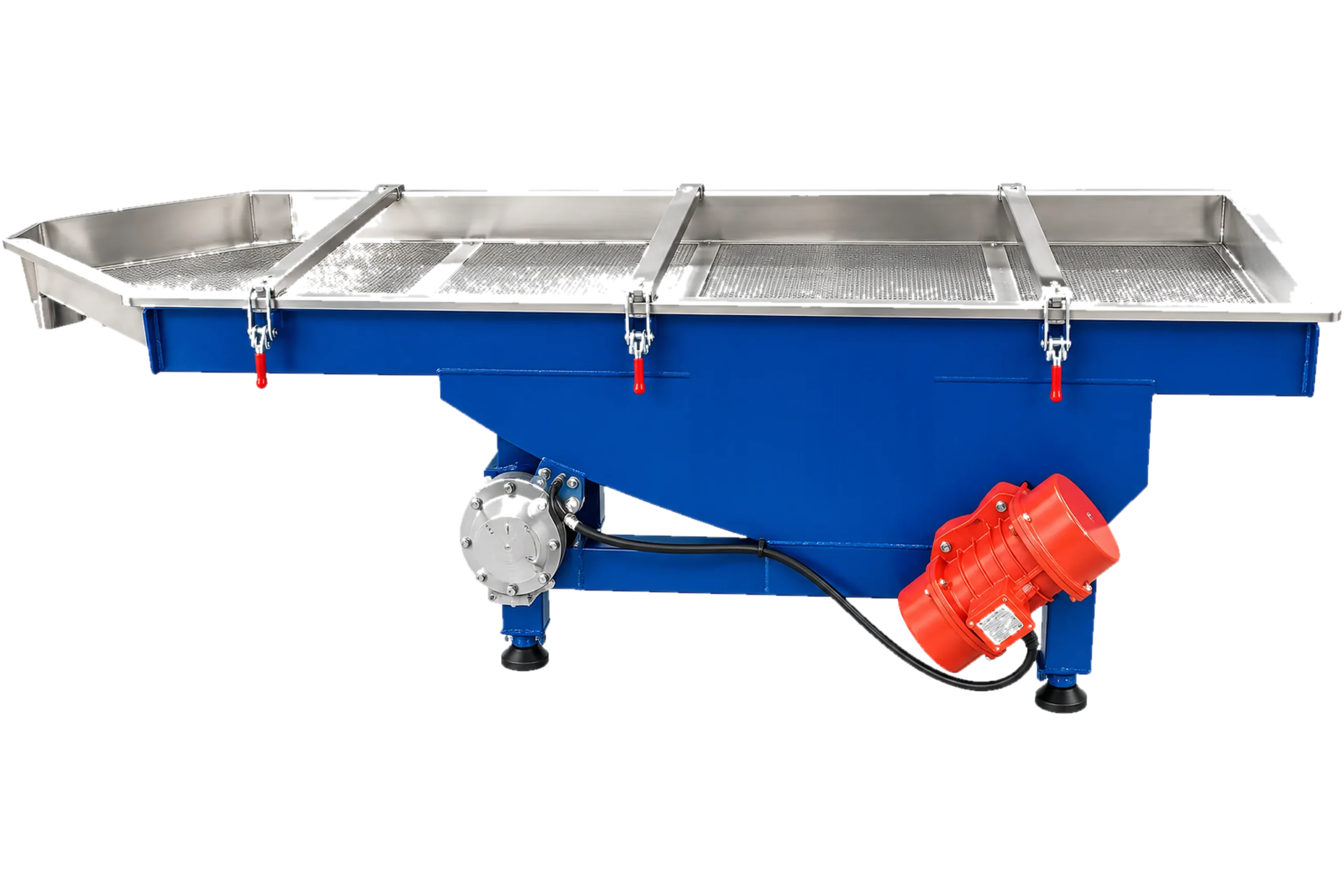
Linear Vibrating Screen

Industrial linear vibrating screen for plastic pelletizing lines, delivering continuous multi-fraction classification to scalp out agglomerates and eliminate fines and dust.

  • Pelletizing Equipment and Auxiliaries
  • Screening and Separation Equipment
  • Post-Pellet Treatment
  • Modified Plastics
  • Multifunctional Masterbatch
  • Recycled plastics
  • Resin
  • Rubber
  • Thermoplastic Elastomer
  • Pellets
  • Off-spec pellet size and fines
  • Sticking and agglomeration
Capacity range
300–2500 kg/h
Models
NC-ZDS525 · NC-ZDS530 · NC-ZDS1020 · NC-ZDS1030 · NC-ZDS1230 · NC-ZDS1235 · NC-ZDS1530 · NC-ZDS1540
Rated power
0.75–4.4 kW
Basis for the capacity figures
Material Particle Size in 0.074-10mm

Reference values for the model or models named above. The confirmed configuration, the capacity basis and the scope of supply are stated in the quotation and the drawings.

Overview

What this machine does

Performs continuous post-pelletizing size classification to scalp out agglomerates and long pellets while eliminating fines and dust from polymer pellet streams.

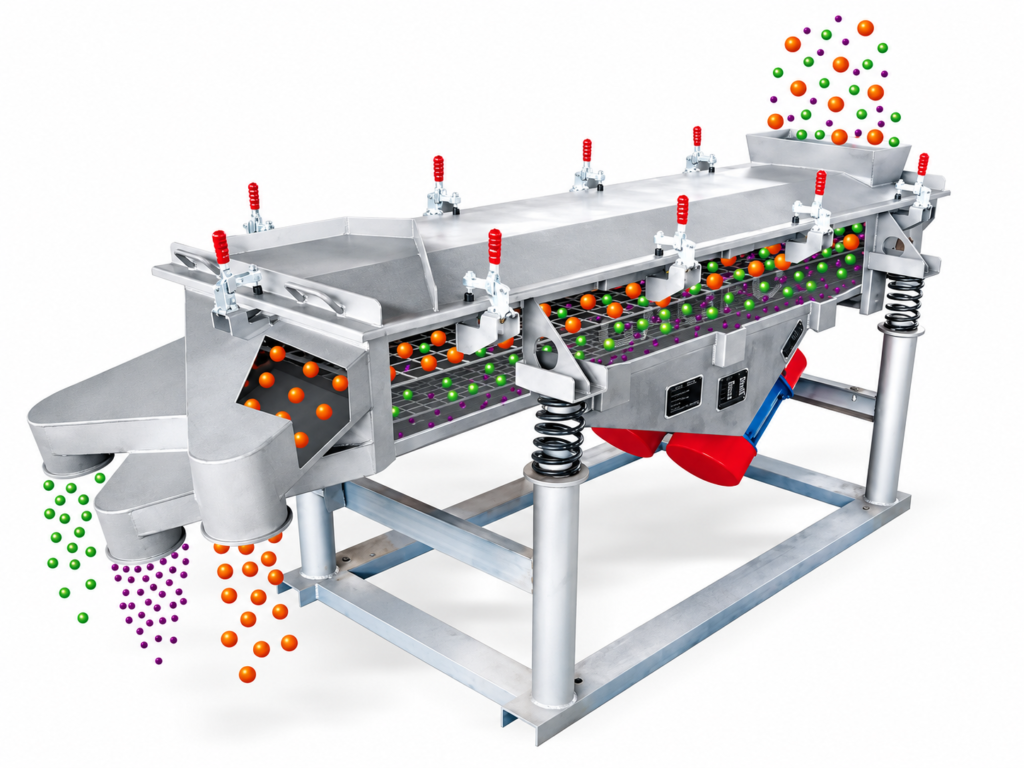
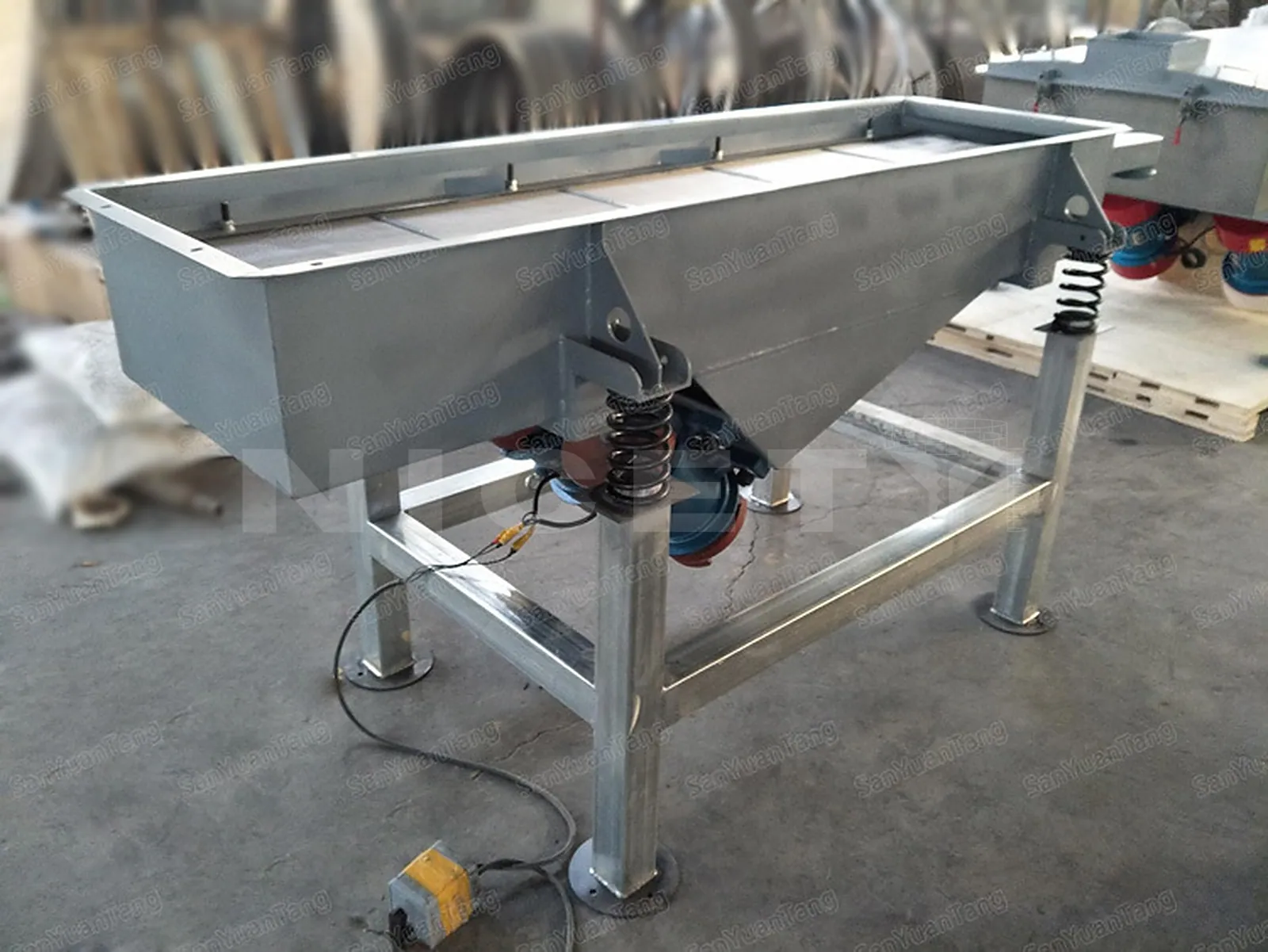
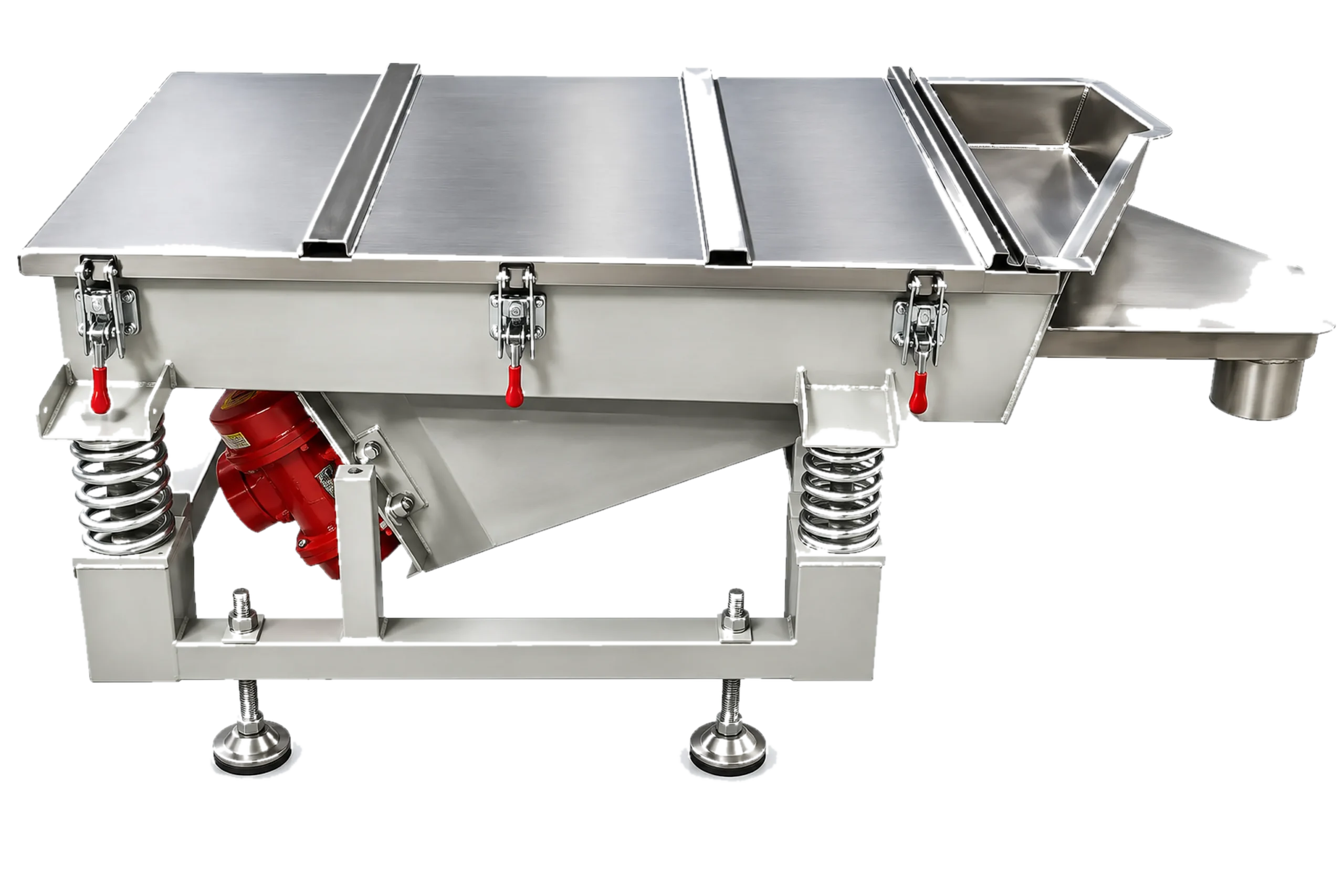
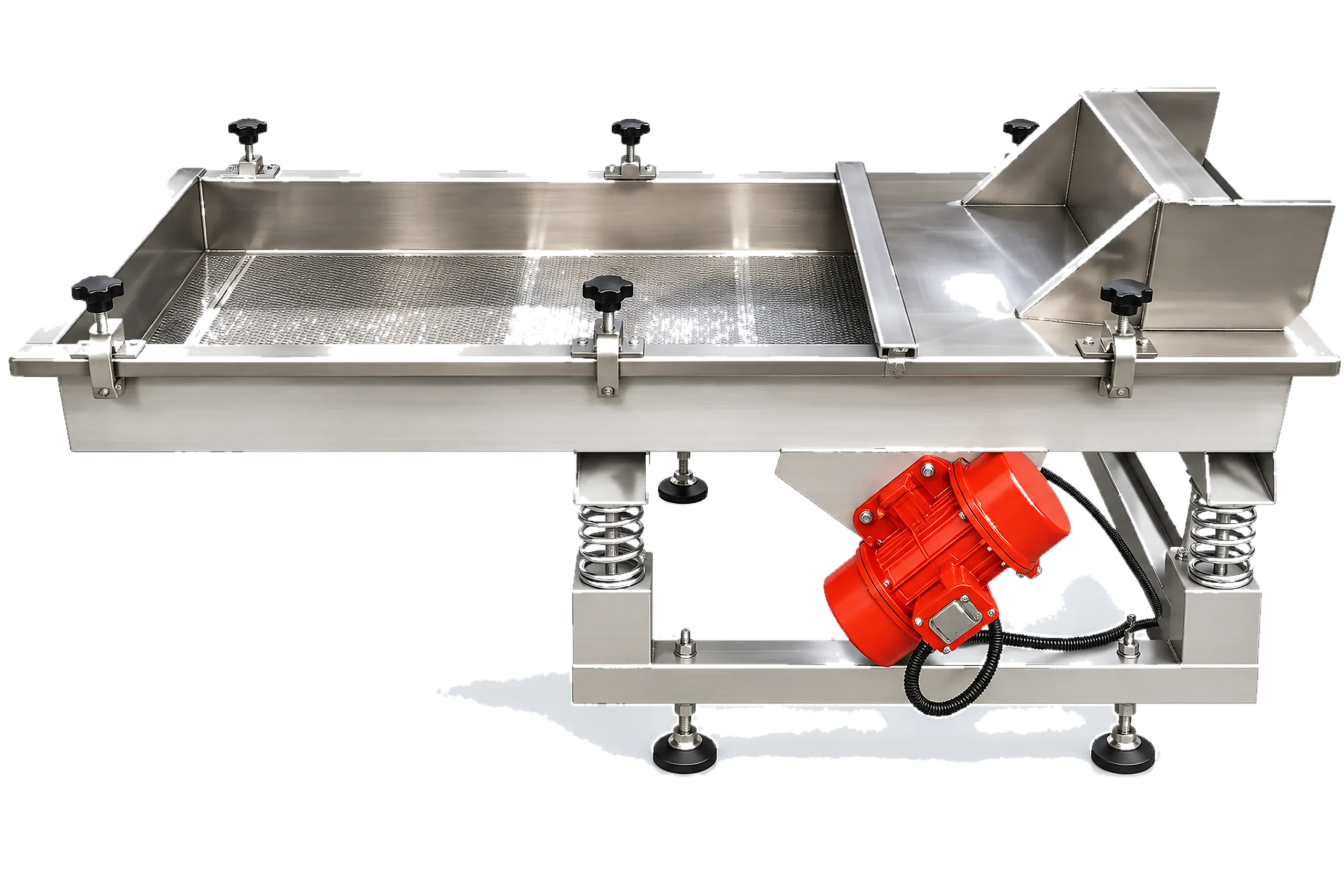
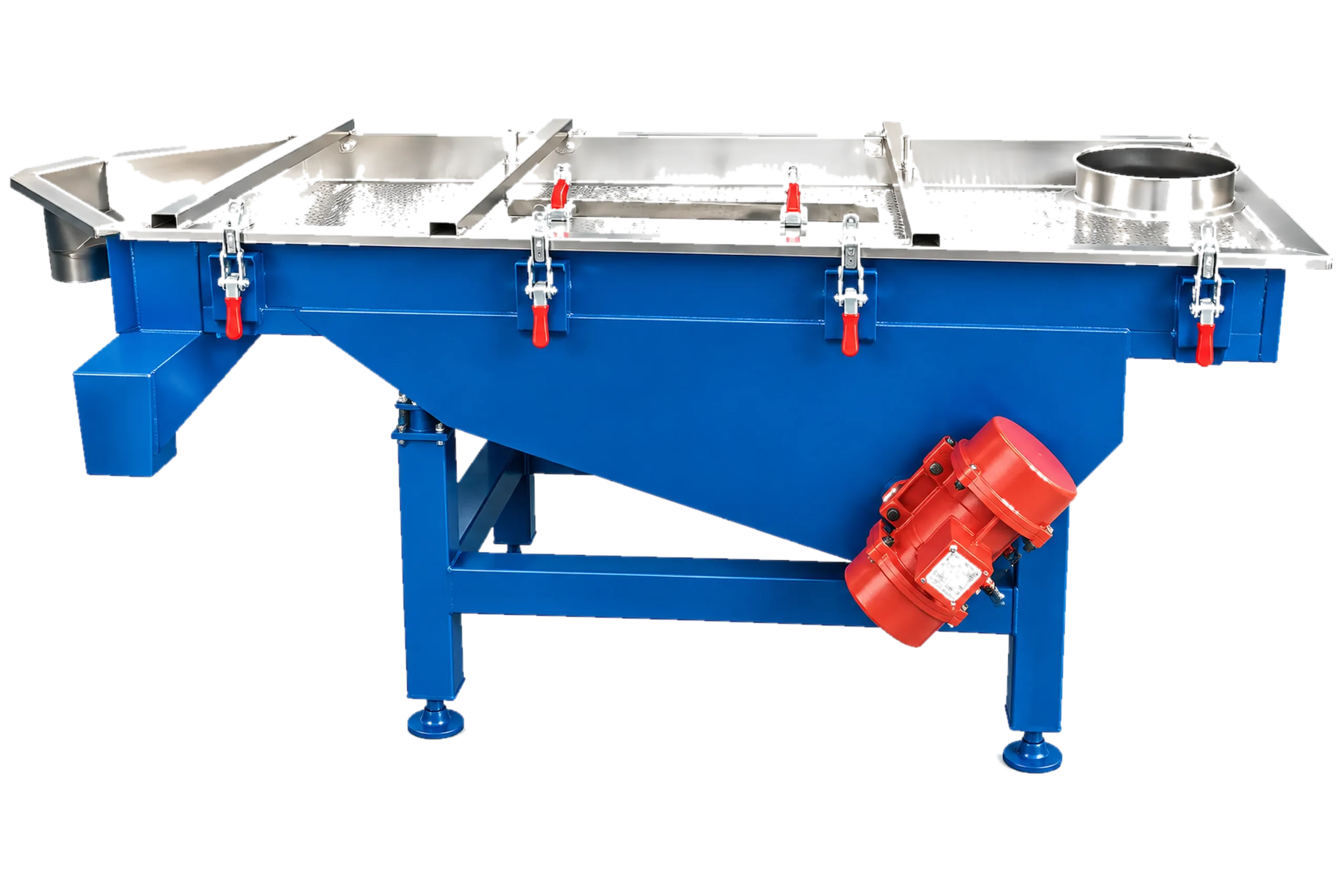
The Linear Vibrating Screen (also known as a Linear Pellet Screener, Rectangular Vibratory Grader, or Pellet Classifier) is a high-efficiency size-classification and separation system designed for plastics pelletizing lines, masterbatch compounding plants, and polymer recycling facilities. Positioned directly downstream of centrifugal dryers, water-ring dewatering units, or strand pelletizers, the screener performs continuous inline classification: reliably scalping out oversized agglomerates and stringers, isolating off-spec fines and cutting dust, and delivering clean, precisely graded on-spec pellets to downstream storage, air cooling, or packaging stations.

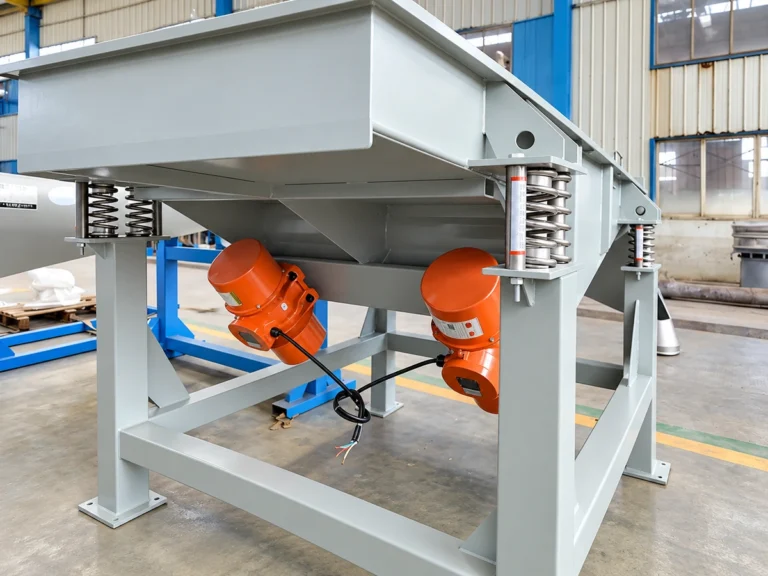
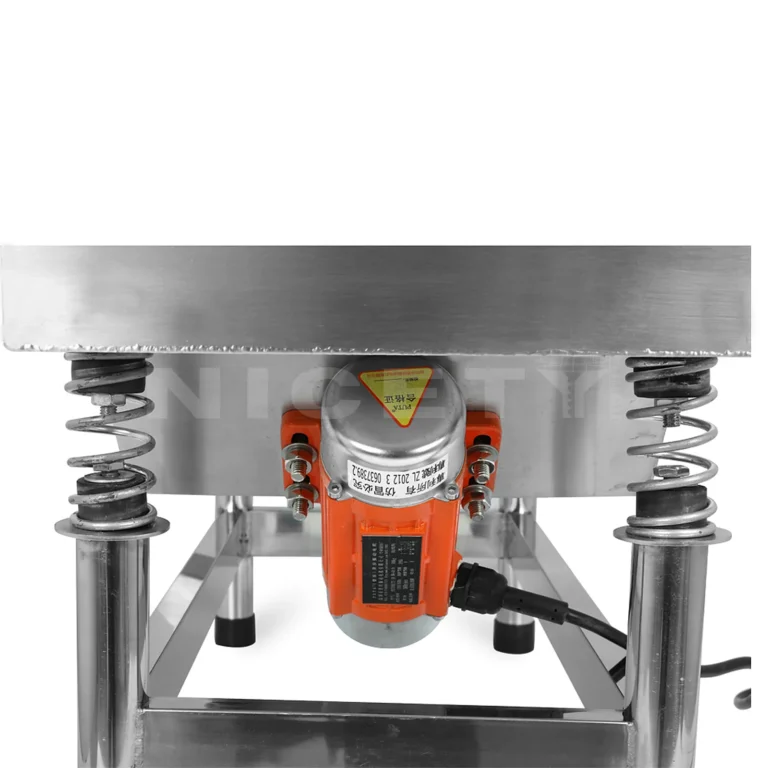
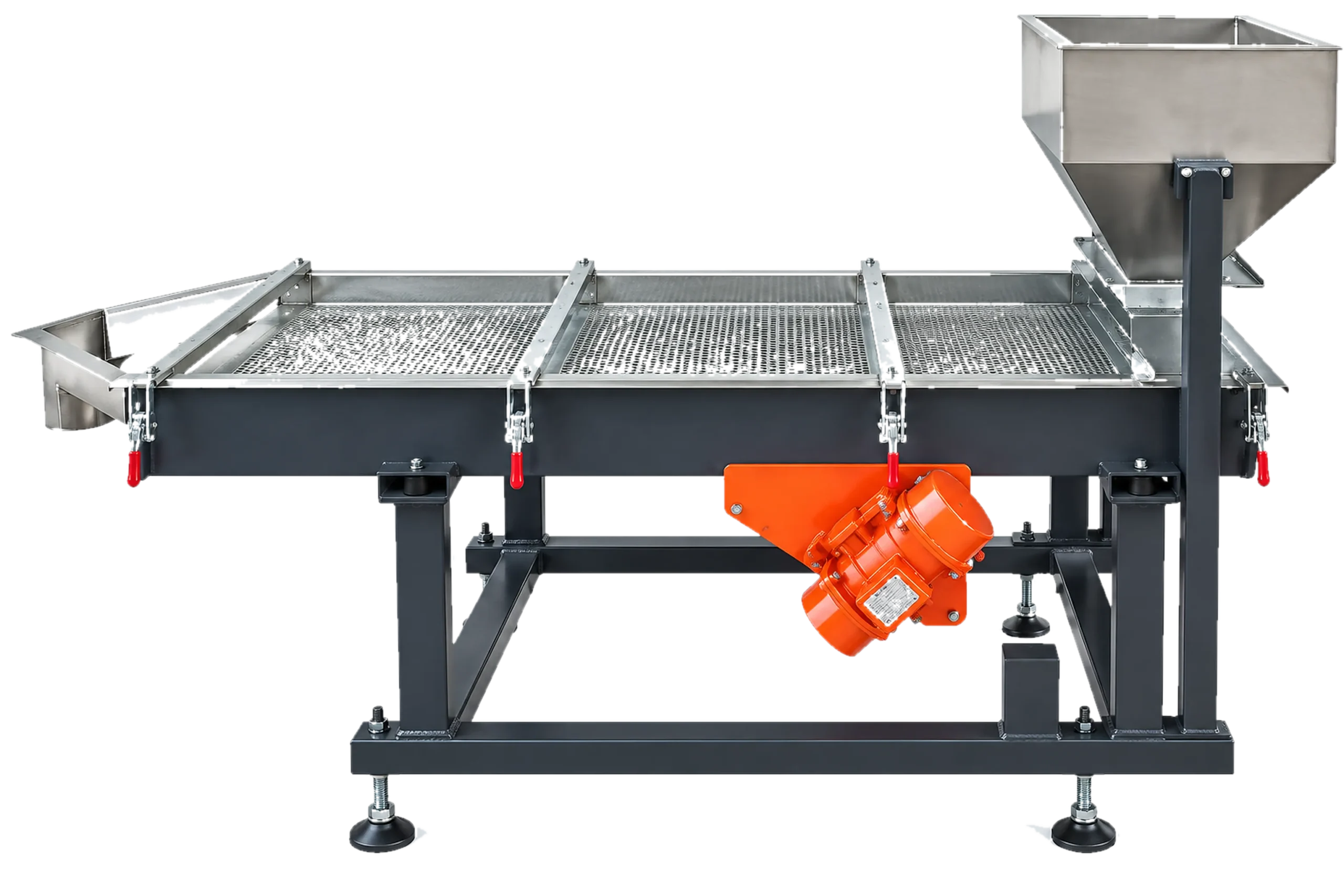
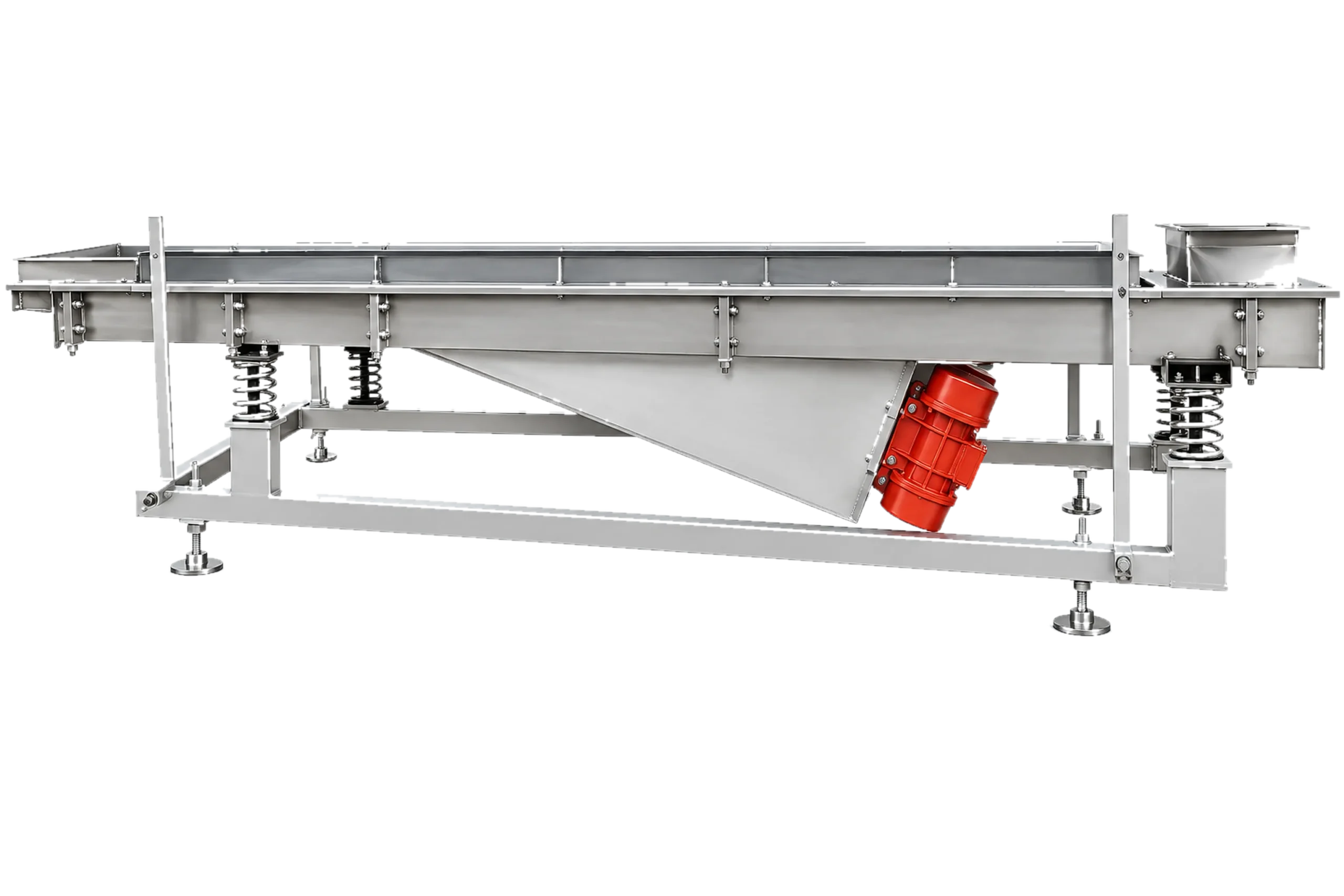
The machine is powered by dual synchronous contra-rotating vibration motors mounted at a precision inclination angle. As the two motors rotate synchronously in opposite directions, their eccentric centrifugal force components cancel each other out in the lateral direction while compounding along the longitudinal axis. This creates a powerful linear trajectory that fluidizes the polymer pellet bed, throwing particles upward and forward in a smooth, continuous conveying wave across the inclined screen deck.

Operating Principles & Multi-Fraction Separation Mechanism

Depending on production cleanliness criteria and quality specifications, linear vibrating screens are configured with single-deck (two fractions) or double-deck (three fractions) separation layouts:

1. Top Deck: Oversize Scalping & Lump Rejection

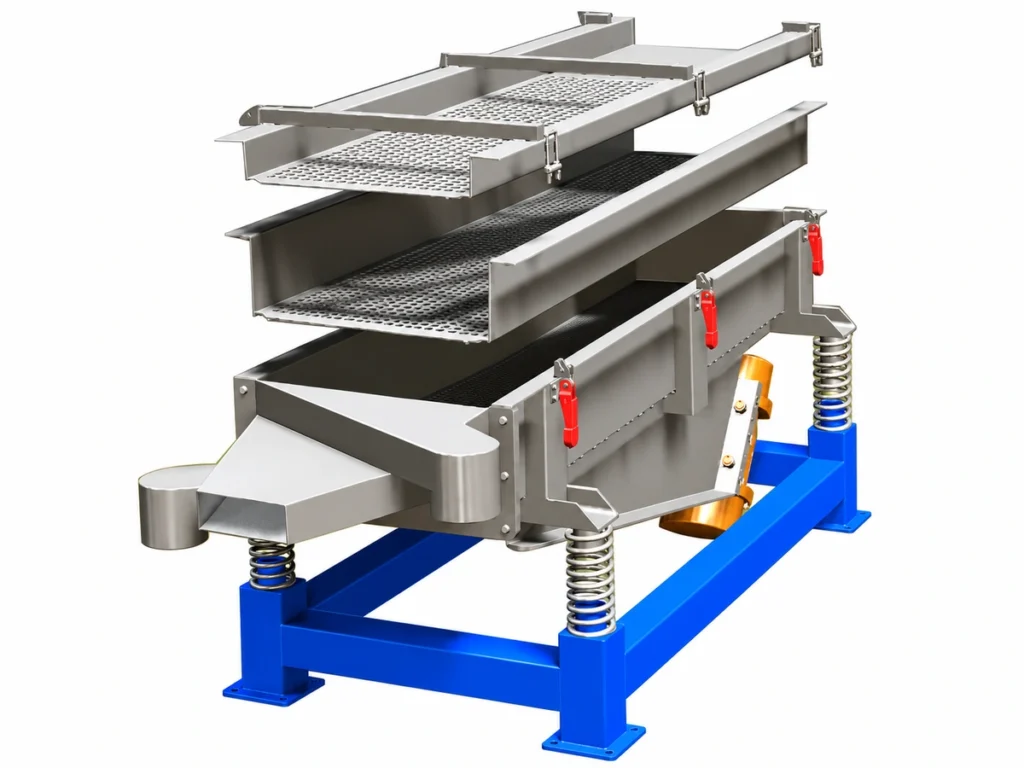
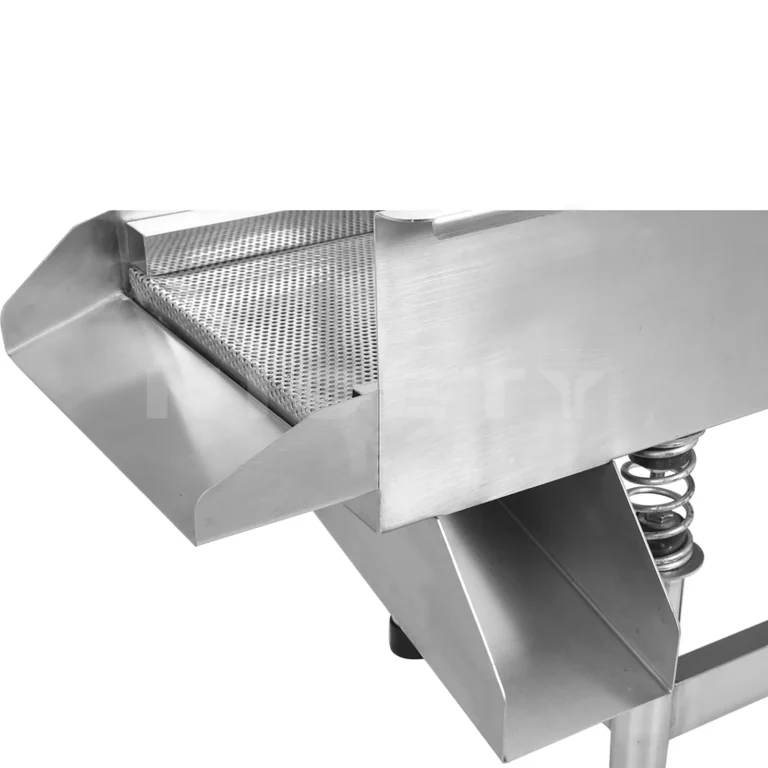
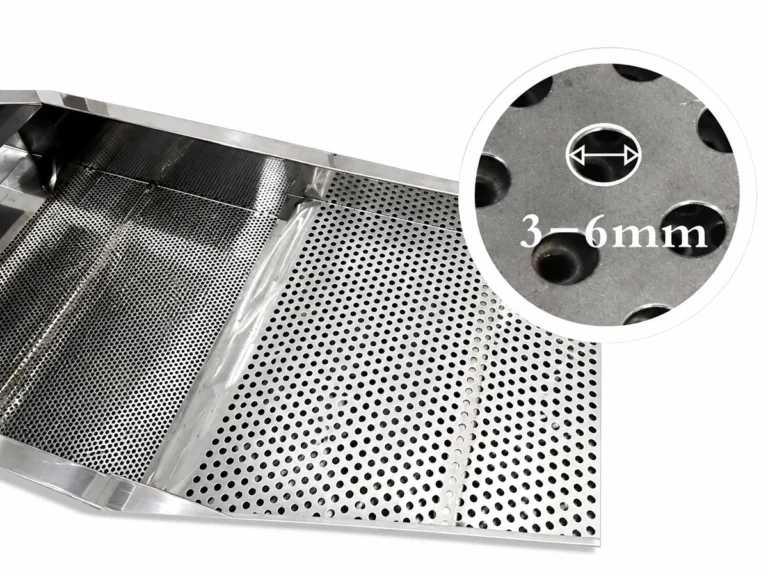
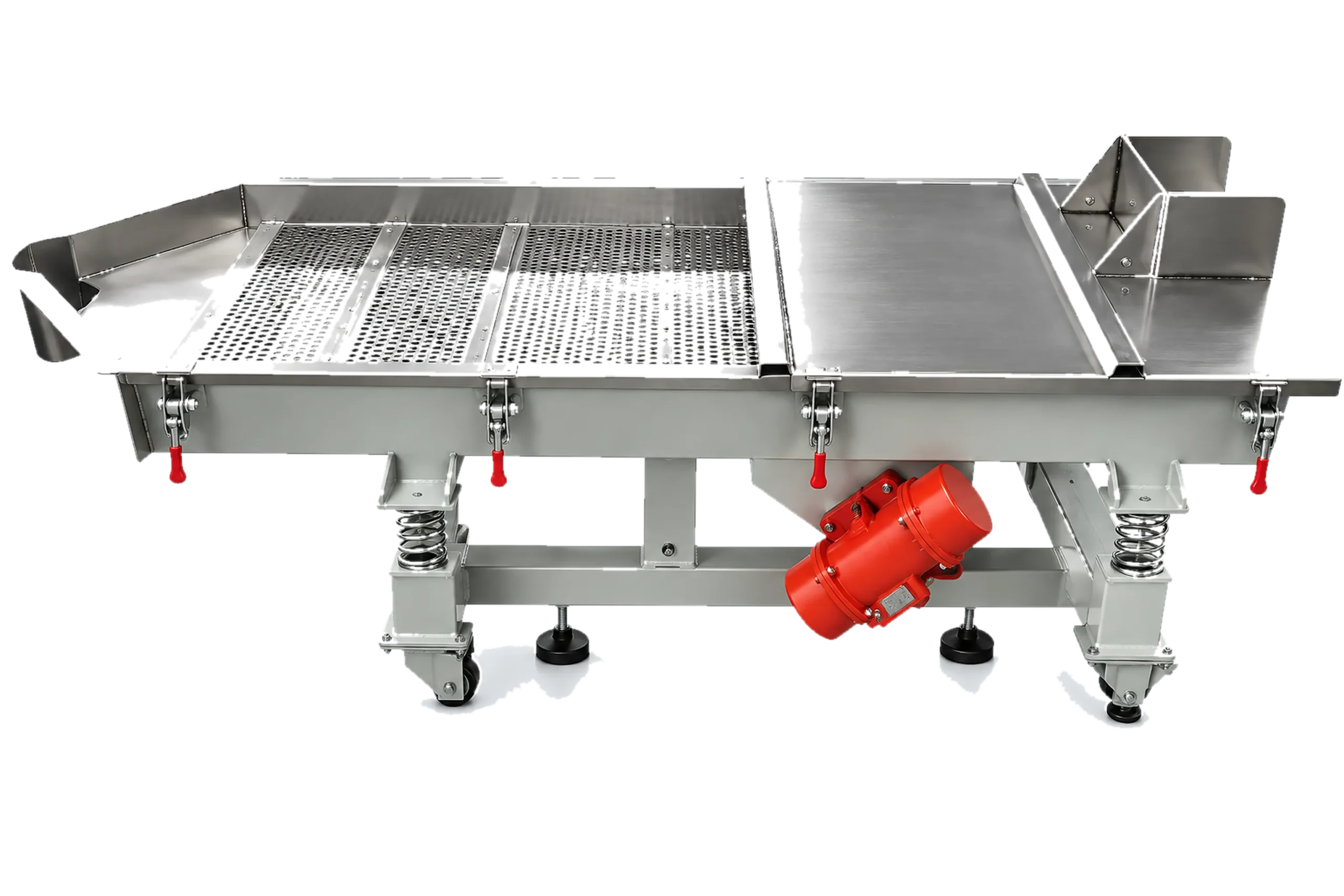
The upper screen deck utilizes heavy-gauge SUS304 perforated punch plates or coarse mesh (typically 4.0 mm to 6.0 mm apertures). As bulk pellets flow over the deck, oversized agglomerates, doublets (twin pellets formed by strand contact in cooling troughs), polymer strings, and start-up clumps are prevented from falling through. These rejected lumps are continuously conveyed forward and discharged through the top oversize chute for offline granulating or reprocessing, protecting downstream molding machinery from nozzle blockages.

2. Lower Deck: Fine Particle Dedusting & Pellet Grading

On double-deck configurations, material that passes through the top screen lands onto a high-precision lower screen cloth (typically 1.5 mm to 2.0 mm apertures). Standard calibrated pellets cannot pass through this lower mesh and travel across the deck to discharge through the central on-spec product chute. Meanwhile, broken pellet fragments, tails, cutting dust, and abrasive fines fall through into the bottom collection pan and discharge via the undersize chute, ensuring that finished pellets are 100% dust-free and uniform in bulk density.

Key features

The parts that do the work

Each picture names one part of the machine and what it does for the material and the batch.

Dual Synchronous Contra-Rotating Vibration Drives

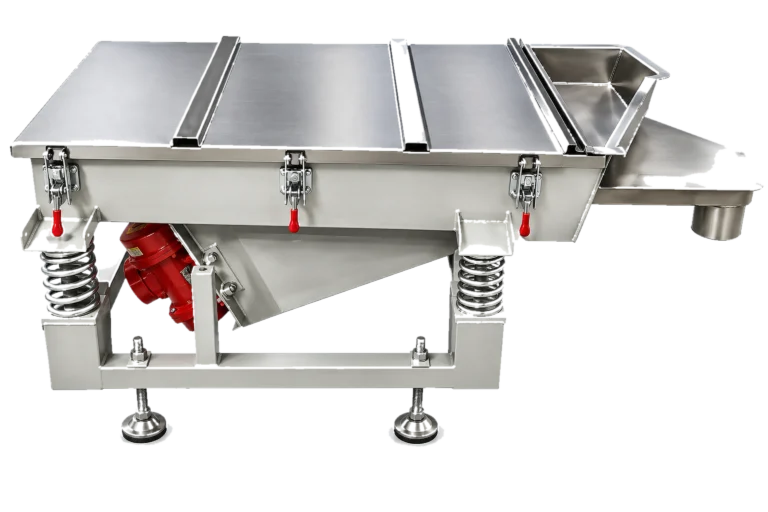
Dual synchronous contra-rotating vibration motors mounted at a precision thrust angle (typically 30° to 45°). Centrifugal forces cancel out in the transverse direction while generating a uniform, high-efficiency linear throw that conveys pellets smoothly down the inclined deck while fluidizing the bed.

High-Precision Multi-Fraction Classification Decks

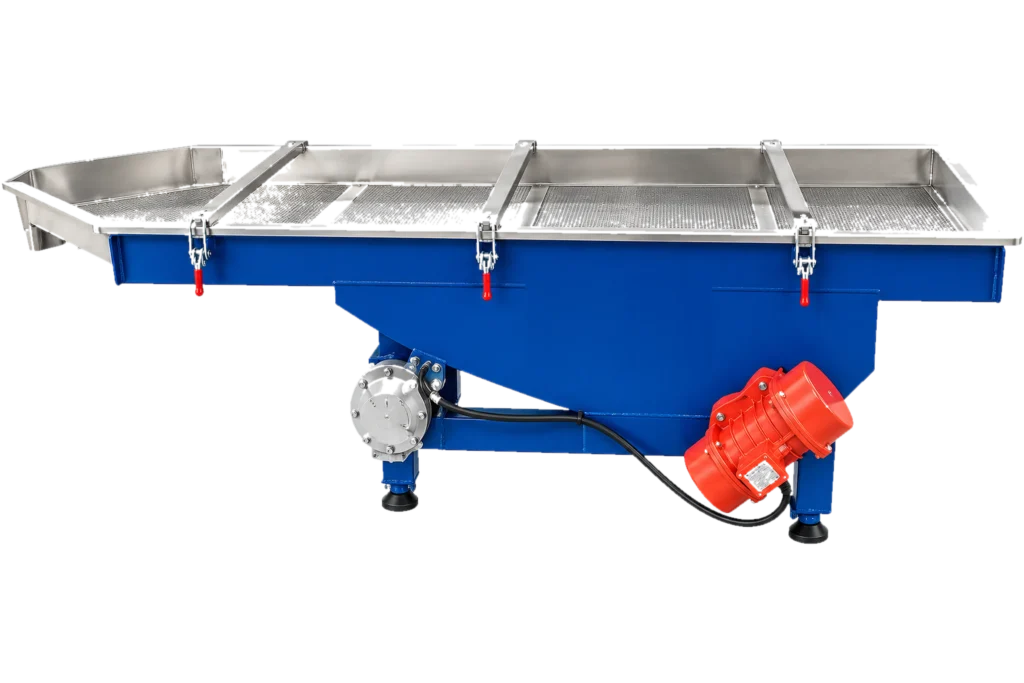
Multi-tier screen deck layout supporting 1, 2, or 3 classification levels. Simultaneously scalps out merged lumps, long tails, and agglomerates on the upper deck while passing fine chips, broken corners, and dust through the lower deck, discharging perfectly uniform on-spec pellets from the middle chute.

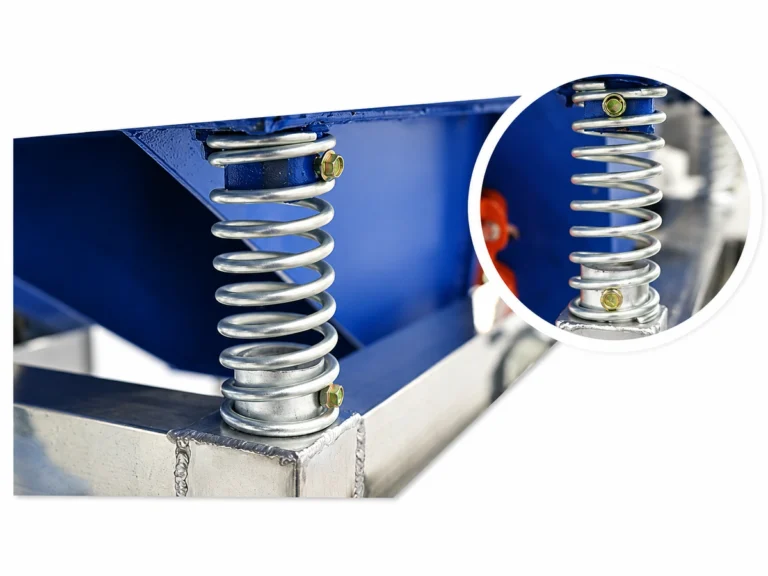
High-Efficiency Spring / Elastomer Vibration Dampeners

Heavy-duty coil compression springs or composite elastomer rubber dampeners isolate up to 95%–98% of dynamic vibration forces from transmitting into the support structure, floor, or adjacent processing machinery.

Fully Enclosed Dust-Tight Cover with Quick-Release Latches

Fully enclosed dust cover equipped with quick-release inspection viewports and soft silicone perimeter sealing gaskets. Positively prevents airborne plastic dust and static fines from escaping into the workshop while maintaining a clean, quiet processing environment.

Material and process

Where it fits — and where it does not

Read the conditions together: a machine is selected for the material and the output, not from its name alone.

Suitable materials and conditions

Engineered for continuous post-pelletizing size classification, scalping, dedusting, and quality grading across plastics compounding, masterbatch manufacturing, and polymer recycling lines.

Ideally suited for handling diverse polymer pellet geometries (cylindrical strand-cut, spherical underwater hot-cut, or water-ring die-face pellets) across all major resin families:

  • General Polyolefins & Engineering Plastics: PP, HDPE, LDPE, LLDPE, PET, PA6/PA66, ABS, PS, PC, and POM pellets following strand pelletizing, underwater pelletizing, or water-ring cutting.
  • Masterbatch & High-Filler Compounds: Color masterbatch, additive concentrates, and high-loading calcium carbonate (CaCO3) / talc-filled compounds requiring strict lump scalping and fines removal to prevent downstream molding defects.
  • Thermoplastic Elastomers & Soft Resins: TPE, TPU, TPV, and EVA pellets when paired with optional non-stick contact coatings.
  • Post-Consumer & Post-Industrial Recycling Regrind: Flakes, ground plastic regrind, and pelletized post-consumer resins requiring separation of long chains, oversized un-melted clusters, and ultrafine plastic dust.

Limitations and when it does not apply

Mechanical size-classification screen; operational boundaries include:

  • No size reduction: Classifies and separates solid fractions; oversized agglomerates are discharged intact for offline secondary granulation.
  • Post-dewatering use only: Designed for dry or drained pellets; cannot replace centrifugal dewaterers for heavy water-slurry separation.
  • Tacky soft elastomers: Low-durometer TPE or warm EVA risk mesh plugging; requires Teflon coatings, air cooling, or vibrating spiral cooling beforehand.
  • Airborne ultrafine dust: Captures solid fines down to 0.8–1.5 mm; sub-micron airborne dust requires top dust aspiration connections.

Feed condition and requirements

Accepts continuous gravity or chute feed of polymer pellets, masterbatch granules, and recycling regrind directly following post-pelletizing dewatering, centrifugal drying, or cooling water ring troughs:

  • Input Forms: Virgin polymer pellets, recycling regrind granules, masterbatch pellets, engineering plastic compounds, and post-consumer / post-industrial flakes (typically 1.0 mm to 8.0 mm).
  • Thermal & Moisture Condition: Surface moisture < 0.2% (recommended after centrifugal dewatering), pellet temperature up to 80°C (standard) or 120°C (with high-temperature dampener package).
  • Raw Feed Anomalies: Capable of handling raw discharge streams containing interconnected pellets (twin/triplet agglomerates), stringers, polymer chains, fines, and cutting dust. Feed must be free of large metallic tramp scrap and unyielding solidified machine purge blocks.

Output condition and boundaries

Discharges continuously separated, clean, and precisely classified material streams through isolated discharge chutes:

  • On-Spec Middle Fraction (95%+ of feed stream): Uniform, calibrated polymer pellets free from fines, strings, and agglomerates, discharging directly into air-conveying suction adapters, cooling elevators, or storage silos.
  • Oversize Top Fraction (Scalped rejects): Interconnected pellets, doublets, long strands, and start-up agglomerates discharged separately for off-line crushing or reprocessing.
  • Undersize Bottom Fraction (Fines & Dust): Fragmented granules, cutting chips, and fines (< 1.5–2.0 mm) eliminated from the primary product stream, preventing dust buildup and mold flashing in downstream injection or extrusion processes.
  • Separation Precision: Classification efficiency typically exceeds 98% under steady volumetric feed conditions.

Throughput

Capacity range

Read a figure together with the basis below it: the same machine reaches different numbers on different materials.

300–2500 kg/h

Basis for the capacity figures

Throughput capacity is calculated based on continuous post-pelletizing linear classification of standard solid polymer pellets (cylindrical or spherical, bulk density 0.50–0.65 kg/L) through 1-deck or 2-deck screen configurations with standard screen meshes (top deck 4.0–5.0 mm for agglomerate scalping, bottom deck 1.5–2.0 mm for fines removal):

  • Standard Polyolefin Pellets (PP / HDPE / LDPE): Free-flowing rigid/semi-rigid granules achieve maximum throughput up to nominal screen deck ratings without pegging.
  • High-Density Mineral Masterbatch: Heavy bulk density (0.80–1.20 kg/L) increases mass throughput (kg/h) but requires reinforced screen frames and heavy-duty dampening springs.
  • Soft Elastomers & Sticky Resins (TPE, TPU, EVA): Lower surface hardness and residual warmth lower deck travel velocity and increase pegging risk; effective capacity should be derated by 25%–35%, and air-assist cooling manifolds are recommended.

Models

Models in this range

The figures are the reference values entered for each model. The model for your line is confirmed against your material and output before it is quoted.

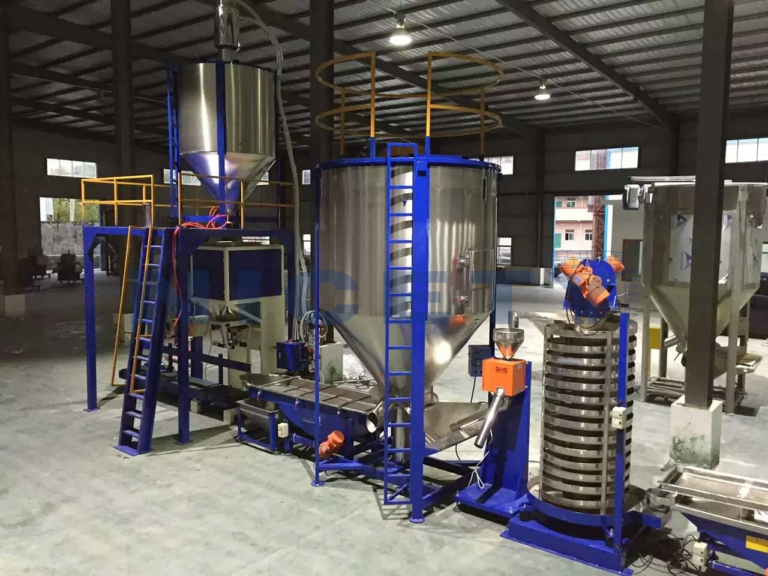
Turnkey downstream compounding auxiliary line delivered for ABS compounding in Thailand, featuring vertical batch mixer, vibrating spiral elevator, vibrating classifier, and bagging station.

A linear vibrating classifier for the back end of an ABS compounding line in Thailand.

Classifies the ABS pellets after pelletizing: oversize is scalped out and cutting dust and fines are taken out of the pellet flow before the elevator and the bagging station. Supplied with the line's other back-end auxiliaries — pelletizer, spiral cooling elevator, vertical silo mixer and automatic weighing and packaging station.

Scroll the table sideways to read every column →

Model Rated power Dimensions Frequency (times/min) Layers(customizable)
NC-ZDS525 0.75 kW 0.5×2.5m 960(times/min) 1-7
NC-ZDS530 1.1 kW 0.5×3m 960(times/min) 1-7
NC-ZDS1020 1.5 kW 1×2m 960(times/min) 1-7
NC-ZDS1030 2.2 kW 1×3m 960(times/min) 1-7
NC-ZDS1230 2.2 kW 1.2×3m 960(times/min) 1-7
NC-ZDS1235 3 kW 1.2×3.5m 960(times/min) 1-7
NC-ZDS1530 2.4 kW 1.5×3m 960(times/min) 1-7
NC-ZDS1540 4.4 kW 1.5×4m 960(times/min) 1-7

Scope of supply

What is included, and what is not

The quotation states the scope for the confirmed configuration; the groups below describe how a supply is normally split.

Optional items

  • Frequency Inverter (VFD) Drive Controller Allows stepless adjustment of vibration frequency and pellet conveying speed across varied material densities and particle shapes.
  • Top Cover Aspiration Dedusting Flange Connecting port for plant dust collector to pull a slight negative pressure, capturing lightweight static fines and cutting dust.
  • Non-Stick Fluoropolymer Coating / Ceramic Cladding PTFE or non-stick ceramic liner applied to internal chutes and screen frames for sticky TPE, TPU, or hot-melt adhesive pellets.
  • Mobile Base Frame with Lockable Casters Heavy-duty structural cart with leveling pads and lockable swivel casters for flexible repositioning between multiple pelletizing lines.
  • Single-Deck, Double-Deck, or Multi-Deck Configurations Single-deck for simple oversize lump scalping (2 discharge fractions); double-deck for simultaneous lump scalping and fines dedusting (3 fractions); triple-deck for multi-grade classification.
  • Screen Deck Metallurgy and Contact Surface Finishes Full SUS304 stainless steel product contact surfaces standard; SUS316L for corrosive or acidic additives; mirror polishing (Ra ≤ 0.4 µm) for pharmaceutical/food-grade polymers or rapid color changeovers.
  • Screen Media Types (Punch Plate vs. Wire Mesh) Punched round/slotted hole plates for rigid pellets and heavy lump impact; precision SUS304 woven wire mesh for high-accuracy fine dedusting; wedge-wire screens for abrasive or wet applications.
  • Forced-Air Cooling & Dedusting Manifolds Integrated top cover air distributor nozzles and exhaust aspiration hood connection for secondary in-transit air cooling and airborne fines extraction during screening.
  • Quick-Clamp Toolless Screen Change Mechanism Over-center toggle latch clamps and slide-out screen frames allowing full screen mesh changeover and thorough cleanout within 10 minutes.

Not included

  • Civil engineering, floor anchor grouting, and vibration-isolated foundations Concrete slab pouring, elevated mezzanine steel structures, and vibration-isolating expansion bolts.
  • External electrical power supply and field wiring Plant-side power cabling from main distribution panels to the screener control switchboard.
  • Upstream and downstream connection transitions and flexible boots Transition chutes, rotary valves, intermediate surge hoppers, and pneumatic conveying lines beyond the screen inlet/outlet connection spigots unless explicitly quoted in a turnkey package.
  • Plant-side central dust extraction ducting and blowers Interconnecting aspiration piping, external exhaust fans, and central baghouse filters.

Installation planning

Utilities, interfaces and site readiness

These are the connections the machine and the line around it have to agree on before the layout is fixed.

Utility requirements

Power supply
220 V / 380 V / 415 V / 460 V (customizable), 50/60 Hz, 3-phase AC.
Water
Not required for dry classification operations.
Compressed air
Not required for basic screener operation. Optional air-purged screen de-blinding or pneumatic cover clamping requires 0.5–0.6 MPa (5–6 bar) clean dry instrument air (intermittent consumption: < 0.1 m³/min).
Exhaust and ventilation
Passive breathable dust sock standard. Optional connection to central plant negative-pressure dust extraction (DN100–DN150 flange, airflow approx. 300–600 m³/h) recommended for high-dust recycling pellets or fines-laden compounds.
Other notes
Vibration motor total electrical rating typically ranges from 0.4 kW × 2 up to 2.2 kW × 2 depending on screen deck dimensions and target processing capacity. Ensure electrical controls feature independent overload thermal protection for both vibration motors.

Interface requirements

Mechanical: Bolted base frame mounting onto level concrete floor or elevated steel mezzanine; standard round flanged or spigot inlet (DN150–DN300) with flexible anti-vibration silicone connection sleeve; multiple dedicated discharge spigots (DN100–DN200) for on-spec, oversize, and fines fractions.

Electrical & Control: Three-phase industrial power supply to local motor starter panel; auxiliary control interlock terminals providing dry contacts for screener Run/Stop status and upstream pelletizer interlock protection.

Dedusting / Aspiration (Optional): Top dust cover flange (DN100–DN150) for connection to central plant negative-pressure dust extraction or secondary fines cyclone.

What the customer prepares on site

The buyer provides a rigid, level concrete foundation floor or structural mezzanine steel platform engineered to support the machine’s static weight and isolate low-frequency harmonic vibrations; electrical main supply routed to the local motor starter / control isolator; flexible dust-tight connection sleeves (silicone or food-grade rubber) matched to upstream chutes and downstream collection hoppers; and regular collection or return systems for separated oversize lumps and undersize fines.

Spare parts

Wear parts and recommended spares

The parts that wear in normal service, and the spares worth keeping on site. How often a part is replaced depends on the material and the duty the machine runs, so the basis is confirmed for each machine.

Wear parts

Upper & Lower Precision Screen Mesh / Perforated Plates

Inspect weekly for mesh tearing, distortion, or localized wear; replace immediately if mesh apertures enlarge or perforation bridges fracture.

Screen media mounted inside the clamping frames. Primary consumable component. Keep one complete replacement set per mesh size on site.

Vibration Dampening Coil Springs / Rubber Isolators

Inspect quarterly for spring fatigue, permanent settling, micro-cracks, or uneven compression height (> 5 mm variance across corners); replace in full sets.

Suspension dampeners isolating dynamic vibration forces between the vibrating screen body and stationary base frame.

Blades, screens and other normal consumables are outside the standard warranty. How a spare part is identified and ordered is set out under Warranty & Spare Parts.

Selection

How to choose a model

Work through what you already know. The rest is settled in the conversation, not before the first message.

Proper sizing and configuration of a linear vibrating screen depends on volumetric throughput, pellet geometry, polymer surface tackiness, and required classification fractions:

  • Determine Number of Decks (Classification Fractions):
    • Single-Deck Screener (2 Fractions): Dedicated to scalping out oversized polymer agglomerates, start-up strings, and clustered pellets. Best for standard recycling pelletizing lines where fines generation is negligible.
    • Double-Deck Screener (3 Fractions – Recommended Industry Standard): Simultaneously scalps oversize agglomerates on the upper deck and filters out undersize chips, broken edges, and dust on the lower deck. Essential for virgin polymers, premium masterbatch, and high-end engineering plastics.
    • Triple-Deck Screener (4 Fractions): Utilized for specialized multi-grade sorting or granular separation with tight particle distribution bounds.
  • Sizing Deck Area to Extrusion Line Capacity: Screen deck area (width × length) must ensure pellet layer thickness does not exceed 1.5 to 2.5 times the pellet diameter. Overcrowding the deck leads to pellet fluidization loss, carrying fines into the on-spec chute and reducing separation efficiency below 90%.
  • Screen Media Selection (Perforated Plate vs. Woven Wire):
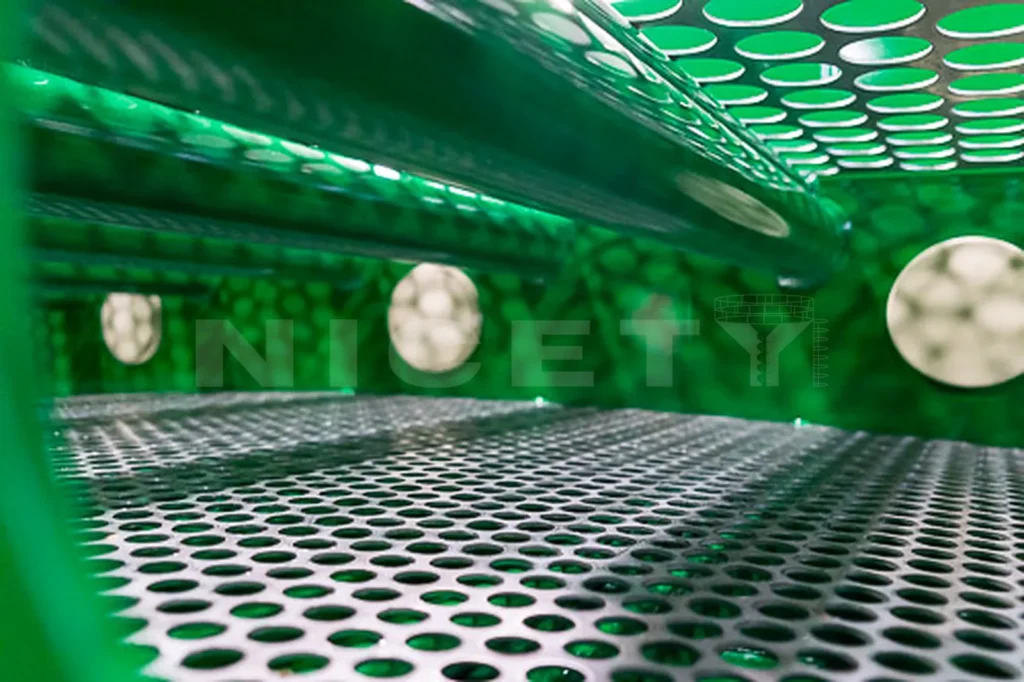
    • Perforated Punch Plates: Exceptional mechanical rigidity and impact resistance; round staggered holes prevent cylindrical strand-cut pellets from tipping through endwise. Highly recommended for the top scalping deck.
    • SUS304 Precision Woven Wire Mesh: Provides high open screen area (45%–60%) for high-speed fines and dust removal on the lower deck.
  • Handling Sticky or High-Temperature Pellets: For soft polyolefins, hot-melt resins, or EVA/TPE with Shore hardness < 80A, select fluoropolymer-coated contact surfaces and air-cooling injection manifolds to prevent screen mesh blinding.

Information we need from you

  1. 01 Base polymer type, pellet geometry, and bulk density Specify polymer family (e.g., PP, PE, PET, ABS, TPU, masterbatch), pellet shape (die-face hot-cut spherical vs. strand-cut cylindrical), pellet dimensions (diameter and cut length), and bulk density (kg/m³ or g/cm³).
  2. 02 Target hourly throughput and upstream pelletizing line output Continuous production rate (kg/h or metric tons/h), peak surge rates from upstream dewatering/centrifugal dryers, and daily operating schedule.
  3. 03 Screening classification objectives and cut points Required number of fractions (e.g., 2 fractions: on-spec + oversize; or 3 fractions: oversize scalping + on-spec + fines dedusting) along with mesh opening sizes (e.g., 4.5 mm top deck, 1.8 mm bottom deck).
  4. 04 Material temperature and surface moisture at screener inlet Inlet pellet temperature (°C) and residual surface moisture (%) as discharged from upstream centrifugal dewatering dryers or air cooling chutes.
  5. 05 Plant floor space, installation elevation, and discharge chutes Available installation footprint, ceiling headroom, elevation drop from upstream dryer, and alignment requirements for downstream air-cooling conveyors, silos, or bagging hoppers.

Request a Quote A model name, a material or a drawing is enough to start.

Photos and videos

The machine itself

Next step

Request a Quote

Tell us the material, the process and what you need to achieve. Technical details can be completed later together with our sales team.

Request a Quote
Request a Quote