_画板-1的副本-300x300.png)
Solution
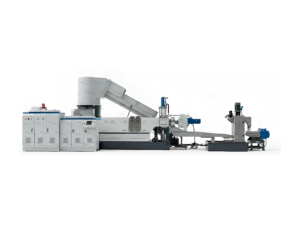
Closed-Loop Pellet Dewatering, Spiral Cooling, and Dedusting System
Integrated post-pelletiz…
Application
Polyolefin extrusion pelletizing plant profile covering water-ring die-face cutting, high-g centrifugal dewatering, spiral elevator cooling, and dedusting.

This industrial application profile outlines the continuous extrusion pelletizing, multi-stage water dewatering, and spiral cooling classification system engineered specifically for high-capacity polyolefin pelletizing plants running virgin polymer, re-compounded, or post-industrial polyethylene (LDPE, LLDPE, HDPE) and polypropylene (PP) compounds.
Polyolefin extrusion lines running at medium-to-large industrial capacities (500 kg/h to 3,000 kg/h) frequently encounter major operational bottlenecks in post-extrusion pellet processing: conventional strand cutting lines require excessive factory length (over 20 meters) and suffer from constant strand breakage when running flexible, low-crystallinity polyolefins like LLDPE or LDPE. Conversely, while water-ring die-face pelletizers eliminate strand guiding, the high volume of recirculating cutting water discharges hot (65°C–80°C), wet (0.5%–1.0% surface water) pellet slurry. If pellets are improperly dried or cooled before packaging, latent heat causes moisture re-condensation ("sweating") inside sealed 25 kg bags, triggering block caking, mold growth in organic additives, and feeding blockages in downstream extrusion hoppers. This application integrates a high-torque single or twin-screw extruder, die-face water ring pelletizer, vertical centrifugal dryer, continuous vibrating spiral cooling elevator, and linear dedusting screen, delivering bone-dry, cooled, and dust-free polyolefin pellets.
The scenario
Commercial polyolefin compounding plants, resin polymerization re-pelletizing facilities, and high-capacity post-industrial polyolefin recycling operations running continuous PE and PP extrusion lines.
High-purity, free-flowing, bone-dry polyolefin pellets (cylindrical or lenticular shape, Ø2.5–3.2 mm) packaged in 25 kg valve bags or 1,000 kg bulk big bags, certified for high-speed blown film, pipe extrusion, and injection molding.
Achieve continuous, high-speed polyolefin extrusion pelletizing with zero strand-break downtime, low plant footprint, and bone-dry, cooled pellets (surface moisture ≤ 0.05%, exit temperature ≤ 40°C).
Material
The properties named here are the ones the equipment questions turn on — they are confirmed per project, from samples where it matters.
Thermoplastic polyolefin melts: HDPE, LDPE, LLDPE, and PP homopolymer / copolymer. Clean polymer melt delivered from single-screw or twin-screw extruder die head at temperatures of 170°C to 240°C.

Process
The flow is the usual shape of the scenario; the machines for each step are chosen per project — see the solutions below.

Extrusion and Melt Processing
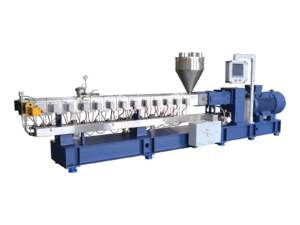
Melt-kneads polyolefin resin and delivers pressurized melt through a multi-orifice circular die plate.
Pelletizing
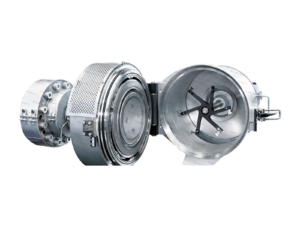
Cuts molten strands into pellets right at the die face; high-velocity water ring sweeps pellets away instantly.
Post-Pellet Treatment
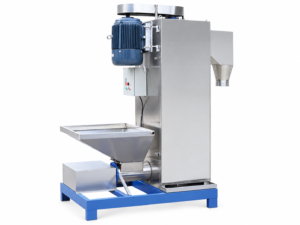
Separates water from pellets via high-speed centrifugal acceleration, reducing surface moisture to ≤ 0.05%.
Cooling
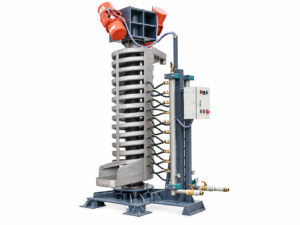
Elevates pellets vertically while convective air knives strip latent heat, cooling pellets from 75°C to ≤ 40°C within a small footprint.
Post-Pellet Treatment
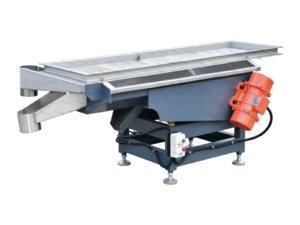
Separates rare oversize agglomerates and dedusts micro-fines before discharging uniform pellets to packaging silos.
Requirements
1. Centered Die-Face Cutting & Dynamic Blade Wear Compensation: Variable-speed cutter motor with pneumatic auto-advance keeps high-speed blades flat against the die plate, ensuring clean shear without “mushrooming” pellet heads.
2. High-G Centrifugal Dewatering: Vertical centrifugal dryer rotor operating at 900–1200 RPM expels > 99.8% of surface water within 1.5 seconds of slurry entry.
3. Vertical Spiral Extended Heat Dissipation: Vibrating spiral elevator provides 60–180 seconds of continuous vertical retention time, using counter-current air knives to dissipate core latent heat and cool pellets from 75°C to ≤ 40°C.
4. Linear Classification & Dedusting: Dual-deck linear screen removes rare oversized doublets and dedusts micro-fines before packaging.
Residual Moisture: Surface moisture of finished pellets strictly ≤ 0.05% (500 ppm) upon exiting the screener.
Exit Temperature: Pellet discharge temperature ≤ 40°C at 25°C ambient, preventing thermal caking in bags.
Pellet Uniformity: Diameter variation within ±0.2 mm; zero agglomerated doublets or tailing whiskers.
Selection
These are the questions a quotation is built from — answering them up front shortens the first round.
Fit
The boundaries are part of the scenario: they keep equipment from being quoted into a case it cannot serve.
Best fit for high-output polyolefin pelletizing plants running virgin polymer, re-pelletized, or post-industrial PE (HDPE, LDPE, LLDPE) and PP lines with continuous capacities from 500 kg/h to 3,000 kg/h, where compact plant footprint (< 12 m line length) and zero pellet agglomeration/sweating are required.
Requires assessment when processing metallocene mLLDPE or high-melt-index injection grades (MFI > 30 g/10 min), where customized die-hole geometries and high cutting water circulation velocities are necessary to prevent die hole smear.
Not suitable for water-soluble polymers (PVA) or ultra-low melting elastomers (Shore hardness < 50A, melting point < 65°C) which require specialized underwater cutting with refrigerated water circuits.
Variants
A variant is written down only where the process and the decision actually differ.
High-density polyethylene (HDPE pipe, blow-molding, and film grades) with MFI 0.05 to 2.0 g/10 min.
Requires high-torque single/twin screw extruder with grooved feed section to handle high melt viscosity and prevent thermal surging.
High-crystallinity spherical/lens pellets with bulk density ≥ 0.55 kg/L and zero moisture retention.
Low-density polyethylene (LDPE / LLDPE film grades) with MFI 1.0 to 10.0 g/10 min.
Requires vibrating spiral elevator equipped with forced ambient air blowers to ensure core cooling before bulk storage.
Uniform, flexible lenticular pellets suitable for high-speed blown film extrusion with zero air bubbles.
Photos
Photos go here once real views of this scenario are cleared to publish.


Before an inquiry
Request a Quote Send these points with your inquiry; the scenario can then be quoted against your line, not against an assumption.
Where to go next
Solution
Integrated post-pelletiz…
Tell us the material, the process and what you need to achieve. Technical details can be completed later together with our sales team.