Equipo auxiliar y sistemas integrados
e-mail [email protected] Idioma EN ES

Equipment

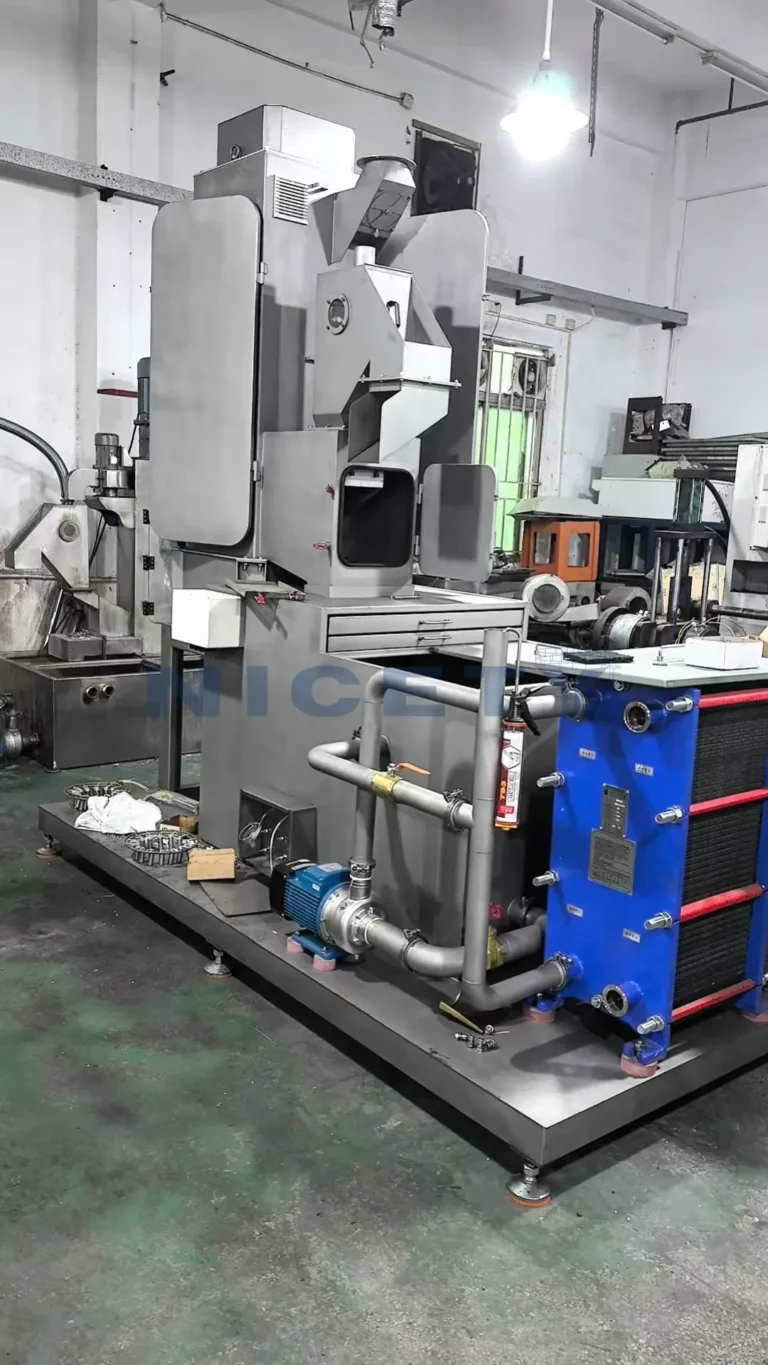
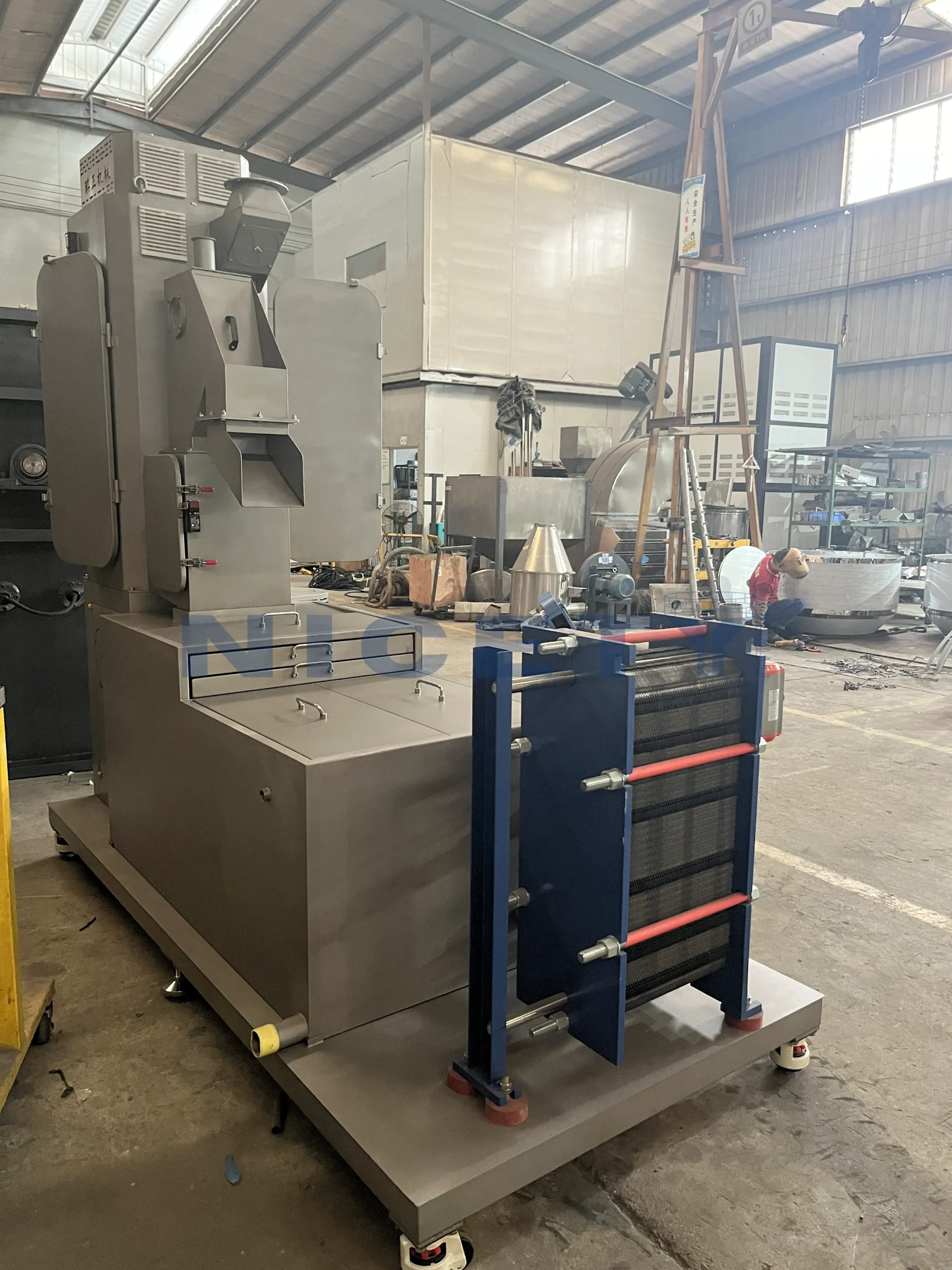
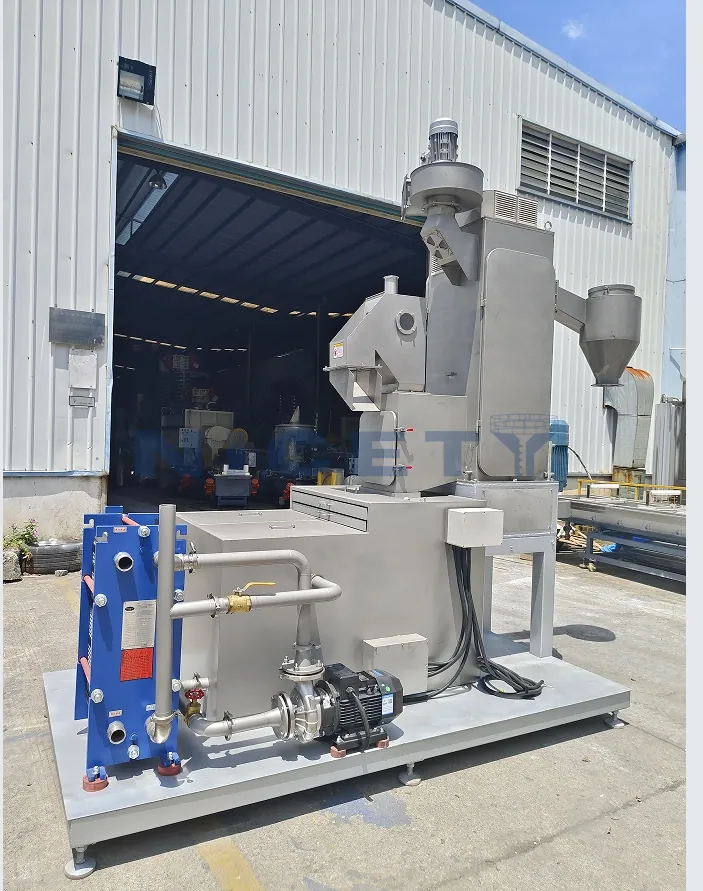
Underwater Pelletizing Dehydrator

High-speed vertical centrifugal dewatering machine for continuous, high-efficiency solid-liquid separation of underwater and water-ring pellet slurry.

  • Drying, Cooling and Dewatering Equipment
  • Pelletizing Equipment and Auxiliaries
  • Compounding
  • Dewatering and Drying
  • Post-Pellet Treatment
  • EVA
  • Modified Plastics
  • Multifunctional Masterbatch
  • Resin
  • Rubber
  • Thermoplastic Elastomer
  • TPE
  • TPO
  • TPU
  • TPV
  • Pellets
  • High surface moisture on the material
  • Insufficient cooling
Rango de capacidad
200–3500 kg/h (dry pellets)

Reference values for the model or models named above. The confirmed configuration, the capacity basis and the scope of supply are stated in the quotation and the drawings.

Overview

What this machine does

Continuously separates process water from pellet-water slurry via high-G centrifugal force, discharging dry pellets and returning water to the recirculation tank.

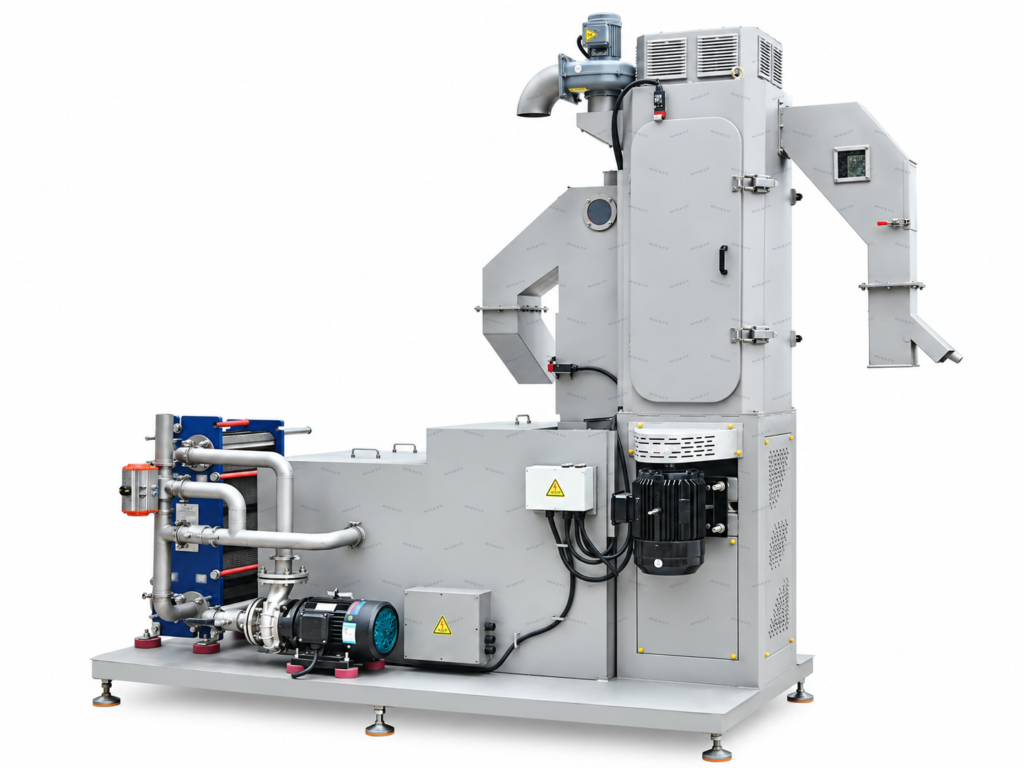
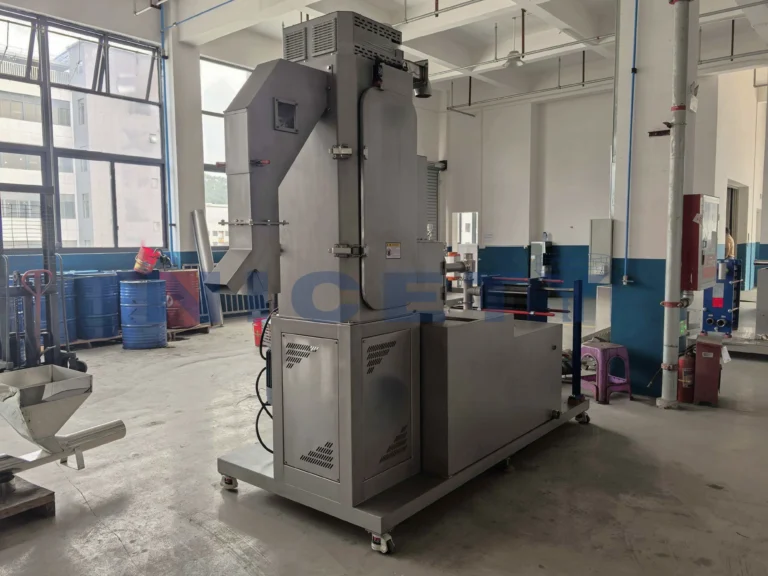
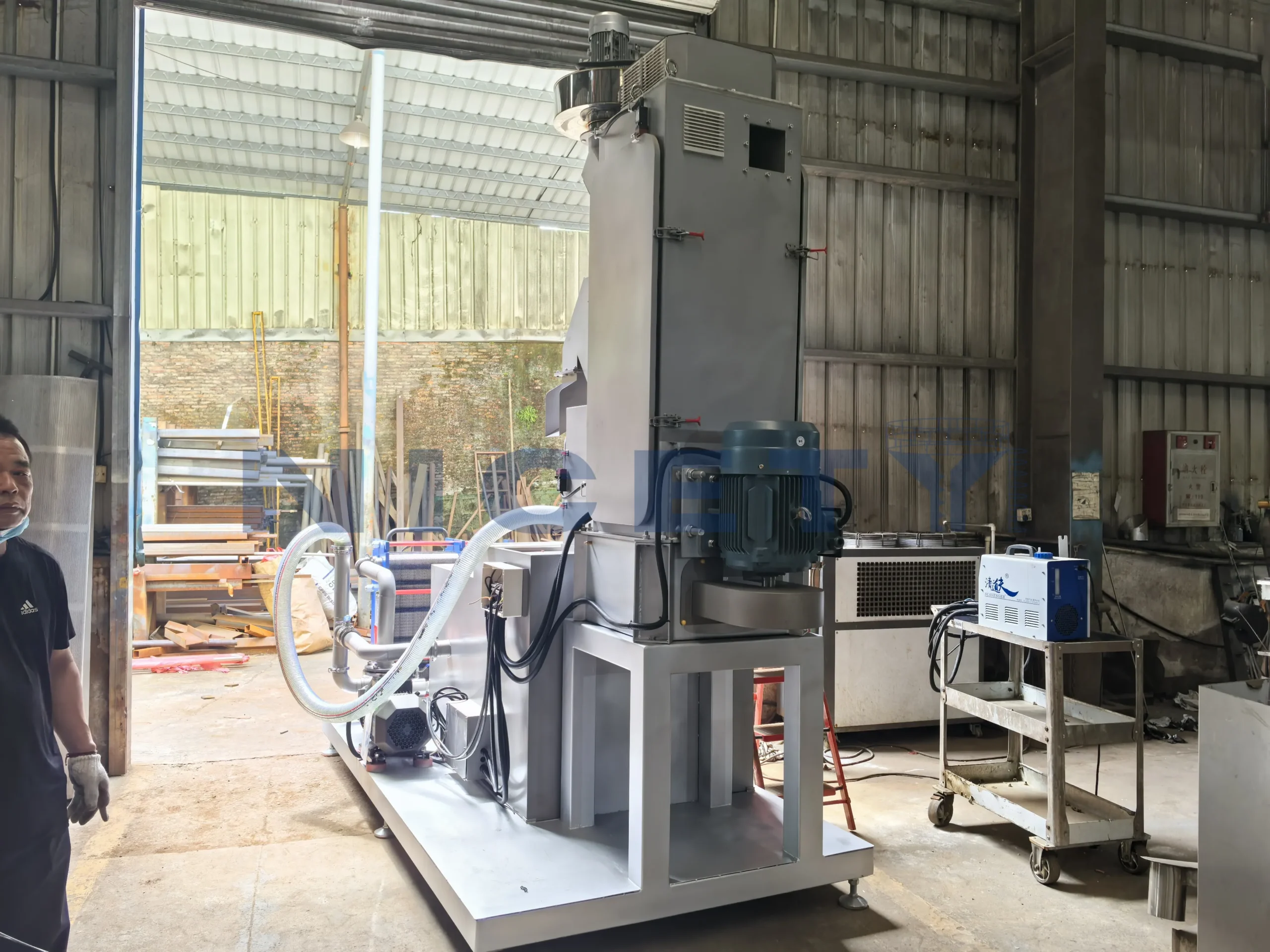
The Underwater Pelletizing Dehydrator (vertical centrifugal dewatering dryer for water-slurry pelletizing) is the critical solid-liquid separation equipment for underwater and water ring pelletizing lines. Receiving a continuous high-volume mixture of circulating process water and freshly cut polymer pellets, the dehydrator rapidly strips away water and discharges dry, ready-to-pack plastic pellets with surface moisture as low as < 0.05%.

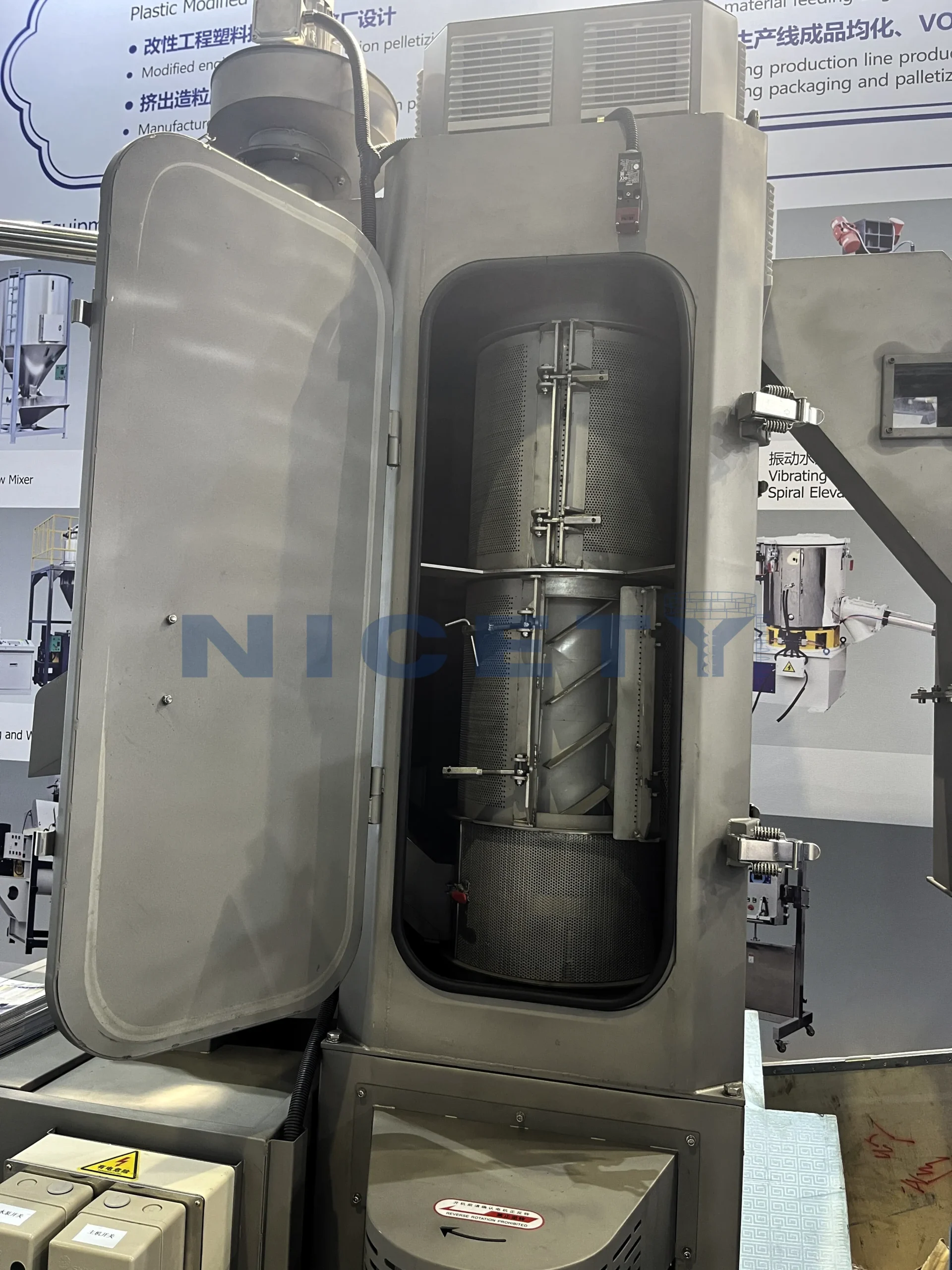
Featuring a multi-stage separation architecture, incoming slurry first passes through an inclined gravity pre-drainage chute that sheds over 90% of the transport water back to the tempered water reservoir. The pre-drained pellets then enter the vertical centrifugal drying chamber, where high-speed rotating rotor paddles propel the pellets upward in a spiral path against a precision non-clogging wedge wire screen basket. Strong centrifugal force expels residual water droplets outward through the screen slots while dried pellets exit tangentially from the top outlet.

Key features

The parts that do the work

Each picture names one part of the machine and what it does for the material and the batch.

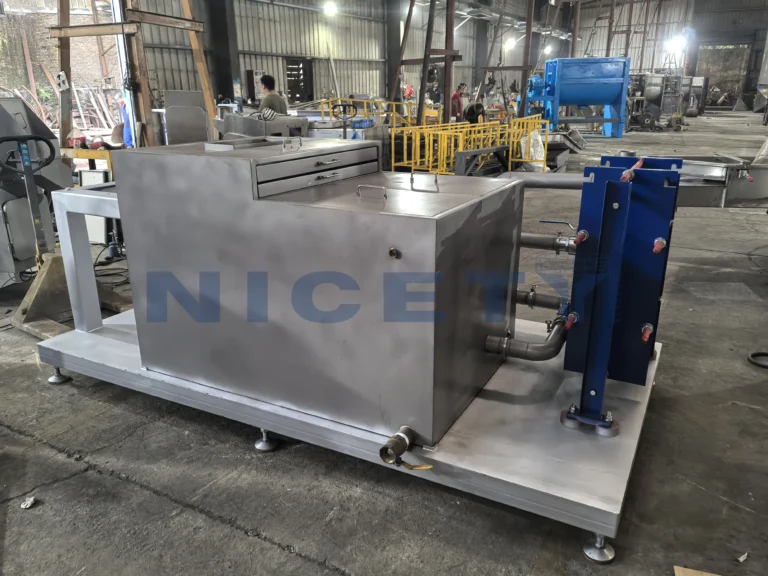
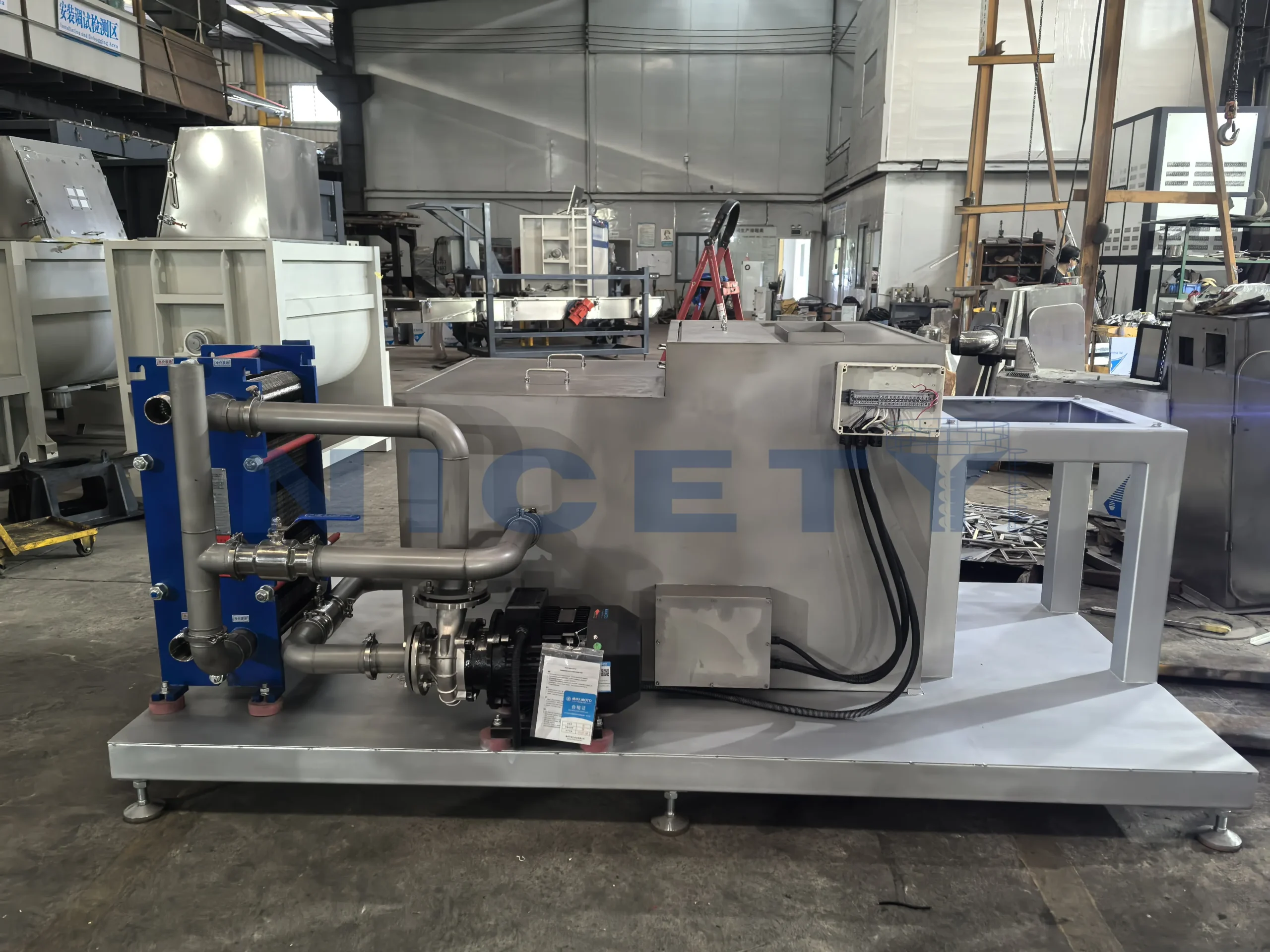
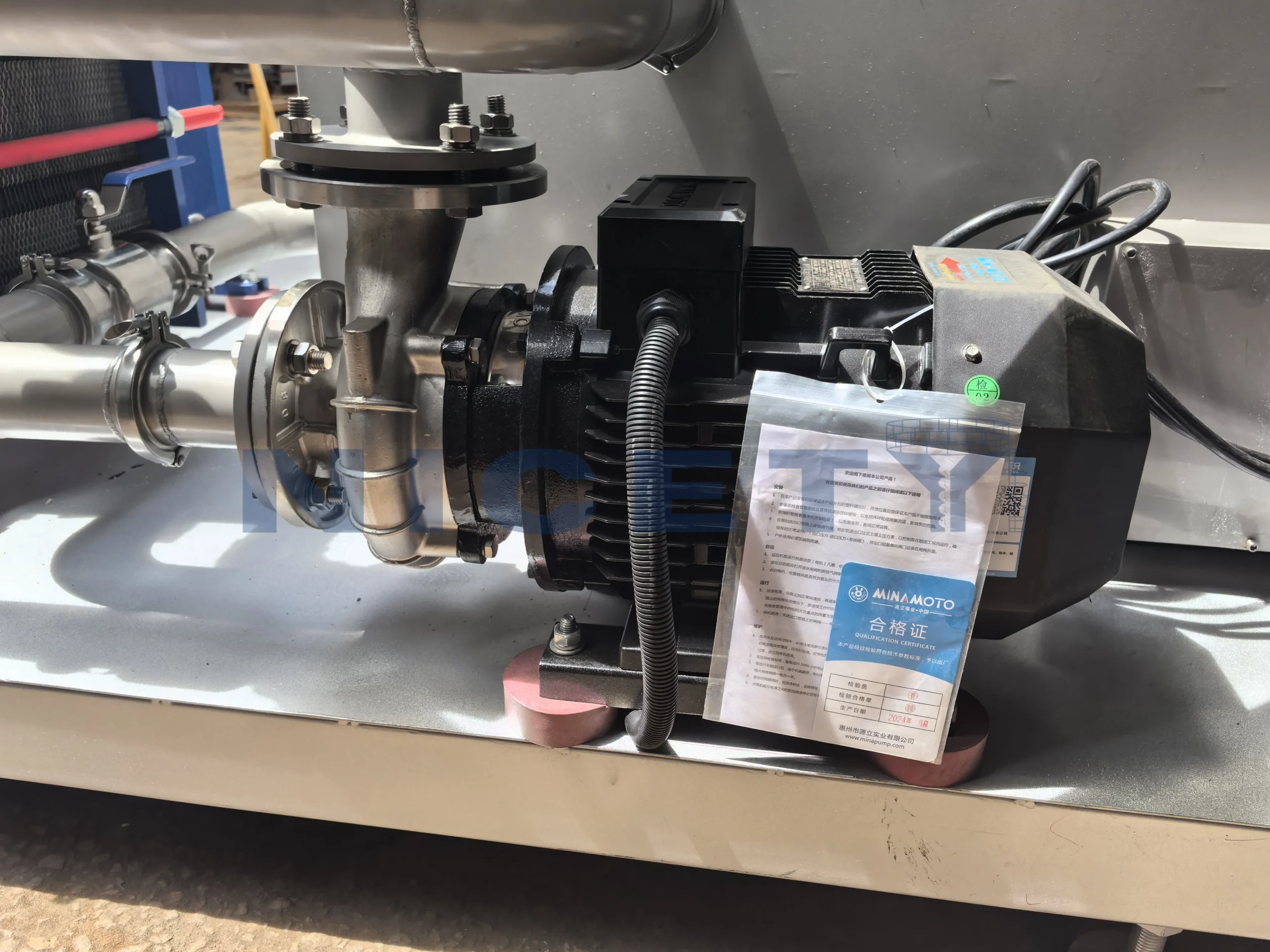
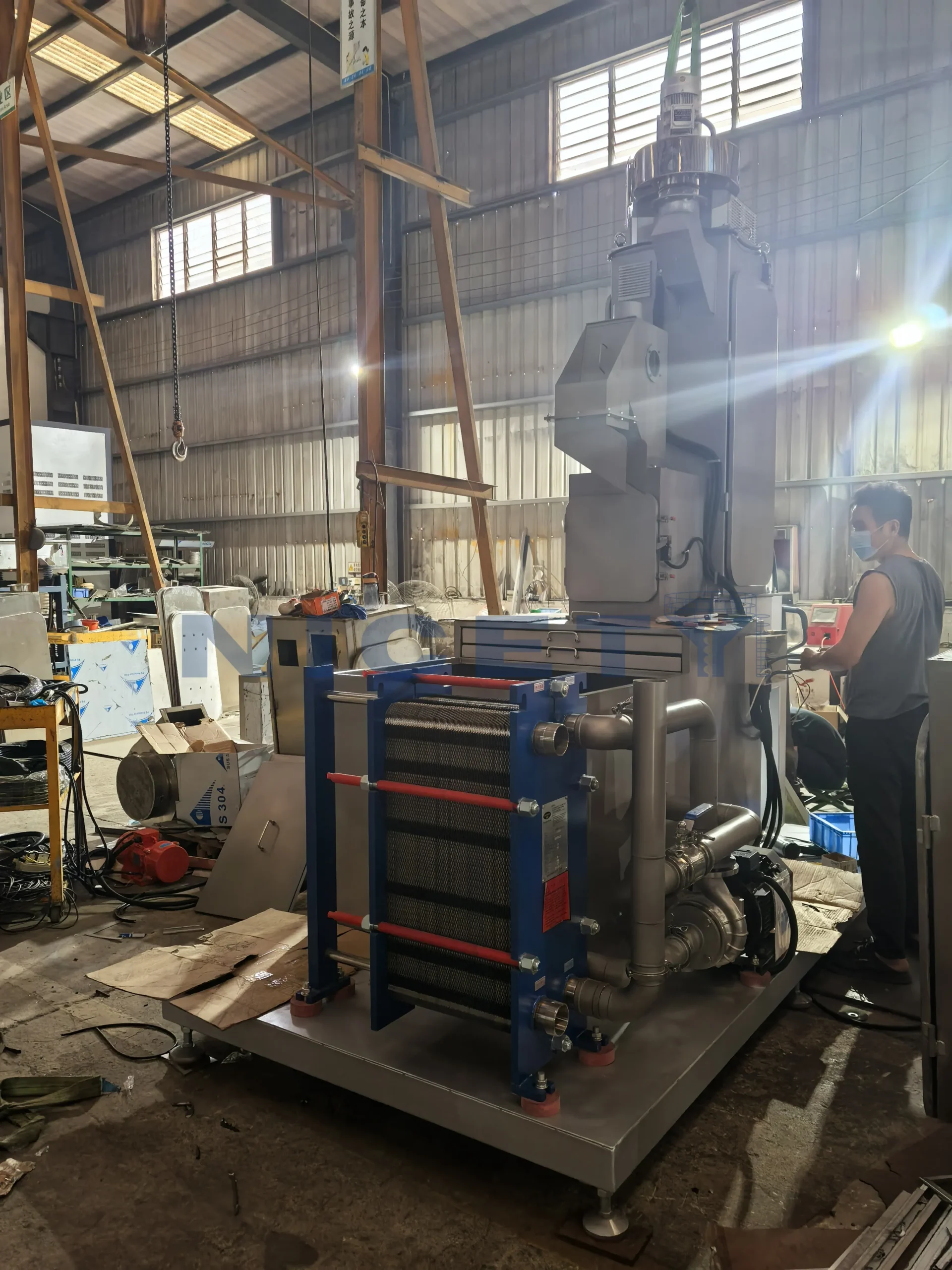
Heat Exchanger

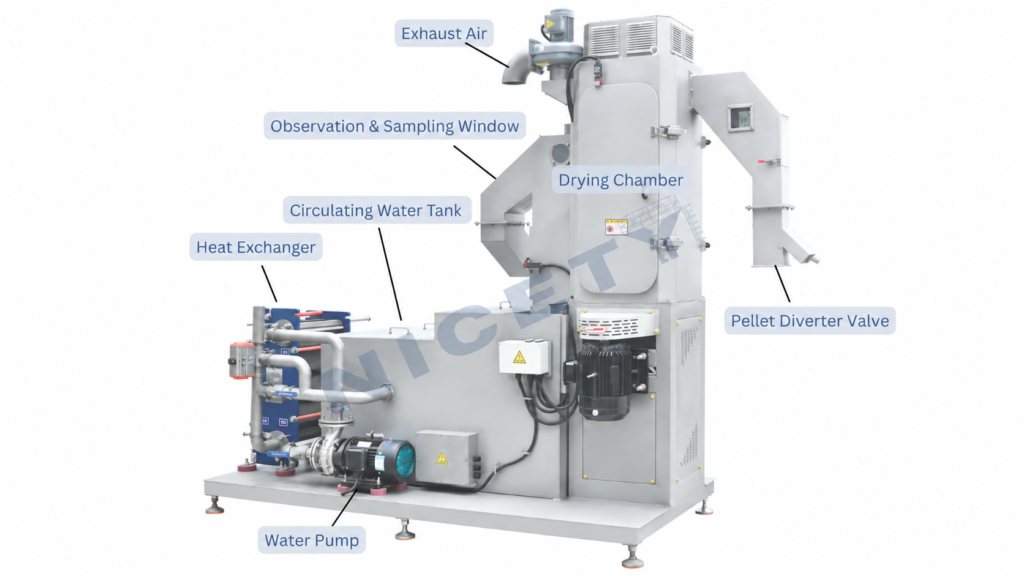
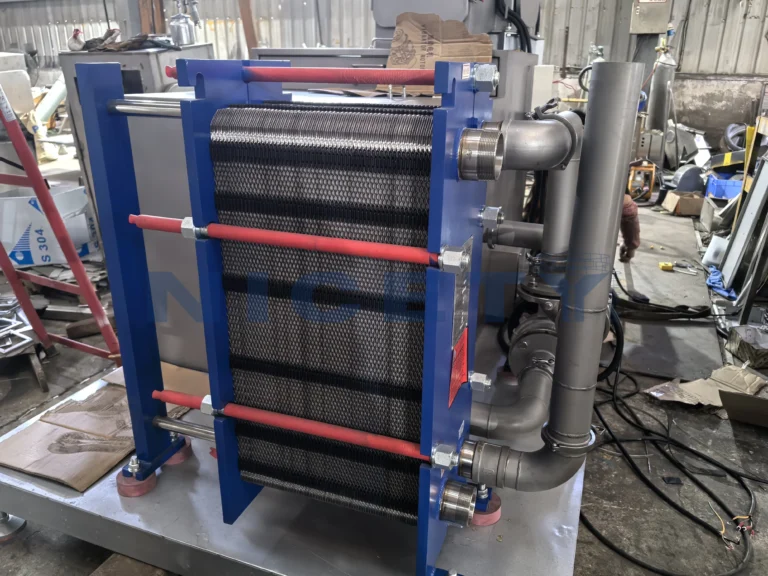
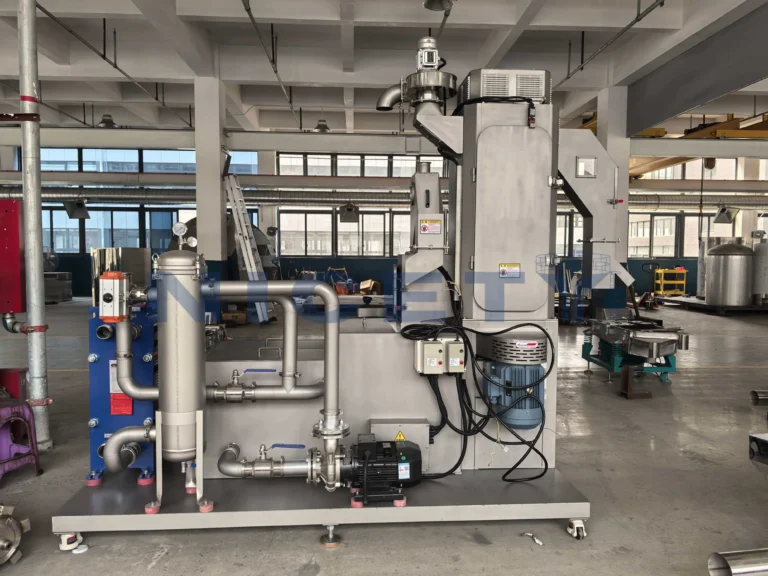
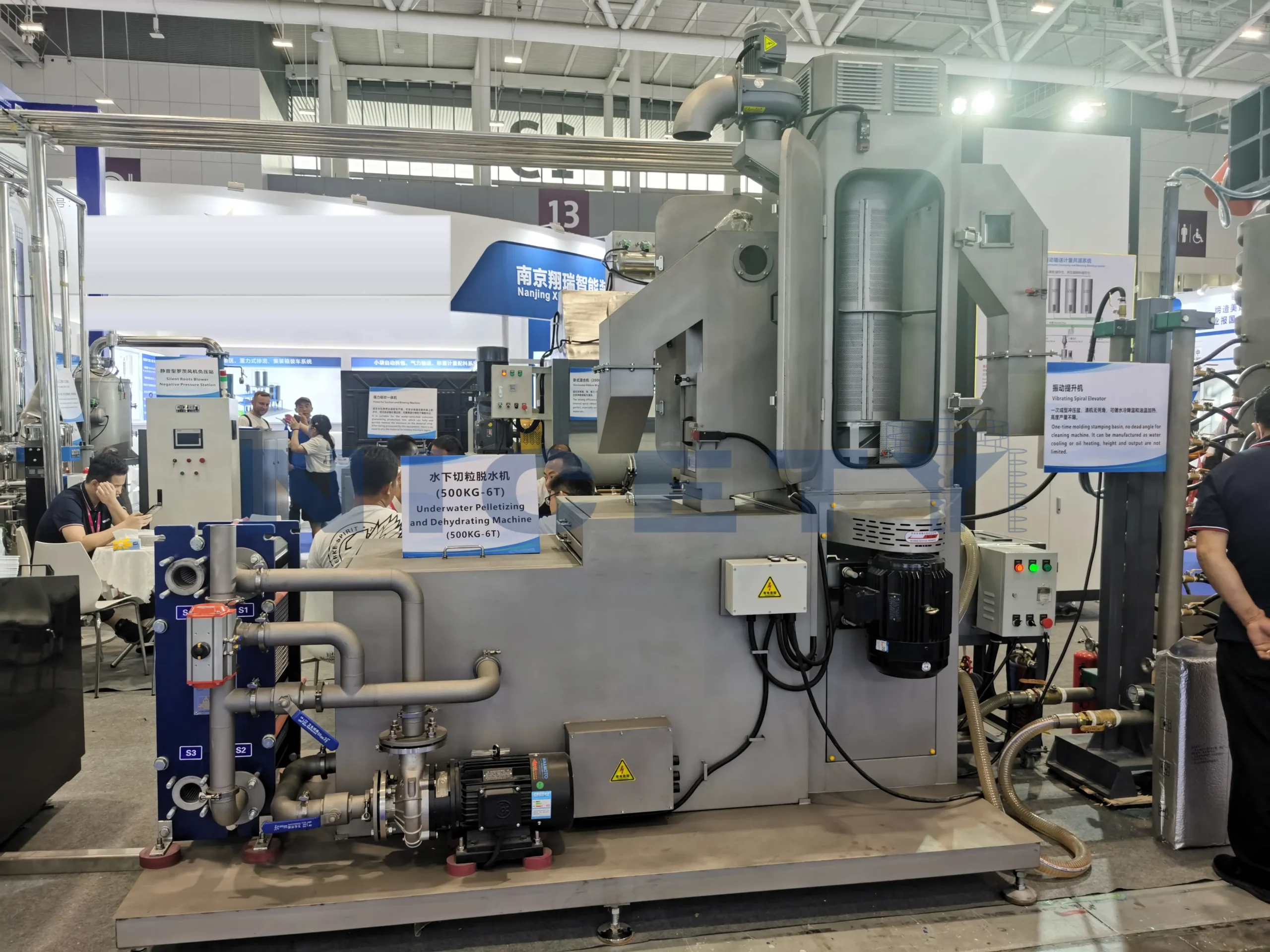
High-efficiency SUS316L plate heat exchanger connected to the process water cooling loop. Continuously dissipates polymer sensible heat from the circulating water to maintain an exact, stable water temperature (±1.0°C), preventing die-hole freeze-off or hot pellet agglomeration during 24/7 extrusion.

Water Level Monitoring & Dual-Layer Filtration Screen

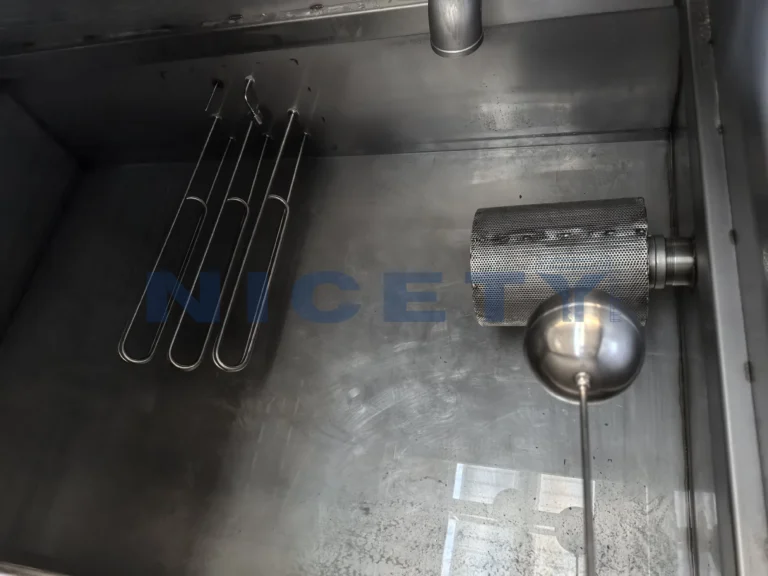
Integrated within the reservoir, high/low magnetic float-level sensors continuously monitor process water levels and trigger automatic makeup water to prevent dry running, while removable dual-layer stainless steel filter screens catch fine polymer debris and protect circulation pumps.

Circulating Water Tank

Heavy-duty SUS304 insulated tempered water reservoir with multi-stage internal settling baffles and electric immersion heating rods. Stabilizes process water temperature and provides clean, surge-free tempered water circulation for continuous pelletizing and dewatering.

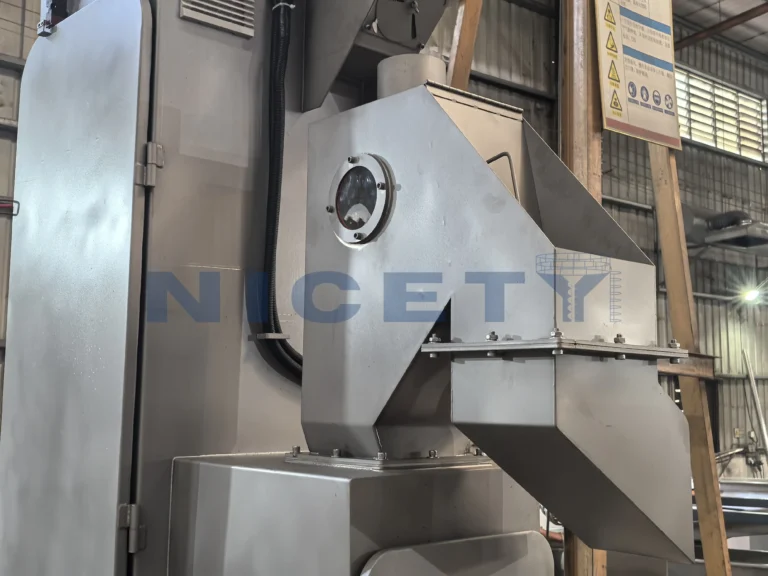
Observation & Sampling Window

A window set into the pellet path to watch the freshly cut pellets and the circulating water without stopping the line or opening the machine. Pellet shape and diameter, any agglomeration or fine debris, and how the cut is running read at a glance, and a hand sample for QC is taken at the sampling window.

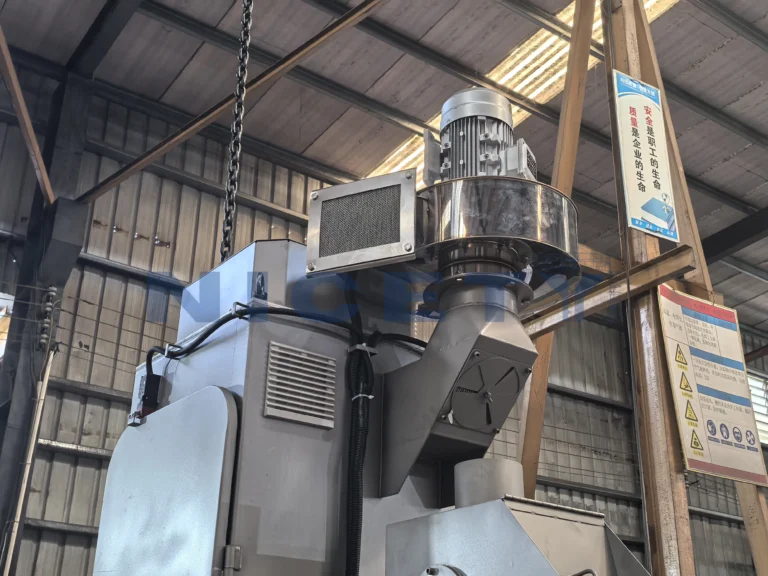
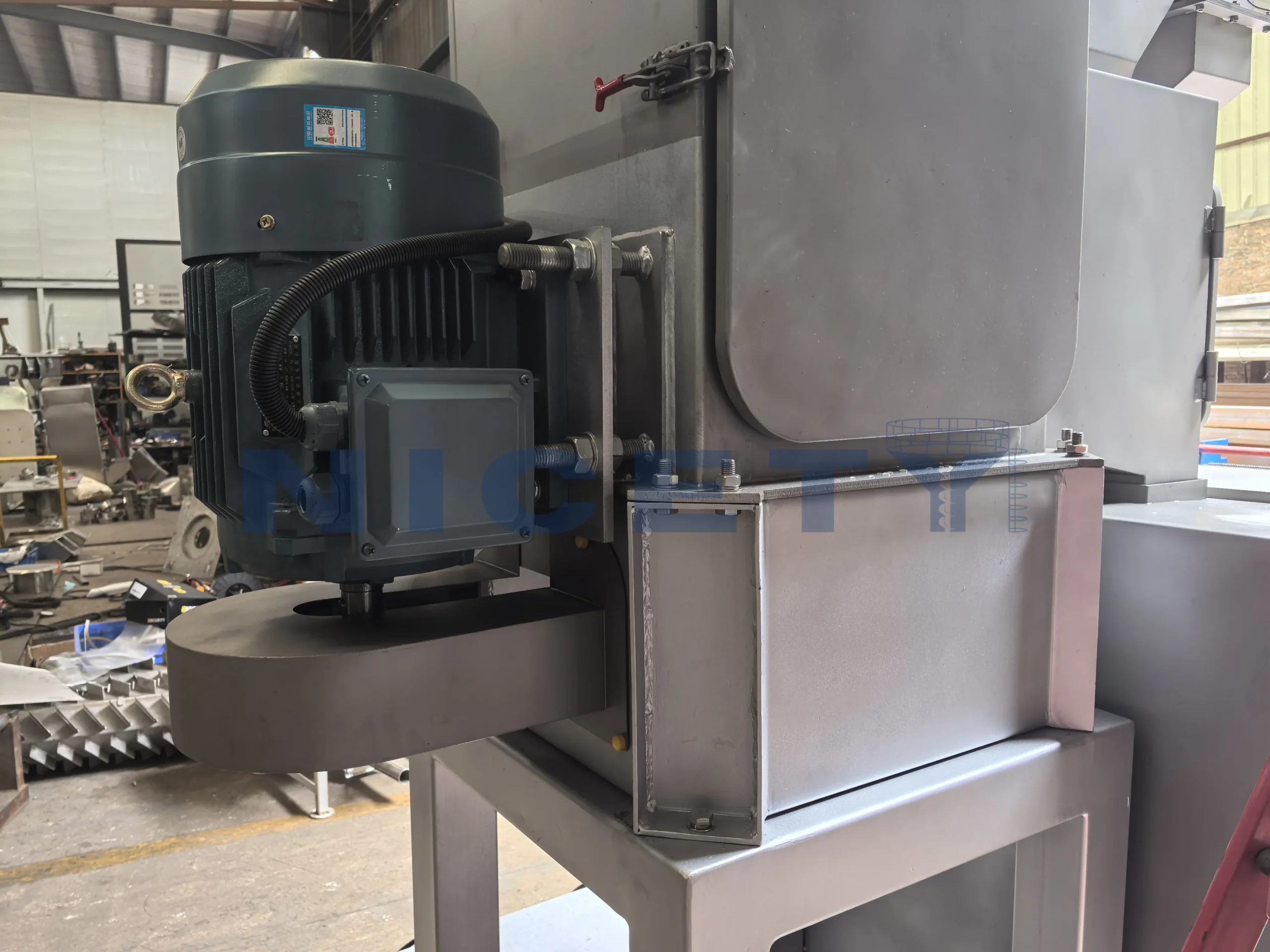
Exhaust Air System

Top-mounted high-flow centrifugal moisture exhaust blower with stainless-steel demister ducting. Continuously evacuates hot water vapor, steam, and atomized mist generated inside the drying chamber, preventing internal condensation and moisture re-deposition onto dried pellets.

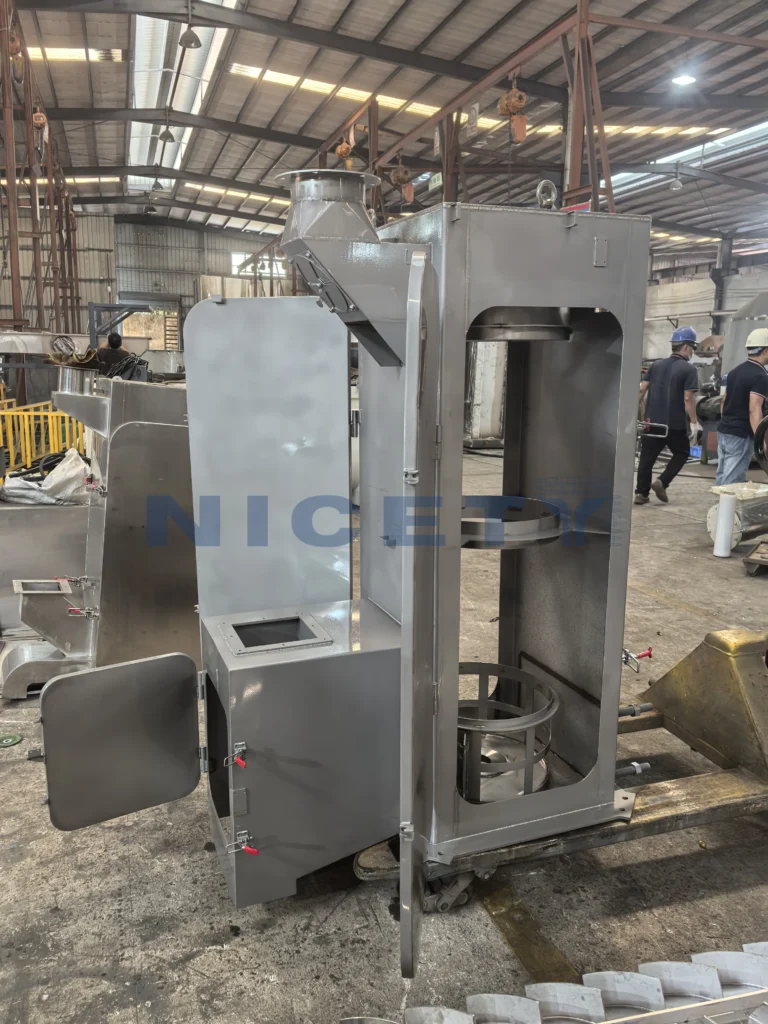
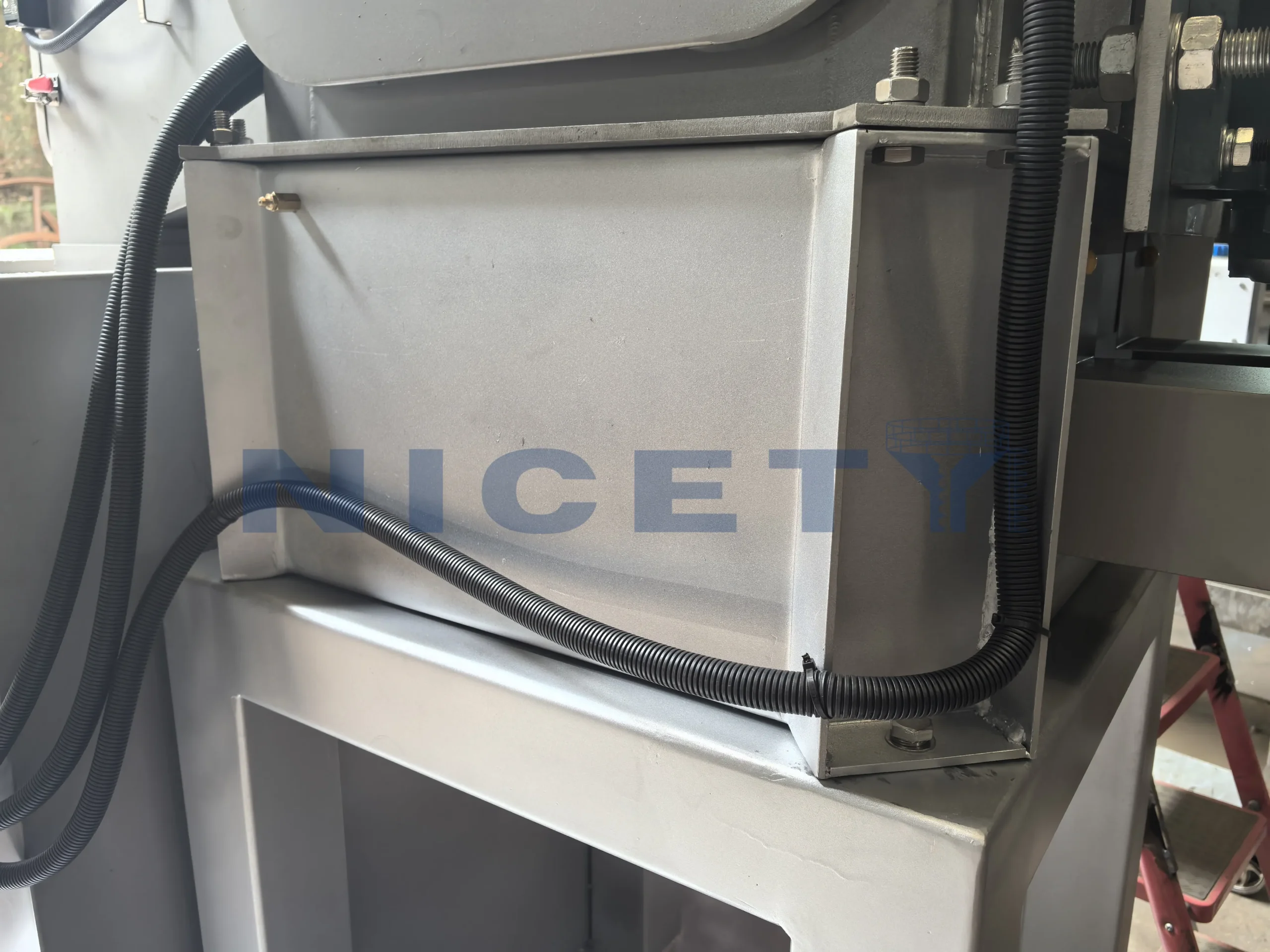
Drying Chamber

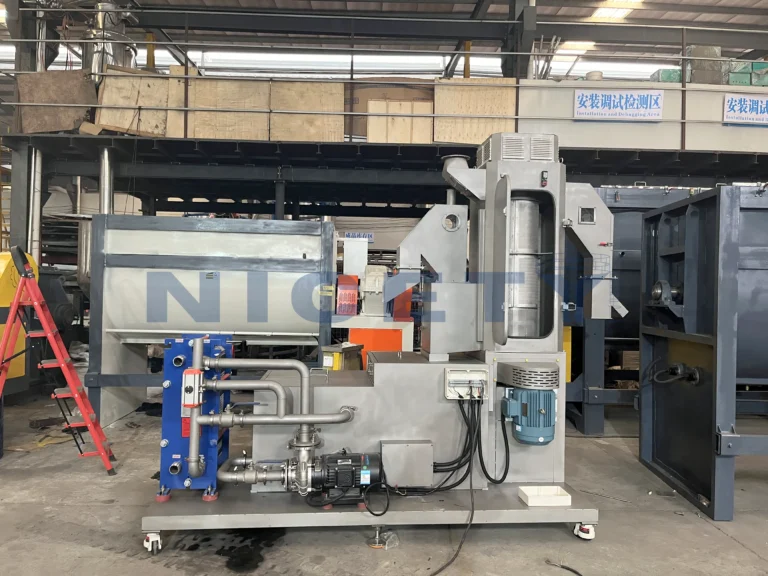
Heavy-duty cylindrical stainless-steel separation chamber fitted with a precision, non-clogging wedge wire screen basket (0.3–1.2 mm aperture). Precision-machined radial clearances and clamp-locked split housing enable smooth water release and under-5-minute cleanouts during color changeovers.

Rotation Shaft

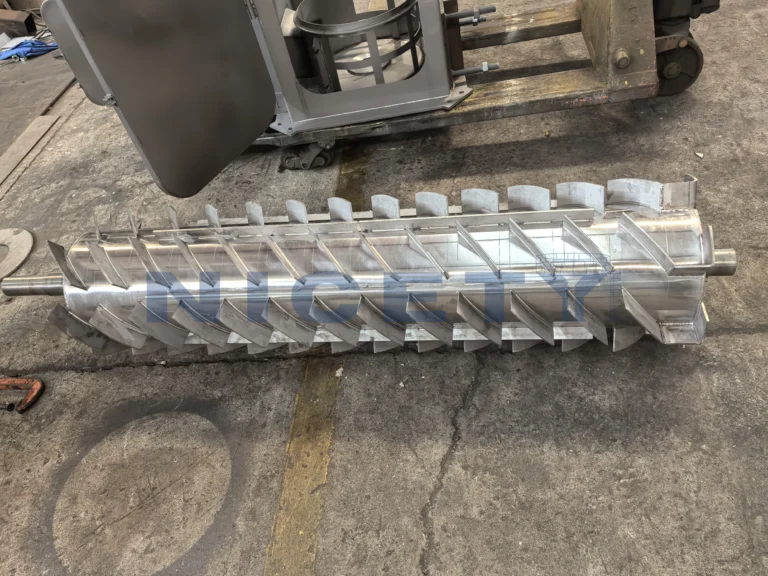
High-tensile stainless-steel central vertical rotor shaft dynamically balanced to ISO G1.0 standards. Equipped with multi-tier wear-resistant angled lifting flights that propel pellets upward in a continuous spiral vortex while outboard-mounted labyrinth slinger seals isolate bearings from water spray.

Pellet Diverter Valve

Pneumatically actuated fast-acting two-way diverter valve installed at the dry pellet exit. Seamlessly switches pellet discharge between production storage silos, QC sampling ports, and off-spec reject bins without interrupting upstream pelletizer operation.

Material and process

Where it fits — and where it does not

Read the conditions together: a machine is selected for the material and the output, not from its name alone.

Materiales y condiciones adecuados

The essential dewatering component for all underwater pelletizing and water-ring pelletizing extrusion lines.

Universally handles thermoplastic materials processed through water-quenched pelletizing systems, including Thermoplastic Elastomers (TPE, TPU, TPV), Ethylene Vinyl Acetate (EVA), Polypropylene (PP), Polyethylene (HDPE, LDPE, LLDPE), Polystyrene (PS), ABS, Polyamides (PA6, PA66), and high-loading masterbatches. Accommodates standard spherical pellets, lenticular granules, and micro-pellets.

When configured with closed-loop chilled-water heat exchange, it stably processes tacky hot-melt adhesives and low-hardness elastomers (Shore 40A–75A) without chamber smearing.

Limitaciones y cuándo no aplica

The centrifugal pellet dewatering dryer separates surface water purely through centrifugal mechanical acceleration; key operating boundaries include:

  • Internal hygroscopic moisture: Removes external surface water only; internal absorbed moisture in hygroscopic polymers (e.g. PA, PET, PC) requires downstream desiccant resin dryers.
  • Micro-pellets smaller than screen slots: Pellets smaller than the screen slot aperture (e.g. < 0.4 mm) will wash through into the water tank; specialized micro-pore screen baskets must be fitted.
  • Severe sticky polymers at elevated temperatures: Processing very tacky soft elastomers (e.g. soft TPU/EVA) at elevated water temperatures may cause pellets to smear against screen walls; water temperature must be chilled below the polymer tack point.

Condición y requisitos de alimentación

Accepts high-volume water-pellet slurry continuously delivered via piping from underwater pelletizers, water ring pelletizers, or water-slide pelletizing systems.

Water-to-pellet ratio typically ranges from 10:1 to 30:1 by volume. Slurry must be free of large molten lumps or foreign debris that could jam the rotating paddles.

Condición y límites de salida

Delivers dry, free-flowing plastic pellets with extremely low residual surface moisture (typically < 0.05% for standard polyolefins).

Pellets exit via the top tangential outlet directly into vibrating classifying screens, cooling spiral elevators, or pneumatic storage silo conveying blowers.

Throughput

Rango de capacidad

Read a figure together with the basis below it: the same machine reaches different numbers on different materials.

200–3500 kg/h (dry pellets)

Base de las cifras de capacidad

Continuous pellet dewatering capacity scales from 200 kg/h to 3,500+ kg/h of dry pellets, accommodating water slurry circulation flow rates up to 15 to 80 m³/h.

Throughput is governed by pellet bulk density, pellet diameter, and surface hydrophobicity. Standard polyolefin pellets (PP, PE) dewater effortlessly with surface moisture < 0.05%, whereas micropellets (< 1.2 mm) or sticky elastomers require higher rotor RPM and fine-mesh wedge wire screens.

Models

Models in this range

The figures are the reference values entered for each model. The model for your line is confirmed against your material and output before it is quoted.

Integrated Centrifugal Pellet Dehydrator & Water Circulation Skid for PP/PE Compounding Line

Delivered a high-capacity vertical centrifugal dewatering and tempered water circulation skid for a high-output polyolefin compounding facility. Handles up to 2,500 kg/h of water-quenched PP/PE pellet slurry, achieving consistent residual surface moisture < 0.05% directly ahead of pneumatic silo transfer.

Low-Temperature Underwater Pelletizing Dehydrator for TPE/TPU Elastomer Granulation

Engineered with closed-loop chilled-water temperature control and anti-stick internal chamber treatment for a soft elastomer compounding workshop. Continuously dries tacky TPE and TPU micro-pellets without screen blinding or granule deformation across continuous shifts.

Quick-Clean Centrifugal Dewatering Unit for Engineering Plastics & Color Masterbatch

Supplied with hardfaced wear-resistant rotor lifting blades, clamp-locked dual split-housing, and quick-release wedge wire baskets for a dense masterbatch plant. Enables under-5-minute washdowns and residue-free color changes during rapid product switches.

Scope of supply

What is included, and what is not

The quotation states the scope for the confirmed configuration; the groups below describe how a supply is normally split.

Incluido de serie

  • Two-stage stainless steel housing with pre-drainage box Fabricated from SUS304 stainless steel with slurry inlet chute, gravity drainage grid, and large water return outlet.
  • High-precision wedge wire screen basket Continuous slot non-clogging screen basket engineered for smooth water shedding and zero pellet trapping.
  • Dynamically balanced vertical rotor with angled lifting flights High-strength stainless steel rotor balanced to ISO G1.0 standard for smooth, vibration-free high-speed rotation.
  • High-efficiency vertical electric drive motor and V-belt transmission TEFC industrial motor mounted on adjustable motor base with safety protective belt guard.
  • Outboard water-protected bearing assemblies Isolated bearing housings mounted outside the wet zone, equipped with grease nipples and labyrinth slinger seals.
  • Electrical control panel / junction box Motor starter, overload thermal relay, emergency stop, and safety cover interlock limit switches.

Elementos opcionales

  • Wedge wire screen slot aperture options Choice of 0.3 mm, 0.5 mm, 0.8 mm, or 1.2 mm laser-cut wedge wire screen baskets tailored to standard pellets or micro-pellets.
  • Tungsten carbide / ceramic rotor paddle cladding Wear-resistant hardfacing on rotor lifting blades for processing highly abrasive mineral-filled (CaCO3) masterbatches or glass fiber compounds.
  • Secondary top counter-current hot-air injection Integrated top air blower with electric heater coil forcing dehumidified hot air through the pellet bed to achieve ultra-low moisture < 0.02%.
  • Pneumatic screen basket vibration / cleaning knocker Pneumatic impact vibrators installed on the screen housing to prevent micro-pellet lodging and screen blinding.
  • Cold-climate tank heating / additional immersion rods Additional immersion heating rods for the circulating water tank, for cold or unheated workshops where the standard heating cannot hold setpoint overnight.

No incluido

  • Floor foundations and wastewater drainage gutters Civil works, foundation pads, and plant floor wastewater trenches.
  • Process water piping outside machine flanges External slurry feed piping from cutting chamber and water return piping to the reservoir.
  • Primary power supply cables Electrical wiring from plant main distribution board to the machine isolator switch.

Installation planning

Utilities, interfaces and site readiness

These are the connections the machine and the line around it have to agree on before the layout is fixed.

Requisitos de servicios auxiliares

Suministro eléctrico
380 V / 415 V / 460 V / 220 V (customizable), 50/60 Hz, 3-phase AC.
Agua
Not consumed; machines separate and return water directly to the recirculation loop.
Aire comprimido
0.5–0.7 MPa (5–7 bar), clean, dry air for optional pneumatic screen vibration knocker (consumption: 0.05 m³/min).
Extracción y ventilación
Passive moisture exhaust chimney on top housing to vent hot water vapor outdoors.
Otras notas
Drive motor power ranges from 4 kW to 22 kW depending on dry pellet output and slurry flow volume.

Requisitos de interfaz

Mechanical: Standard slurry inlet flange (DN80–DN150) at the bottom or pre-drainage box; large bottom water return drain flange (DN150–DN300) discharging by gravity into the tempered water tank; top tangential pellet discharge port connecting to pneumatic transfer or vibrating sieve.

Electrical & Automation: Three-phase industrial power supply to electrical control cabinet; interlock contacts coordinating running status with the upstream slurry pump and downstream blower.

Lo que el cliente prepara en obra

The buyer provides level machine installation space, process water return piping back to the tempered water tank, dry compressed air for screen clearing, and primary electrical cabling terminated at the control panel.

Spare parts

Wear parts and recommended spares

The parts that wear in normal service, and the spares worth keeping on site. How often a part is replaced depends on the material and the duty the machine runs, so the basis is confirmed for each machine.

Wear parts

Placeholder image: spare part photo, 960 × 720 px (4:3). It shows the space reserved for approved material and is not a photograph of our equipment.

Precision Wedge Wire Screen Basket (SUS304 / SUS316L)

Inspect for slot enlargement, deformation, or wear every 6 months; replace when slot gap exceeds allowable pellet tolerance.

Cylindrical filtration basket. The primary separation wear component. Keep one spare basket set in stock to prevent downtime during changeovers or wear replacement.

Placeholder image: spare part photo, 960 × 720 px (4:3). It shows the space reserved for approved material and is not a photograph of our equipment.

Rotor Lifting Flight Paddles / Wear Blades

Inspect for blade thinning during quarterly PM; replace or re-weld hardfacing when blade width wears by > 15%.

Removable angled lifting blades attached to the vertical rotor shaft. Subjected to constant abrasive pellet impact.

Placeholder image: spare part photo, 960 × 720 px (4:3). It shows the space reserved for approved material and is not a photograph of our equipment.

Labyrinth Water Seal & Slinger Gaskets

Inspect during scheduled overhauls; replace seals if water leakage occurs past the slinger disc.

Dynamic sealing kit preventing process water from migrating into lower bearing housings.

Recommended spares

Placeholder image: spare part photo, 960 × 720 px (4:3). It shows the space reserved for approved material and is not a photograph of our equipment.

Top & Bottom Heavy-Duty Pillow Block Bearings

Grease periodically; replace every 8,000–12,000 operating hours or upon bearing temperature rise.

High-speed dynamic bearings supporting the vertical shaft.

Placeholder image: spare part photo, 960 × 720 px (4:3). It shows the space reserved for approved material and is not a photograph of our equipment.

Circulating Water Tank Immersion Heating Rods

Inspect the rod sheath for scale or pitting at every six-month service; replace whenever the tank no longer holds its set temperature or a rod draws no current.

Immersion heating rods that hold the circulating water tank at its set temperature. In very cold or unheated workshops they make up the heat the insulated tank loses and keep quenching water stable overnight and between shifts; order by machine model and supply voltage.

Blades, screens and other normal consumables are outside the standard warranty. How a spare part is identified and ordered is set out under Warranty & Spare Parts.

Selection

How to choose a model

Work through what you already know. The rest is settled in the conversation, not before the first message.

Select the optimal centrifugal dehydrator configuration based on line throughput, pellet dimensions, and water circulation volume:

  • Sizing Selection: Match machine size to total slurry water flow rate (m³/h) and dry pellet output (kg/h). Ensure the gravity pre-drainage box can handle peak slurry surges without overflowing.
  • Screen Slot Dimension: Use 0.8–1.2 mm slots for standard 3 mm pellets; specify 0.4–0.6 mm slots for small masterbatch pellets or 0.3 mm for micro-pellets to avoid pellet loss.
  • Metallurgy Specification: Full SUS304 construction is standard; upgrade to SUS316L for acidic recycling wash lines or corrosive additive systems; apply tungsten carbide cladding on rotor paddles for abrasive glass-fiber or CaCO3 compounds.

Información que necesitamos de usted

  1. 01 Polymer type and pellet morphology Polymer family (TPE, TPU, EVA, hot melt, PP, PET), pellet diameter/shape (spherical, micro-pellets, or lens-shaped), and stickiness at water temperatures.
  2. 02 Slurry water flow rate and solid output Hourly dry pellet throughput (kg/h) and process water slurry circulation volume (m³/h) from the underwater or water ring cutting chamber.
  3. 03 Target final surface moisture level Residual moisture limit (e.g. < 0.05% or < 0.10%) and whether downstream secondary drying (desiccant or hot air) is planned.
  4. 04 Electrical voltage and plant footprint constraints Available plant electrical voltage/frequency and installation floor height below the slurry feed pipe.

Request a Quote A model name, a material or a drawing is enough to start.

Photos and videos

The machine itself

Siguiente paso

Solicitar cotización

Indíquenos el material, el proceso y el resultado que necesita lograr. Los detalles técnicos se pueden completar más adelante junto con nuestro equipo de ventas.

Solicitar cotización