_画板-1的副本-300x300.png)
Solución
Closed-Loop Underwater Pelletizing and Chilled-Water System for Thermoplastic Elastomers
Closed-loop underwater p…
Application
Thermoplastic Polyurethane (TPU) application profile covering precision twin-screw compounding, submerged underwater pelletizing, and closed-loop chilled-water dewatering for footwear and pneumatic grades.

This industrial application profile details the precision compounding, reactive extrusion, and closed-loop underwater pelletizing architecture engineered specifically for thermoplastic polyurethane (TPU) manufacturers. It covers both polyester-based and polyether-based TPUs ranging from Shore 60A to 98A, serving high-demand applications including athletic shoe sole foaming beads (expanded TPU / E-TPU), pneumatic air tubing, hydraulic hoses, medical catheters, film coatings, and hot-melt adhesive films.
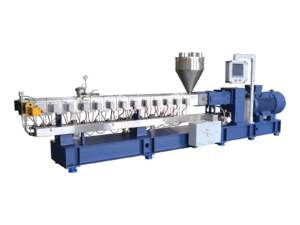
Processing TPU presents severe rheological, thermal, and mechanical challenges during compounding and pelletizing: first, TPU exhibits a narrow processing temperature window; minor shear overheating or barrel hotspotting triggers thermal degradation, polymer chain scission, and yellowing, while under-heating causes unmelted hard "fish-eye" gels. Second, TPU is notoriously hygroscopic and exhibits prolonged tackiness during melt phase transitions. Conventional water bath strand pelletizing inevitably leads to strand sagging, inconsistent pulling speed, and catastrophic wrap-around on feed rollers. Third, standard water-ring pelletizers suffer from knife smearing and die-face freezing due to cold water contact. This specialized industrial application integrates multi-component gravimetric feeding, a high-torque co-rotating twin-screw extruder with segmented temperature zoning, a thermally insulated underwater pelletizer die plate with pneumatic dynamic knife pressure control, an industrial process chiller maintaining ±0.5°C chilled water control, and a dedicated centrifugal underwater dewatering machine, producing perfectly uniform, non-sticking spherical micro-pellets.
The scenario
Thermoplastic Polyurethane (TPU) polymerization plants, toll compounders, and footwear/hose raw material manufacturers producing polyester and polyether grade TPU pellets.
Uniform, free-flowing, dust-free spherical TPU pellets or micro-pellets packaged in 25 kg moisture-barrier aluminum-foil bags or sealed drums, certified for high-speed tube extrusion, injection molding, and supercritical bead foaming.
Achieve continuous, uninterrupted underwater pelletizing of tacky, shear-sensitive TPU without die freeze-off, zero blade smearing, and bone-dry spherical pellets (surface moisture ≤ 0.03%).
Material
The properties named here are the ones the equipment questions turn on — they are confirmed per project, from samples where it matters.
Thermoplastic Polyurethane raw materials: polyester polyols, polyether polyols, diisocyanates (MDI/TDI), chain extenders (1,4-butanediol BDO), virgin TPU granules, processing aids, antioxidants, and UV light stabilizers. Highly hygroscopic; initial moisture content 0.1%–0.5%.

Process
The flow is the usual shape of the scenario; the machines for each step are chosen per project — see the solutions below.

Feeding and Material Transfer
Meters base TPU resins and functional additives via loss-in-weight gravimetric feeders into the twin-screw extruder feed throat.
Compounding
Plastifies TPU under gentle shear; multi-vent vacuum degassing (-0.095 MPa) strips volatile moisture and residual monomers.
Extrusion and Melt Processing
Decouples extruder pressure fluctuations and delivers constant, laminar melt flow to the circular die head.
Pelletizing
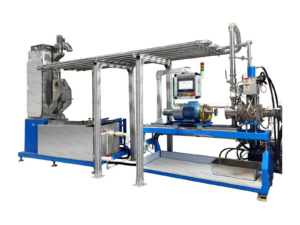
Extrudes melt through an insulated circular die plate into an enclosed water cutting chamber, sheared instantly into droplets by high-speed rotating knives.
Cooling
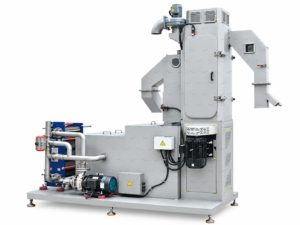
Turbulent chilled water stream quenches molten droplets into solid spheres and carries them to a high-speed centrifugal dewatering machine.
Post-Pellet Treatment
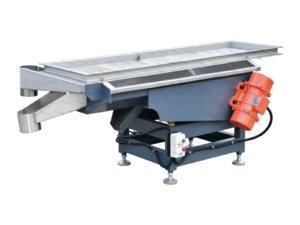
Enclosed dual-deck vibrating screen scalps off rare oversize agglomerates and dedusts micro-fines before packaging.
Requirements
1. Low-Shear, High-Dispersive Temperature Control: Specialized screw profile with distributed conveying and gentle kneading elements prevents shear overheating; barrel temperatures strictly zoned between 170°C and 220°C to eliminate polyurethane chain scission.
2. Melt Gear Pump Pressure Decoupling: A high-precision melt gear pump installed between extruder and die head decouples extrusion surging, delivering constant, pulsation-free laminar melt pressure to the underwater die face.
3. Thermally Insulated Die Plate: Ceramic/Hastelloy insulated orifice inserts prevent the chilling water from freezing the melt inside die holes (die freeze-off), while pneumatic blade auto-advance maintains uniform micro-gap cutting contact.
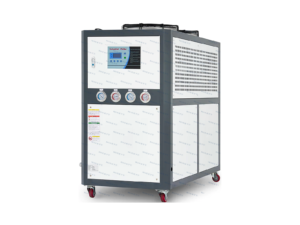
4. Closed-Loop Process Chilled Water: Industrial chiller delivers water at 12°C–18°C (±0.5°C) to immediately quench tacky TPU droplets into solid spheres without void cavitation or thermal distortion.
Pellet Morphology: Perfectly spherical or lens-shaped pellets (Ø2.0–3.0 mm ± 0.1 mm, or micro-pellets Ø1.2–1.8 mm); 100% free of agglomerated twins, hollow voids, or tails.
Residual Moisture: Surface moisture ≤ 0.03% (300 ppm) upon discharge from the centrifugal dewatering machine.
Optical Clarity & Purity: Zero fish-eyes, unmelted gels, bubbles, or thermal yellowing (Yellowness Index YI ≤ 1.5).
Selection
These are the questions a quotation is built from — answering them up front shortens the first round.
Fit
The boundaries are part of the scenario: they keep equipment from being quoted into a case it cannot serve.
Best fit for thermoplastic polyurethane (TPU) manufacturers producing polyester and polyether based grades across Shore 60A to 98A for footwear foaming beads (E-TPU), pneumatic air tubing, hydraulic hoses, medical catheters, film coatings, and hot-melt adhesives where conventional strand cutting fails due to tackiness and strand stretching.
Requires assessment when processing ultra-soft TPU (Shore hardness < 60A) or high-tack hot-melt polyurethanes, where specialized anti-tack process water additives, sub-10°C refrigerated water chilling, and modified micro-hole die configurations are mandatory to prevent pellet agglomeration.
Not suitable for thermoset reactive injection molding polyurethanes (RIM / PUR foam) or ultra-high-temperature rigid polymers requiring processing temperatures above 330°C.
Variants
A variant is written down only where the process and the decision actually differ.
Polyester or polyether TPU formulated for supercritical CO2 / N2 physical foaming of athletic footwear midsole beads (E-TPU).
Requires micro-hole die plate inserts (Ø0.8–1.2 mm), high-RPM underwater cutterhead (up to 4,500 RPM), and high-precision melt gear pump.
Uniform micro-pellets (Ø1.2–1.8 mm) with narrow particle size distribution, zero internal micro-voids, and clean cut surfaces.
Polyether TPU grades (Shore 85A to 98A) formulated for pneumatic air hoses, hydraulic tubing, and medical catheters requiring high burst pressure and hydrolysis resistance.
Employs deep multi-vent vacuum degassing (-0.095 MPa) and fine-mesh screen filtration to eliminate moisture bubbles and gels.
Crystal-clear, non-yellowing cylindrical or spherical pellets (Ø2.5–3.0 mm) with zero fish-eyes or unmelted polymer gels.
Photos
Photos go here once real views of this scenario are cleared to publish.


Before an inquiry
Request a Quote Send these points with your inquiry; the scenario can then be quoted against your line, not against an assumption.
Where to go next
Solución
Closed-loop underwater p…
Solución
Integrated post-pelletiz…
Indíquenos el material, el proceso y el resultado que necesita lograr. Los detalles técnicos se pueden completar más adelante junto con nuestro equipo de ventas.