_画板-1的副本-300x300.png)
Application
Post-Consumer Rigid HDPE & PP Scrap Recycling and Compounding Line
Rigid plastic recycling plant application profile detailing shredding, fine crushing, vacuum extrusion compounding, continuous melt filtration, and water-ring pelletizing for HDPE bottles, PP crates, and battery cases.

This industrial application profile outlines the crushing, continuous extrusion devolatilization, and high-capacity pelletizing engineering setup designed specifically for post-consumer and post-industrial rigid plastics recycling plants. It focuses on recovering rigid HDPE milk jugs, household chemical bottles, 200L chemical drums, PP injection-molded crates, battery casings, and e-waste ABS/PS housings.
Rigid post-consumer recycling facilities battle severe operational headaches: feedstocks arrive with unpredictable wall thicknesses, trapped moisture, residual detergents, and tramp metal contamination (screws, bottle caps, hinges). During extrusion, printed ink binders and residual organics break down into volatile vapors, causing foamed pellets with pinholes and low bulk density. Furthermore, high melt contamination requires continuous screen changing that halts lines and generates massive melt leaks. This application combines heavy-duty primary shredding, fine crushing with magnetic metal extraction, single/twin-screw extrusion with multi-vent vacuum degassing, continuous hydraulic dual-piston screen changers, die-face water ring pelletizing, centrifugal dewatering, and linear classifier dedusting to produce dense, solid, odor-free recycled pellets.
The scenario
Who runs it, what it makes, and what it must hold
A quién va dirigido
Commercial plastic recyclers, post-consumer processing facilities, and compounding reprocessors specializing in rigid polyolefin scrap (HDPE / PP) and engineering plastic regrind (ABS / HIPS).
Producción típica
High-quality, dense cylindrical or lens-shaped recycled pellets (HDPE / PP / ABS) packaged in 25 kg bags or 1,000 kg bulk big bags, certified for manufacturing blow-molded industrial containers, drainage pipes, and injection-molded crates.
Objetivo de producción
Convert contaminated, variable-density rigid plastic scrap into high-purity, uniform, dense recycled pellets with zero internal blisters, consistent MFI, and excellent mechanical toughness.
Material
What the line is fed
The properties named here are the ones the equipment questions turn on — they are confirmed per project, from samples where it matters.
Rigid post-consumer and post-industrial plastics: washed HDPE flakes (milk bottles, 200L chemical drums), PP regrind (beverage crates, battery casings, pallets), and ABS/PS e-waste flakes. Particle size 8–15 mm from granulator; residual surface moisture ≤ 2.0%; tramp metal removed.

Process
The typical flow, step by step
The flow is the usual shape of the scenario; the machines for each step are chosen per project — see the solutions below.

-
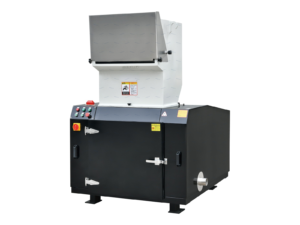
Heavy Shredding, Fine Crushing & Magnetic Separation
Raw Material Preparation
Reduces bulky hollow containers, crates, and drums into uniform 10–12 mm flakes and eliminates magnetic tramp metal.
-
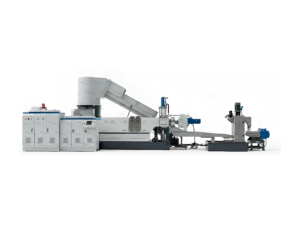
Extrusion Plastification, Vacuum Degassing & Melt Filtration
Extrusion and Melt Processing
Melts regrind flakes, devolatilizes residual moisture and solvent vapors under high vacuum, and continuously filters solid contaminants.
-
Die-Face Water-Ring Pelletizing
Pelletizing
Cuts polymer melt at the die face with rotating knives while enclosed in circular cooling water.
-
Centrifugal Dewatering & Vibratory Classification
Post-Pellet Treatment
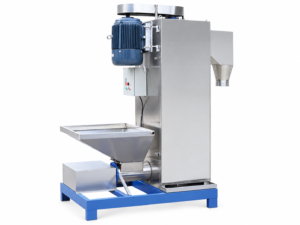
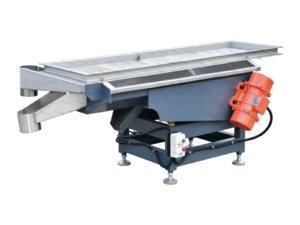
High-g centrifugal spinning expels water to ≤ 0.05%; dual-deck vibrating screen scalps off oversize doublets and dedusts fines.
Requirements
What the process demands, and what quality is judged on
Requisitos críticos del proceso
1. Tramp Metal Protection: Multi-stage suspended overband magnetic separators and tunnel metal detectors protect downstream extruder screws and hydraulic breaker plates from catastrophic metal damage.
2. Multi-Vent High-Vacuum Degassing: Dual vacuum chambers operated at -0.095 MPa boil off residual wash moisture, printing ink solvents, and odor volatiles before the melt reaches the die plate.
3. Non-Stop Melt Filtration: Dual-piston hydraulic screen changer maintains melt pressure stability (< 15 bar fluctuation during screen switches), preventing line shutdowns and melt leakage.
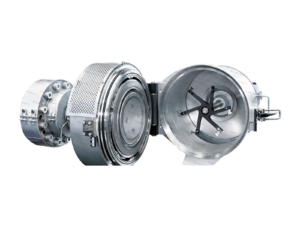
4. Die-Face Water-Ring Pelletizing: Constant pneumatic blade pressure against the hardened die plate ensures clean circular cut geometry and prevents pellet agglomeration in the cutting chamber.
Requisitos de calidad
Bulk Density: Recycled pellets must achieve bulk density ≥ 0.52 kg/L with zero hollow foamed cavities.
Melt Purity: Melt filtration via 80 to 120 mesh screens ensuring zero unmolten specks, metal particles, or foreign fibers in finished molded test bars.
Surface Moisture: Discharged pellet surface water strictly ≤ 0.05% (500 ppm) with zero post-bagging condensation sweating.
Selection
What decides the equipment in this scenario
These are the questions a quotation is built from — answering them up front shortens the first round.
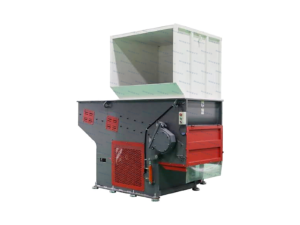
- Single-shaft shredder with hydraulic pusher ram
- Low-speed, high-torque rotor with DC53 indexable blades to crush hollow drums and thick crates without flying splinters.
- Bimetallic recycling extruder screw & barrel
- Tungsten-carbide coated screw flights to resist abrasion from residual road dust, filler, and paper ash.
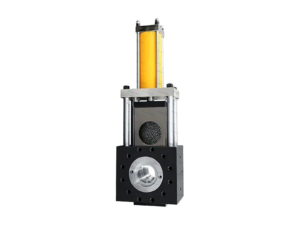
- Continuous dual-piston hydraulic screen changer
- Large filtration area with dual breaker plates for 24/7 filter screen replacement without stopping production.
- Water-ring die-face pelletizer & centrifugal dryer
- Direct-drive water ring cutting hood with pneumatic blade adjustment and vertical centrifugal dryer with SUS304 screen basket.
Fit
Where this scenario fits — and where it does not
The boundaries are part of the scenario: they keep equipment from being quoted into a case it cannot serve.
Mejor opción cuando
Best fit for commercial plastic recycling operations processing post-consumer rigid packaging scrap (HDPE milk jugs, shampoo bottles, detergent containers, 200L blue drums, PP battery boxes, automotive battery casings, beverage crates) with hourly capacity ranging from 500 kg/h to 2,000 kg/h.
Requiere evaluación cuando
Requires assessment when processing electronic waste scrap (e-waste ABS/HIPS/PC) with brominated flame retardants or heavy paper label contamination (> 2.0%), where continuous backflush screen changers or specialized degassing condensers are required.
No adecuada cuando
Not suitable for unwashed, heavily sand-laden municipal solid waste (MSW) containing stones, glass shards, or over 10% dirt without an upstream wash-plant sorting and sink-float tank pre-treatment line.
Variants
How the scenario splits
A variant is written down only where the process and the decision actually differ.
Blow-Molding Grade Recycled HDPE (Bottles & Drums)
- En qué se diferencia
Post-consumer blow-molded HDPE containers (milk bottles, detergent bottles, chemical drums) with Melt Flow Index (MFI) 0.2 to 1.5 g/10 min.
- Diferencia de proceso
Requires large L/D single-screw recycling extruder (34:1 to 38:1) with grooved feed bush to maintain stable melt pressure without overheating low-MFI resin.
- Diferencia de producción
High-viscosity recycled HDPE pellets engineered for direct blow-molding of new non-food bottles or double-wall corrugated drainage pipes.
Injection-Molding Grade Recycled PP (Crates & Battery Cases)
- En qué se diferencia
Post-consumer injection-molded PP scrap (bottle crates, sorting boxes, battery cases) with MFI 5 to 25 g/10 min.
- Diferencia de proceso
Utilizes twin-screw compounding extruder to incorporate elastomer impact modifiers and antioxidant packages directly into regrind flakes.
- Diferencia de producción
High-stiffness, impact-modified PP pellets certified for injection molding new industrial pallets, storage crates, and automotive battery shells.
Photos
The scenario in practice
Photos go here once real views of this scenario are cleared to publish.
-

Placeholder · 1200 × 900 px (4:3)(占位图) Replace with an approved application photo, real workshop or installation views at this size.(按此尺寸替换为正式图片。) -

Placeholder · 1200 × 900 px (4:3)(占位图) Replace with an approved application photo, real workshop or installation views at this size.(按此尺寸替换为正式图片。)
Before an inquiry
What we need to know to quote this scenario
- 01 Scrap rigid plastic source and form Feedstock type (baled bottles, pre-crushed flakes, whole crates/drums), thickness, and color sorting level.
- 02 Contamination and residual moisture level Estimated residual water (%), paper/label residue (%), and mineral/ash content (%).
- 03 Target recycled pellet application Downstream molding process (extrusion pipe, blow molding, injection molding) and target MFI.
- 04 Plant power, water, and layout limits Available electrical capacity (min 250 kW), process water supply, and floor dimensions (min 25 m x 5 m).
Request a Quote Send these points with your inquiry; the scenario can then be quoted against your line, not against an assumption.
Where to go next
The solutions and the equipment this scenario names
Solutions for this scenario
Solución
Closed-Loop Pellet Dewatering, Spiral Cooling, and Dedusting System
Integrated post-pelletiz…
Equipment for this scenario