_画板-1的副本-300x300.png)
Solución
Gentle Convective Ribbon Blending and Liquid Dosing System for Rapid Changeovers
Convective horizontal ri…
Application
Masterbatch plant application profile covering gentle ribbon pre-blending, liquid dispersion dosing, high-torque twin-screw compounding, and rapid changeover Strand Pelletizer System.

This application profile focuses on masterbatch manufacturers producing high-concentration color concentrates (white, black, and colored masterbatches) and multi-functional additive masterbatches (antioxidants, UV stabilizers, antistats, processing aids) for blown film, sheet extrusion, and injection molding converters.
Masterbatch manufacturing is plagued by two distinct industrial operational challenges: first, fine organic and inorganic pigments (such as carbon black, titanium dioxide TiO2, phthalocyanine blue, and quinacridone red) exist as tightly bound agglomerates that resist dispersive wetting, causing pinholes, streaks, and filter pressure rises in thin blown films if poorly compounded. Second, toll compounders run multiple small custom batches daily, requiring constant recipe and color changeovers. High-speed mixers generate excessive frictional heat that soft-melts low-melting wax carriers into sticky doughs, while mixer disassembly and cleaning between contrasting color batches takes up to 90 minutes, killing machine utilization. This application integrates dust-tight sack tipping, gentle convective ribbon blending with liquid additive spray atomization, high-shear co-rotating twin-screw compounding, and a high-precision Strand Pelletizer System, achieving dispersion excellence and cutting changeover times to under 15 minutes.
The scenario
Commercial masterbatch manufacturers, toll compounders, and plastics converters producing color concentrates, white/black masterbatches, and functional additive compounds.
High-dispersion color and additive masterbatch pellets packaged in 25 kg multi-wall valve bags or plastic-lined drums, ready for blown film extrusion, sheet casting, or injection molding.
Achieve flawless pigment dispersion (zero agglomerates/streaks in blown film) while slashing recipe changeover downtime from 90 minutes down to under 15 minutes.
Material
The properties named here are the ones the equipment questions turn on — they are confirmed per project, from samples where it matters.
Polymer carrier resins (LLDPE, LDPE, PP, PA, EVA pellets/powders), micronized color pigments (organic red, yellow, phthalocyanine blue, carbon black, rutile TiO2), functional additives (UV absorbers, slip agents, antioxidants), and low-molecular-weight polyethylene waxes or liquid white oils.

Process
The flow is the usual shape of the scenario; the machines for each step are chosen per project — see the solutions below.

Feeding and Material Transfer
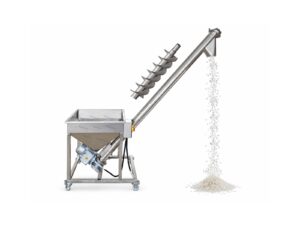
Discharges raw carrier pellets, pigments, and waxes into an inclined screw conveyor with negative-pressure dust capture.
Mixing
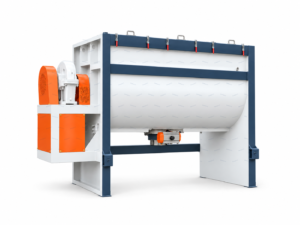
Double-helical ribbons fold ingredients into a homogeneous pre-blend in 3–5 minutes without frictional heating, while atomized spray coats liquid dispersing agents.
Compounding
Intense shear kneading blocks melt carrier polymer and de-agglomerate pigment clusters down to sub-micron primary particle dimensions under high vacuum.
Cooling
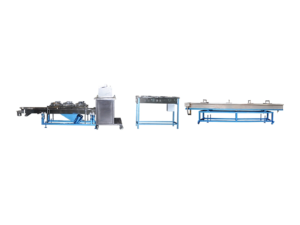
Continuous polymer strands are quenched in a stainless steel cooling trough and dried using high-pressure air knives.
Pelletizing
Precision tungsten carbide helical rotor shears parallel strands into exact cylindrical pellets; quick-opening hood allows 5-minute cleaning between colors.
Requirements
1. Low-Shear Pre-blending with Liquid Wetting: Double-helical ribbons fold carrier resin, pigment powders, and wax without frictional heat build-up (< 4°C rise), while atomized liquid dispersing agents pre-wet pigment surfaces.
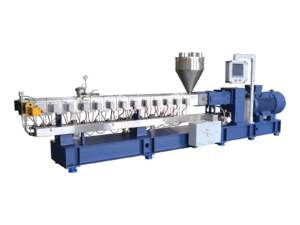
2. High-Shear Twin-Screw Dispersive Kneading: Extruder screw profile combines forward, neutral, and reverse kneading blocks with narrow clearances, imparting high shear stress to break pigment primary agglomerates.
3. Rapid Changeover Design: Mixer interior polished to Ra ≤ 0.8 µm with contoured bottom discharge; extruder equipped with high-speed barrel purge cycles; Strand Pelletizer System features quick-opening cutterhood for complete washdown in ≤ 15 minutes.
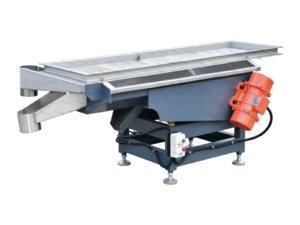
4. Fines-Free Strand Classification: Rotary strand pelletizer with stellite bed knife and carbide rotor cuts clean cylindrical pellets; dual-deck vibrating screen removes fines and slivers.
Dispersion Quality: Filter Pressure Value (FPV) according to EN 13900-5 must be ≤ 0.8 bar/g for film grades.
Color Delta E*: Spectrophotometric color difference Delta E* < 0.30 against master reference chip across all production bags.
Clean Cut Morphology: Cylindrical pellets (Ø2.5 x 3.0 mm) with zero stringers or dust (< 0.05% fines passing 1.5 mm mesh).
Selection
These are the questions a quotation is built from — answering them up front shortens the first round.
Fit
The boundaries are part of the scenario: they keep equipment from being quoted into a case it cannot serve.
Best fit for masterbatch producers running frequent custom color matches and formulation changeovers (4 to 8 recipe changes per day) requiring low-temperature pre-blending, liquid dispersion aid atomization, and rapid machine cleanability without batch-to-batch color contamination.
Requires assessment when compounding ultra-high concentration carbon black (> 50% loading) or nano-scale organic red/blue pigments with low bulk density (< 0.15 kg/L), where specialized twin-screw side-stuffing with vacuum de-aeration or split feeding is mandatory.
Not suitable for continuous high-tonnage commodity single-grade resin polymerization plants where color never changes, or liquid silicone masterbatch production requiring high-pressure dynamic vulcanizing reactors.
Variants
A variant is written down only where the process and the decision actually differ.
White masterbatch with 50% to 75% rutile titanium dioxide (TiO2) and polyethylene wax carrier for film extrusion.
Requires high-torque twin-screw extruder with wear-resistant metallurgy and specialized kneading blocks to wet heavy inorganic pigments without burning wax.
High-opacity white masterbatch pellets with filter pressure value (FPV) ≤ 0.5 bar/g and zero un-dispersed agglomerates.
Custom engineering plastic color masterbatches (PA6, PC, ABS) running short batches (200 kg to 1,000 kg) with multiple daily color changeovers.
Employs horizontal ribbon mixer for 3-minute gentle pre-blending and cantilever strand pelletizer for 5-minute cutter blade cleanout.
Exact colorimetric delta E* < 0.30 matching customer standard, delivered in clean, dust-free cylindrical pellets.
Photos
Photos go here once real views of this scenario are cleared to publish.


Before an inquiry
Request a Quote Send these points with your inquiry; the scenario can then be quoted against your line, not against an assumption.
Where to go next
Solución
Convective horizontal ri…
Solución
Integrated continuous st…
Indíquenos el material, el proceso y el resultado que necesita lograr. Los detalles técnicos se pueden completar más adelante junto con nuestro equipo de ventas.